

Key Takeaways
- Animal proteins are generally 'complete,' containing all nine essential amino acids in adequate amounts.
- Most plant proteins are 'incomplete,' but eating a varied plant-based diet covers all essential amino acids over the course of a day.
- Protein quality is also measured by digestibility - animal proteins tend to score higher, but many plant sources score well too.
- Plant-based eaters can reliably meet protein needs through strategic food combinations and adequate total intake.
- No single protein source is universally superior - dietary context, overall pattern, and individual needs all matter.
Our Verdict
Animal proteins offer a convenient, high-quality complete protein package, while plant proteins require a bit more dietary planning but are fully capable of meeting human needs when eaten in variety and sufficient quantity. Neither approach is inherently superior - what matters most is the overall dietary pattern, individual health goals, and personal values. Consulting a registered dietitian can help tailor protein intake to your specific circumstances.
| Best for | Recommended |
|---|---|
| Those seeking the simplest path to complete protein in each meal | Animal protein sources |
| Those following plant-based or flexitarian diets | Varied plant protein combinations |
| Those wanting both high quality and plant-forward eating | Soy-based proteins (tofu, edamame, tempeh) |
| Those balancing protein quality with sustainability or ethical concerns | Mixed dietary approach (plant-forward with selective animal sources) |
What 'Protein Quality' Actually Means
Protein quality is a measure of how well a dietary protein supports the body's needs - specifically, whether it supplies all the essential amino acids (EAAs) in proportions the body can use. There are nine EAAs that humans cannot synthesize on their own and must obtain from food: histidine, isoleucine, leucine, lysine, methionine, phenylalanine, threonine, tryptophan, and valine.
Two frameworks are commonly used to assess quality. The Protein Digestibility-Corrected Amino Acid Score (PDCAAS) compares a food's amino acid profile to human requirements and adjusts for digestibility. A newer metric, the Digestible Indispensable Amino Acid Score (DIAAS), is considered more precise because it measures amino acid absorption in the small intestine rather than overall digestibility. Both are useful lenses, but neither tells the whole story of a food's nutritional value in isolation.
Understanding these metrics helps cut through a lot of diet-culture noise. High quality doesn't automatically mean "better for you" - it simply means the protein is more efficiently used for functions like muscle maintenance, enzyme production, and immune support.
Animal vs. Plant Proteins: A Direct Comparison
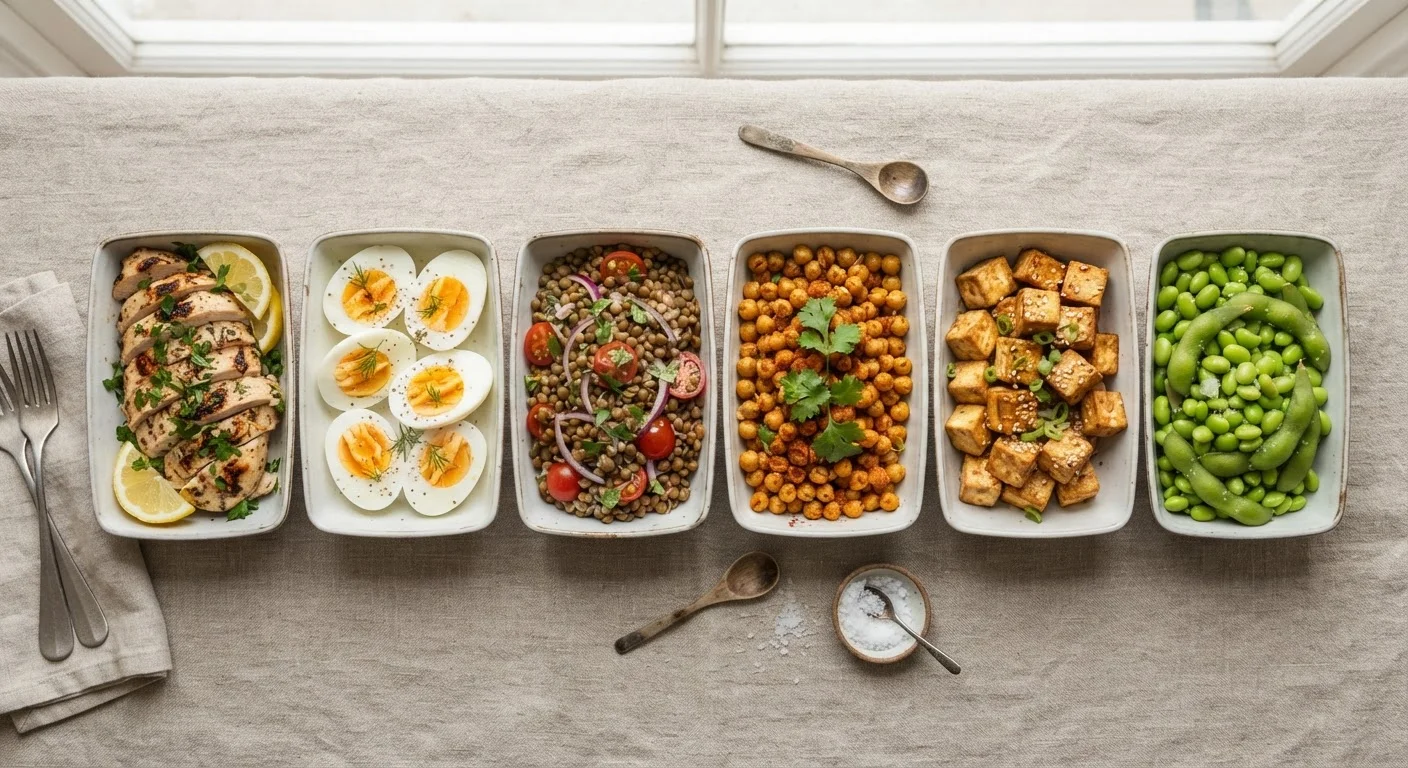
Animal-sourced proteins - including meat, poultry, fish, eggs, and dairy - are generally considered complete proteins because they contain all nine EAAs in sufficient quantities. They also tend to score high on both PDCAAS and DIAAS scales, meaning the body can absorb and utilize them efficiently.
Most plant proteins are incomplete, meaning they are low or limited in at least one EAA. Common examples: legumes (beans, lentils) are low in methionine, while grains (rice, wheat) are low in lysine. Exceptions exist - soy (tofu, tempeh, edamame) and quinoa are plant-based complete proteins, scoring comparably to many animal sources.
| Animal Proteins | Plant Proteins (General) | Soy Proteins (Exception) | |
|---|---|---|---|
| Completeness (all 9 EAAs) | Yes - all sources | No - most are incomplete | Yes - complete protein |
| Typical digestibility | 90-99% | 70-90% | ~91-95% |
| DIAAS score (general range) | High (often >1.0) | Moderate (0.5-0.9) | High (close to 1.0) |
| Common limiting amino acid | None typically | Methionine or lysine | Methionine (minor) |
| Additional nutrient co-benefits | B12, heme iron, zinc | Fiber, phytonutrients, folate | Isoflavones, fiber, iron |
| Dietary planning required | Minimal for completeness | Moderate - variety needed | Low - versatile staple |
Digestibility is another key difference. Animal proteins typically have digestibility rates above 90%, while some plant proteins - particularly from whole legumes or grains - fall between 70-90%, partly due to fiber content and naturally occurring compounds like phytates that can reduce mineral and protein absorption.
For a broader perspective on evaluating food quality beyond single nutrients, see our guide on whole foods vs. processed foods.
Can Plant-Based Eaters Get Enough Complete Protein?
The short answer is yes - with thoughtful eating. The older idea that you must eat complementary proteins in the same meal (e.g., rice and beans together) has been largely revised. Current evidence suggests that as long as a variety of plant proteins are consumed throughout the day, the body can pool amino acids effectively.
Variety Is the Cornerstone of Plant Protein Adequacy
No single plant food needs to be perfect - diversity does the work. Rotating among legumes, whole grains, nuts, seeds, and soy foods throughout the week naturally covers the full spectrum of essential amino acids. Tracking every amino acid is unnecessary for most healthy adults; focus on consistent variety and adequate overall protein intake instead.
Practical strategies for plant-based eaters include:
- Prioritize soy-based foods - tofu, tempeh, and edamame are complete proteins and among the most studied plant sources.
- Combine legumes and grains regularly - not necessarily in one sitting, but as a consistent daily pattern.
- Include seeds and nuts - hemp seeds and pumpkin seeds are notably rich in methionine, which many legumes lack.
- Eat enough total protein - slightly higher total intake may help compensate for lower digestibility in some plant foods.
For a practical framework on structuring meals around these principles, building a balanced plate is a useful starting point.
This article is for general informational purposes only and does not constitute medical or dietary advice. Consult a registered dietitian or qualified healthcare professional for guidance tailored to your individual needs.