

Key Takeaways
- Water damage is often hidden behind walls, under floors, or above ceilings before it becomes obvious.
- Musty odors, soft spots, and peeling paint are early indicators worth investigating promptly.
- Catching water intrusion early significantly reduces the cost and complexity of repairs.
- Some warning signs require a licensed professional to assess safely and accurately.
- Routine seasonal inspections are your best defense against undetected water damage.
Why Hidden Water Damage Is So Common
Water is deceptively patient. It can seep into wall cavities, migrate along floor joists, and pool in crawl spaces for weeks or months before you notice anything wrong. By then, structural damage, mold growth, and deteriorating materials may already be well underway.
Most homeowners discover water damage during a renovation, a home inspection, or after a noticeable smell forces the issue. The goal here is to help you catch it sooner - before it becomes a major repair. Many of the signs below are subtle, which is exactly why they go unnoticed. Knowing what to look for puts you ahead of the problem.
If you're planning any renovation work, it's worth reading what homeowners should know before starting any renovation - uncovering hidden damage mid-project can significantly shift your timeline and budget.
A Persistent Musty or Earthy Odor
One of the most reliable early signals of hidden water damage is smell. Mold and mildew - both common byproducts of prolonged moisture - produce a distinct musty, damp odor that tends to intensify in enclosed spaces like closets, cabinets under sinks, and basements.
If a smell is strongest near a specific wall, under a particular cabinet, or in one corner of a room, that localization matters. It often points directly to the moisture source. Airing out a room may temporarily mask the smell, but it won't resolve the underlying issue.
A musty smell that returns after airing out a room almost always signals an active moisture problem.
Bubbling, Peeling, or Stained Paint and Wallpaper
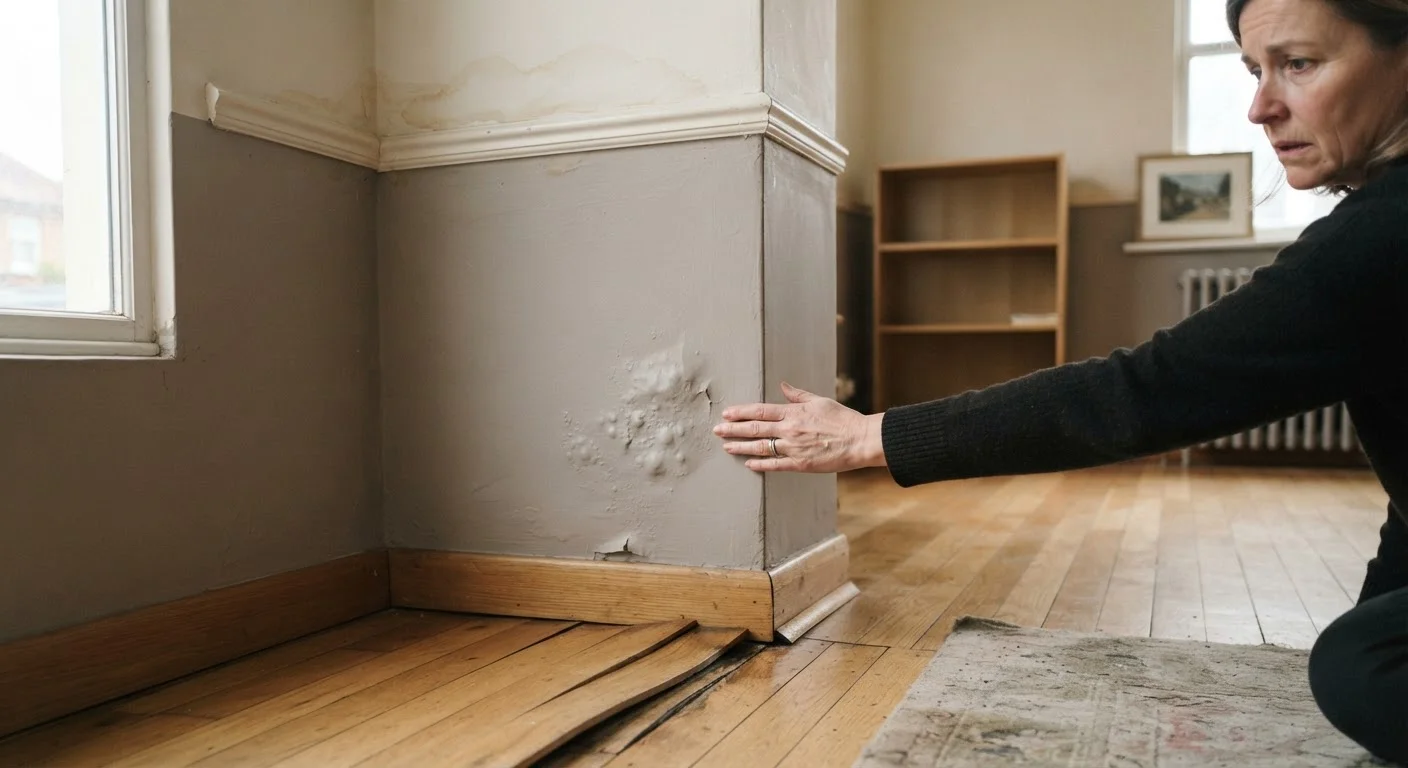
Paint and wallpaper act like moisture indicators. When water infiltrates a wall from behind - whether from a slow pipe leak or exterior seepage - it disrupts the bond between the surface material and the wall beneath. The result is bubbling, blistering, or peeling that doesn't have an obvious external cause.
Yellowish-brown staining is another telltale sign. These stains often appear on ceilings directly below a bathroom or roof area. A single stain that has dried may indicate an old, resolved leak - but a stain with a soft or damp center suggests the problem is ongoing.
Bubbling paint with no clear external cause often means water is trapped behind the wall surface.
Soft, Spongy, or Warped Flooring
Floors that feel soft or springy underfoot - particularly hardwood or laminate - often indicate moisture damage to the subfloor beneath. Wood absorbs water and swells, causing planks to buckle, cup, or pull apart at the seams. Tile floors can also reveal moisture issues through cracked grout or tiles that rock slightly when stepped on.
Pay close attention to areas around toilets, dishwashers, refrigerators with ice makers, and bathroom vanities. These are high-probability zones for slow, undetected leaks that saturate the subfloor over time.
Soft spots in flooring near appliances or plumbing fixtures are a strong indicator of subfloor moisture damage.
Unexplained Spikes in Your Water Bill
If your water usage habits haven't changed but your bill has climbed noticeably, a hidden leak is a reasonable suspect. Slow drips inside walls, running toilet flappers, or pinhole leaks in supply lines can waste significant amounts of water without producing visible signs inside the home.
A simple test: turn off all water-using appliances and check your water meter. If the meter continues to move, water is escaping somewhere in your system. A licensed plumber can use pressure testing or thermal imaging to locate the source without opening walls unnecessarily.
A rising water bill with no change in habits is a quiet but reliable indicator of a hidden leak.
Visible Mold in Unexpected Places
Finding mold on grout in a shower is common and manageable. Finding it on drywall, in the back of a closet, along a baseboard, or on ceiling tiles in a dry part of the house is a different matter. Mold requires sustained moisture to grow - its presence away from obvious wet areas strongly suggests a hidden water source nearby.
Black, green, or gray spots that grow or recur after cleaning warrant professional assessment, particularly if they appear near HVAC vents, which can spread spores through the home. Do not attempt to clean or remove large mold colonies without appropriate protective equipment and guidance from a remediation professional.
Mold appearing in dry areas of the home almost always points to a concealed, ongoing moisture source.
Cracks in Walls or Ceilings Following Water Stains
Water stains alone are concerning, but when cracks appear along or near those stains, the damage has likely progressed beyond surface discoloration. As drywall and plaster absorb moisture, they soften, and repeated wetting and drying cycles cause them to crack and crumble. Horizontal cracks in basement walls can also indicate hydrostatic pressure from water-saturated soil pressing against the foundation.
These cracks are worth having evaluated by a structural or waterproofing professional, particularly in basement and foundation contexts. What looks like cosmetic cracking can sometimes signal more significant structural compromise.
Cracks near water stains often mean damage has moved beyond the surface into the wall or ceiling structure.
What to Do If You Find Something Suspicious
Spotting one or more of these warning signs doesn't mean you need to panic, but it does mean you need to act. Start by locating the most likely water source - a leaking pipe, a failed roof flashing, a cracked foundation, or poor exterior drainage. Turn off the supply if a plumbing leak is likely, and document what you find with photos before touching anything.
Use Your Senses First, Then Tools
Before calling anyone, do a slow walkthrough of your home using sight, smell, and touch. Press gently on walls near plumbing, look along ceiling edges for discoloration, and kneel to check for soft spots in flooring. Affordable tools like a handheld moisture meter (available at most hardware stores) can confirm suspicion without any demolition. This quick check helps you describe the problem accurately when you do consult a professional.
For anything involving structural members, electrical components near moisture, or mold growth covering more than a small area (commonly cited as roughly 10 square feet), contact a licensed contractor or certified remediation professional. These situations carry safety risks that go beyond DIY assessment.
Preventing damage in the first place is always more cost-effective. Our guide to seasonal home maintenance tasks that prevent expensive repairs walks through the checks - gutters, roof, caulking, drainage - that can stop water intrusion before it starts.