

Key Takeaways
- Clutter is a behavioral and spatial problem - understanding its root causes is the first step.
- Decluttering works best when approached room by room with a clear decision framework.
- Effective storage systems match how you actually live, not an idealized version of your habits.
- Maintenance routines - not one-time purges - are what keep homes organized long-term.
- Small, consistent daily habits prevent the overwhelm that leads to clutter rebound.
Why Clutter Accumulates in the First Place
Most clutter isn't a sign of laziness - it's the natural result of systems that don't match how people actually live. Items land on counters and chairs because there's no clear, convenient home for them. Purchases outpace storage capacity. Life transitions - a new baby, a move, a job change - bring new possessions before old ones are cleared out.
Research in environmental psychology suggests that visual clutter increases cognitive load, making spaces feel more stressful and harder to manage. Understanding why clutter builds is more useful than self-criticism, because it points directly toward structural solutions. For most households, the core issues are: too much stuff relative to available storage, unclear ownership of items, and no regular process for letting things go.
54%
Americans overwhelmed by home clutter
A survey by the National Association of Professional Organizers found that over half of Americans feel their homes have too much clutter.
1 hour
Average time lost daily to disorganization
Studies in workplace and home environments estimate that disorganized spaces cost individuals roughly an hour per day in searching for misplaced items.
80%
Of clutter kept but never used
Professional organizers commonly report that the vast majority of items clients hold onto are never actually used after being stored.
Shifting Your Mindset Before You Declutter
Organization projects that start with a shopping cart - buying bins and labels before sorting anything - almost always stall. The more productive first step is mental: deciding what role your home will play in your daily life and what you actually want it to contain.
A useful framework is asking three questions about any item: Do I use it regularly? Do I love it? Would I replace it if it disappeared tomorrow? If the answer to all three is no, that item is a candidate for removal. This isn't about minimalism as an aesthetic - it's about creating space for what genuinely serves you.
Sort items into categories across your entire home before assigning storage locations - not room by room in isolation. This reveals true quantities and prevents you from creating duplicate storage zones.
Many households discover they own six pairs of scissors or a dozen half-used tape rolls only when all like items are grouped together, which immediately clarifies how much storage is actually needed.
Set a 'one-in, one-out' household rule: whenever something new enters the home, something comparable leaves. Apply this consistently to clothing, kitchenware, and hobby supplies.
This rule addresses the root cause of clutter rebound by capping total volume rather than relying solely on periodic purges, which is a more sustainable long-term approach.
For those who find decision-making around possessions emotionally difficult, starting with a low-stakes area - a junk drawer, a bathroom cabinet - builds momentum without the emotional weight of sentimental categories like photographs or inherited items.
Room-by-Room Decluttering Strategy
Tackling your whole home at once is a reliable path to burnout. A room-by-room approach - finishing one space before moving to the next - gives you visible wins that sustain motivation.
High-Traffic Zones First
Entry areas, kitchens, and living rooms accumulate clutter fastest and benefit most visibly from organization. Start here for maximum impact. In the kitchen, clear countertops of appliances used less than once a week; store them, donate them, or remove them.
Private Spaces Next
Bedrooms and home offices are often more emotionally charged but equally important. Clothing is one of the most common excess categories - a simple rule is that if you haven't worn something in the past 12 months and it has no sentimental value, it's a strong donation candidate.
Storage Areas Last
Garages, basements, and closets are where things go to be forgotten. Sort into clear categories: keep, donate, recycle, and trash. Don't reorganize until you've removed what you won't keep - reorganizing clutter just relocates it. See our home improvement hub for guidance on making the most of storage spaces throughout your home.
Building Storage Systems That Actually Work
The best storage system is one you'll actually use - which means it has to be honest about your real habits, not your aspirational ones. If you tend to drop mail on the counter, a wall-mounted mail sorter near the entry will work far better than a filing cabinet in a back room.
Zone Your Spaces
Each room functions best when it's divided into clear activity zones. In a kitchen, that means prep areas are near the sink, cooking tools near the stove, and everyday dishes at reachable height. In a home office, active project materials should be within arm's reach; archived materials can be stored further away.
Label Everything
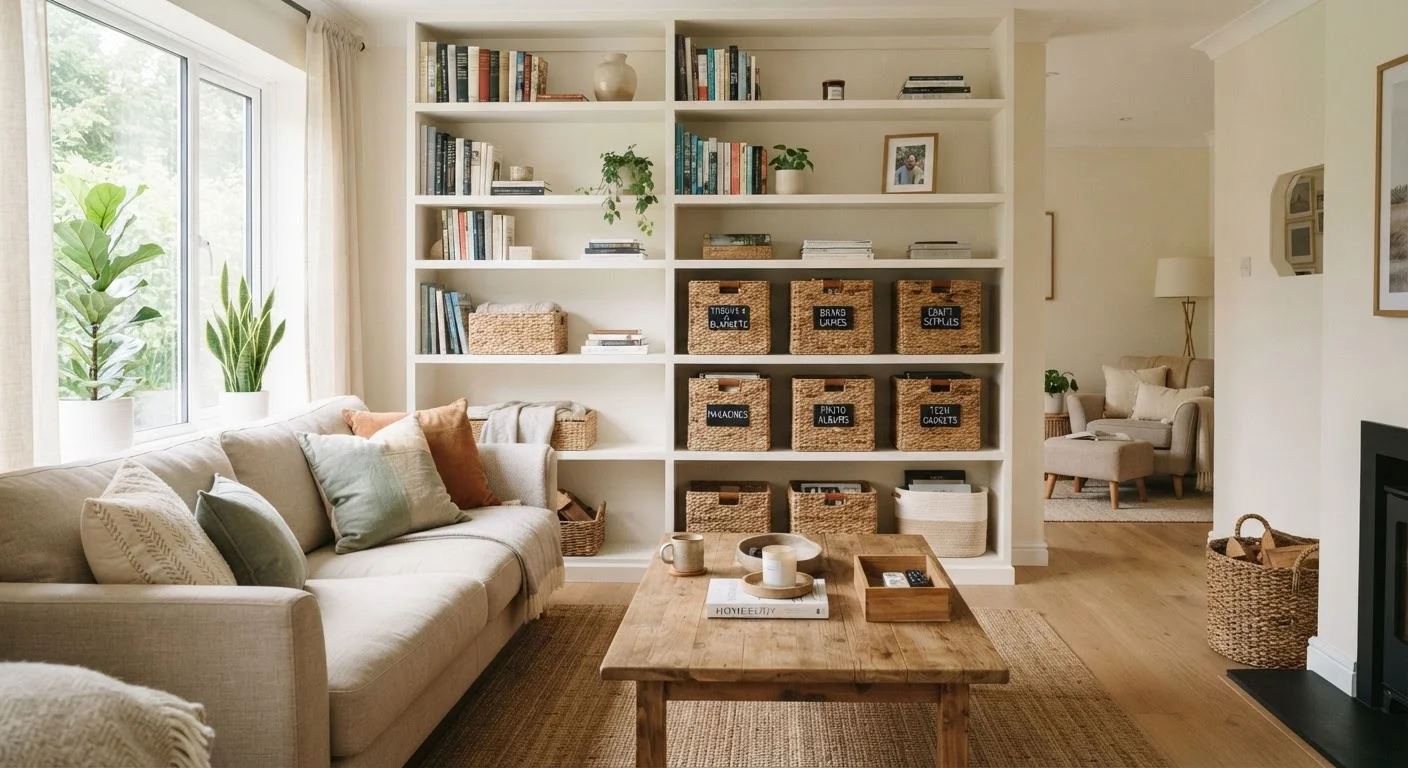
Labeling isn't just for aesthetics - it removes decision fatigue. When every family member knows exactly where something belongs, items are more likely to be returned there. Even simple handwritten labels on bins outperform an unlabeled system.
Use Vertical Space
Most homes are underutilizing wall height. Shelving above doorways, stacked bins in closets, and wall-mounted racks in garages can dramatically increase usable storage without adding floor footprint. This principle applies equally outdoors - our gardening basics hub covers vertical growing structures that keep outdoor spaces just as tidy.
Maintaining Organization Over Time
The most common reason organization efforts fail isn't the initial setup - it's the absence of a maintenance routine. A well-organized home requires regular, brief resets rather than periodic major overhauls.
Daily Habits
A ten-minute end-of-day reset - returning items to their homes, clearing surfaces, running a quick tidy of common areas - prevents accumulation from becoming overwhelming. This habit is easier to sustain than it sounds because an already-organized space is much faster to tidy.
Seasonal Reviews
Schedule a light declutter pass every season. This is when you evaluate whether your systems are still working, rotate in seasonal items, and remove things that have outlived their usefulness. Seasonal reviews also catch drift - the gradual return of clutter when systems aren't being followed.
Schedule Your Seasonal Reset
Block 30-60 minutes on your calendar at the start of each season specifically for a home reset review. Treating it like a recurring appointment - rather than something you'll get to eventually - is the single most effective way to prevent clutter from rebuilding. Even a brief, focused pass through each room can catch drift before it becomes a major project.
Organization is not a destination you reach once. It's an ongoing practice that adapts as your household changes. Building flexibility into your systems - choosing adjustable shelving, modular bins, and multipurpose furniture - means you won't need to start from scratch every time life shifts.