

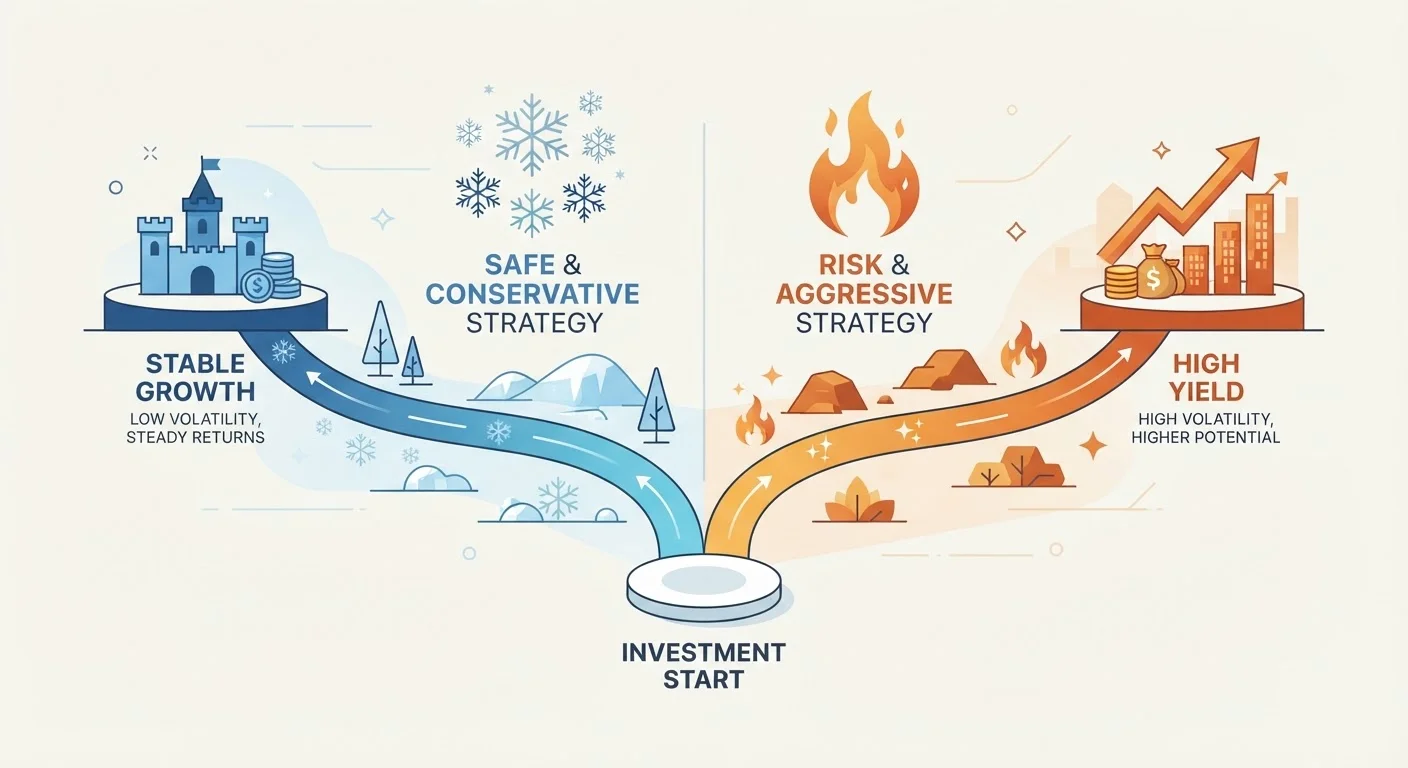
Key Takeaways
- The avalanche method targets your highest-interest debt first, reducing the total interest you pay over time.
- The snowball method eliminates your smallest balances first, building motivation through early wins.
- The mathematically cheaper option is the avalanche, but the snowball often leads to better follow-through for many people.
- Both strategies require a fixed extra payment on top of your minimums each month.
- The best method is whichever one you'll actually stick with until your debts are gone.
Option A
Debt Avalanche
The mathematically optimal approach to debt repayment.
Best for: People who are motivated by numbers, want to minimize total interest paid, and can stay disciplined without frequent quick wins.
Option B
Debt Snowball
The psychologically driven approach to debt repayment.
Best for: People who need visible momentum and motivation, especially those managing several smaller debts alongside larger ones.
If you want to pay the least interest overall
Debt Avalanche
Targeting your highest-rate debt first reduces the total cost of borrowing, sometimes significantly over a multi-year repayment timeline.
If you've struggled to stay motivated with debt repayment before
Debt Snowball
Clearing smaller balances quickly gives you tangible proof of progress, which research suggests helps people stay on track longer.
If most of your debts carry similar interest rates
Debt Snowball
When rates are close together, the mathematical advantage of the avalanche shrinks - and the motivational boost of the snowball becomes the more meaningful differentiator.
If you have one high-rate debt that dwarfs all others
Debt Avalanche
A single high-APR balance left unchecked can cost hundreds or thousands of dollars extra. Targeting it first cuts that drag on your finances immediately.
If you're managing debt on a very tight monthly budget
Debt Snowball
Freeing up minimum payments sooner by eliminating small balances can release cash flow faster, giving you slightly more breathing room each month.
How Each Strategy Works
Both methods share the same core mechanic: you pay the minimum on every debt you owe, then put any extra money toward one target debt at a time. The difference is which debt you target first.
With the debt avalanche, you rank your debts by interest rate - highest to lowest - and throw extra payments at the top of that list. Once that balance is gone, you roll the freed-up payment into the next highest-rate debt, and so on.
With the debt snowball, you rank debts by balance - smallest to largest - and attack the smallest one first. Each time you eliminate a balance, you roll that payment amount into the next-smallest debt, building momentum like a snowball rolling downhill.
Neither method requires a minimum income level or a specific number of debts. If you're not sure how credit and debt work at a foundational level, this primer on debt and credit is a helpful starting point before choosing a strategy.
| Criterion | Debt Avalanche | Debt Snowball |
|---|---|---|
| Repayment order | Highest interest rate first | Smallest balance first |
| Total interest paid | Lower (in most scenarios) | Higher (in most scenarios) |
| Speed of first payoff | Slower if high-rate debt is large | Faster - smallest balance goes first |
| Motivational approach | Driven by math and long-term savings | Driven by visible wins and momentum |
| Best rate spread scenario | Wide gap between high and low rates | Rates are similar across debts |
| Cash flow impact | Slower to free up minimum payments | Faster account closures free minimums |
| Complexity | Requires tracking interest rates | Simple - just sort by balance |
The Real Cost Difference
The avalanche method wins on pure math. Because you're reducing the balance that's accruing the most interest first, you shrink your overall interest burden faster. Over several years of repayment, the savings can be meaningful - though the exact difference depends on how many debts you have, how far apart the interest rates are, and how long repayment takes.
The snowball method costs more in total interest in most scenarios. When your smallest balance also happens to carry a low rate, you're leaving a higher-rate debt accruing interest longer than necessary. That gap narrows when your debts carry similar rates, but it rarely disappears entirely.
~$1,000+
Potential interest savings with avalanche method
Consumer finance educators estimate that on a typical multi-debt household balance, avalanche ordering can reduce total interest paid by hundreds to over a thousand dollars compared to snowball ordering.
77%
Americans carrying some form of debt
According to Experian's State of Credit report, the vast majority of U.S. adults carry at least one form of debt, making repayment strategy a widely relevant financial decision.
That said, total interest paid only matters if you finish the plan. Studies in behavioral finance - including research published in the Journal of Marketing Research - have found that people are more likely to follow through on debt repayment when they see accounts closing. A plan you complete beats a plan you abandon.
If you're already stretched thin financially, see how to manage debt on a tight budget for strategies that work even when the extra payment amount is small.
Choosing the Approach That Fits You
There's no universal right answer here. The honest question to ask yourself is: What has derailed my debt repayment in the past?
If the answer is losing track of progress or feeling like nothing is happening, the snowball is likely your better fit. If the answer is watching interest pile up and feeling like you're digging a hole, the avalanche addresses that directly.
A few other factors worth considering:
- Rate spread: If your highest-rate debt is at 24% APR and your lowest is at 6%, the avalanche saves you real money. If everything sits between 15% and 18%, the difference is smaller.
- Number of accounts: Managing five or six separate balances can feel chaotic. The snowball reduces the account count faster, which some people find mentally easier to manage.
- Cash flow: Eliminating small balances frees up minimum payments, which can help if your monthly budget is tight. The avalanche may not free up cash as quickly if your highest-rate debt is also your largest balance.
It's also worth knowing that neither strategy exists in a vacuum. Debt consolidation is a separate approach that could change the picture depending on your credit profile and debt mix. And in some financial situations, aggressive debt payoff may not be the highest-priority move right now.
Whatever method you choose, the habits that quietly extend repayment timelines - like only making minimum payments or skipping months - matter more than the strategy itself. Recognizing those patterns early can make a bigger difference than which list order you use.
This article is for general informational and educational purposes only and does not constitute personalized financial advice. Consider consulting a licensed financial professional for guidance tailored to your situation.