

Key Takeaways
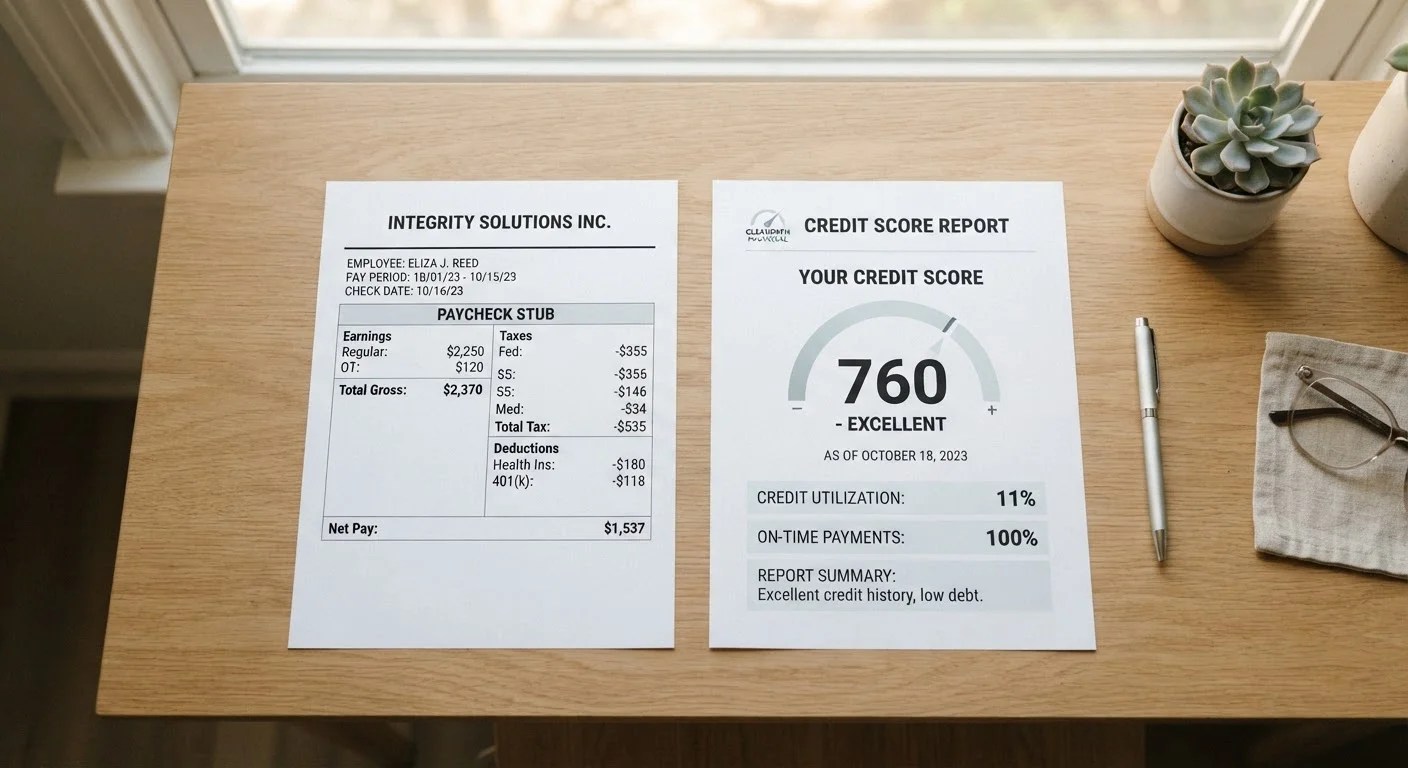
- Income is not included in your credit score calculation — ever.
- Your score is built from payment history, amounts owed, credit age, mix, and new inquiries.
- High earners can have poor credit; modest earners can have excellent scores.
- Lenders may check income separately from your credit score when evaluating applications.
- Building strong credit is about consistent habits, not salary level.
The Big Disconnect: Earnings and Credit Scores Are Separate Things
It's one of the most common assumptions in personal finance: earn more money, and your credit score goes up. It feels logical. But it's wrong — and understanding why can change how you approach your financial life.
Credit scores, whether generated by FICO or VantageScore, are calculated entirely from the data in your credit reports. That data covers how you've borrowed and repaid money over time. Your salary, hourly wage, investment income, or household earnings appear nowhere in that calculation. Not even a little.
If you've never seen what actually drives a credit score, this introduction to credit and debt fundamentals is a solid place to start before going further.
Myth
If I make good money, my credit score will naturally be high.
Fact
Income has zero impact on your credit score. The score only measures how you manage borrowed money.
Credit bureaus — Equifax, Experian, and TransUnion — collect data on loans, credit cards, and repayment history. They do not collect income data. So no matter how large your paycheck, it contributes nothing to your score. A six-figure earner who pays bills late and carries high balances will score poorly. The math doesn't care about the paycheck.
Myth
Low-income people can't build good credit.
Fact
People at any income level can build strong credit by practicing consistent, responsible borrowing habits.
Because income doesn't factor in, the playing field is more level than most people assume. Someone earning $35,000 a year who pays every bill on time, keeps credit card balances low, and avoids unnecessary new applications can absolutely achieve an excellent credit score. The behaviors that build credit are accessible regardless of earnings — what matters is discipline and consistency over time.
Myth
Getting a raise will help fix my bad credit.
Fact
A raise improves your financial capacity but does nothing directly to repair your credit score.
Credit repair happens through credit-report activity: paying down balances, making on-time payments, and letting negative marks age off your report over time. A salary increase gives you more resources to do those things — but the increase itself is invisible to your score. Redirecting new earnings toward paying down debt and avoiding missed payments is the mechanism that actually moves the number.
Myth
Lenders only care about your credit score, not your income.
Fact
Most lenders evaluate both your credit score and your income (or debt-to-income ratio) separately.
A credit score tells a lender how reliably you've handled debt in the past. Income and DTI tell them whether you can realistically handle new debt right now. Both factors matter for loan approval and terms — but they're assessed independently. Strong credit with insufficient income, or strong income with poor credit, can each result in denial or unfavorable loan conditions. You generally need both to be in reasonable shape.
Myth
Checking my own credit score will hurt it.
Fact
Checking your own credit score is a soft inquiry and has no effect on your score whatsoever.
There are two types of credit inquiries: hard and soft. A hard inquiry occurs when a lender pulls your credit as part of an application — that can temporarily affect your score. A soft inquiry, which includes your own credit checks, background checks by employers, and pre-qualification reviews, leaves no mark on your score. Monitoring your own credit regularly is actually a healthy habit, not a risk. Auto loan hard inquiries work a bit differently — rate-shopping within a short window is typically treated as a single inquiry.
What Actually Moves Your Credit Score
FICO — the scoring model used by the majority of lenders — breaks its score into five weighted categories:
- Payment history (35%): Whether you pay on time, every time. A single missed payment can drop your score significantly.
- Amounts owed / credit utilization (30%): How much of your available revolving credit you're using. Lower is generally better. Credit utilization is more nuanced than it looks — it's worth understanding in detail.
- Length of credit history (15%): How long your accounts have been open. Older is typically better.
- Credit mix (10%): Having a variety of account types — credit cards, installment loans, etc.
- New credit inquiries (10%): Applying for multiple new accounts in a short window can temporarily lower your score.
Notice what's missing from that list: income. A surgeon who maxes out credit cards and pays late will score lower than a teacher who uses credit sparingly and pays on time, every month.
35%
Largest share of your FICO score
Payment history alone accounts for 35% of a standard FICO score, according to FICO's published scoring criteria.
0%
Income's contribution to your credit score
Income is not a factor in any of the major credit scoring models, including FICO and VantageScore.
30%
Weight of credit utilization in FICO scoring
Amounts owed — particularly revolving credit utilization — is the second-largest factor in standard FICO score calculations.
Where Income Does — and Doesn't — Factor In
Lenders aren't blind to income. When you apply for a mortgage, auto loan, or credit card, the lender often asks for income information separately from pulling your credit report. They use that figure to assess your ability to repay — called your debt-to-income ratio (DTI) — which compares your monthly debt obligations to your monthly gross income.
But DTI and credit score are two different tools evaluated independently. You can have a high income with a low credit score (and get denied). You can have a modest income with an excellent credit score (and get approved at favorable terms). The score reflects your past borrowing behavior; the income check reflects your current capacity to repay.
Don't Assume Income Growth Fixes Credit Problems
If your credit score took a hit from late payments, collections, or high utilization, earning more money won't automatically repair it. Negative marks can stay on your credit report for up to seven years. The only real remedies are time, consistent on-time payments, and reducing what you owe. A raise gives you more tools to do that work — but it's not a shortcut.
This also matters for people who are new to earning — recent graduates or career changers who now earn well but have a thin or damaged credit file. Income growth won't repair credit history. Only time and consistent on-time payments do that. For more on how credit misconceptions can compound into real financial setbacks, see the surprisingly common beliefs about credit that aren't true.
This article provides general financial education and is not personalized financial or credit advice. Consider consulting a qualified financial professional for guidance specific to your situation.