

Key Takeaways
- Most budgets fail due to friction and unrealistic expectations, not bad math.
- Automating key transactions removes the daily willpower requirement from budgeting.
- Building in a small buffer category prevents one unexpected expense from derailing everything.
- Reviewing your budget weekly — even briefly — closes the gap between plan and reality.
- A budget that fits your actual life is more durable than a technically perfect one.
Why the First Week Is the Easy Part
Starting a budget feels productive. You add up income, list expenses, maybe open a spreadsheet or an app. The numbers make sense. You feel in control. Then real life arrives — an irregular expense, a social obligation, a bad Tuesday — and the plan quietly falls apart.
The problem isn't motivation or math. It's that most budgets are built for ideal conditions, not actual ones. They assume steady spending, no surprises, and unlimited decision-making energy. None of those hold up for long. The practices below are designed for real conditions: irregular months, occasional slip-ups, and the simple human tendency to avoid things that feel like a chore.
For a deeper look at why budgets unravel, see why budgets fall apart and what keeps them intact.
Practices That Keep a Budget Working
These aren't theoretical tips — they're adjustments that reduce friction, set realistic expectations, and make it easier to stay on track without burning out.
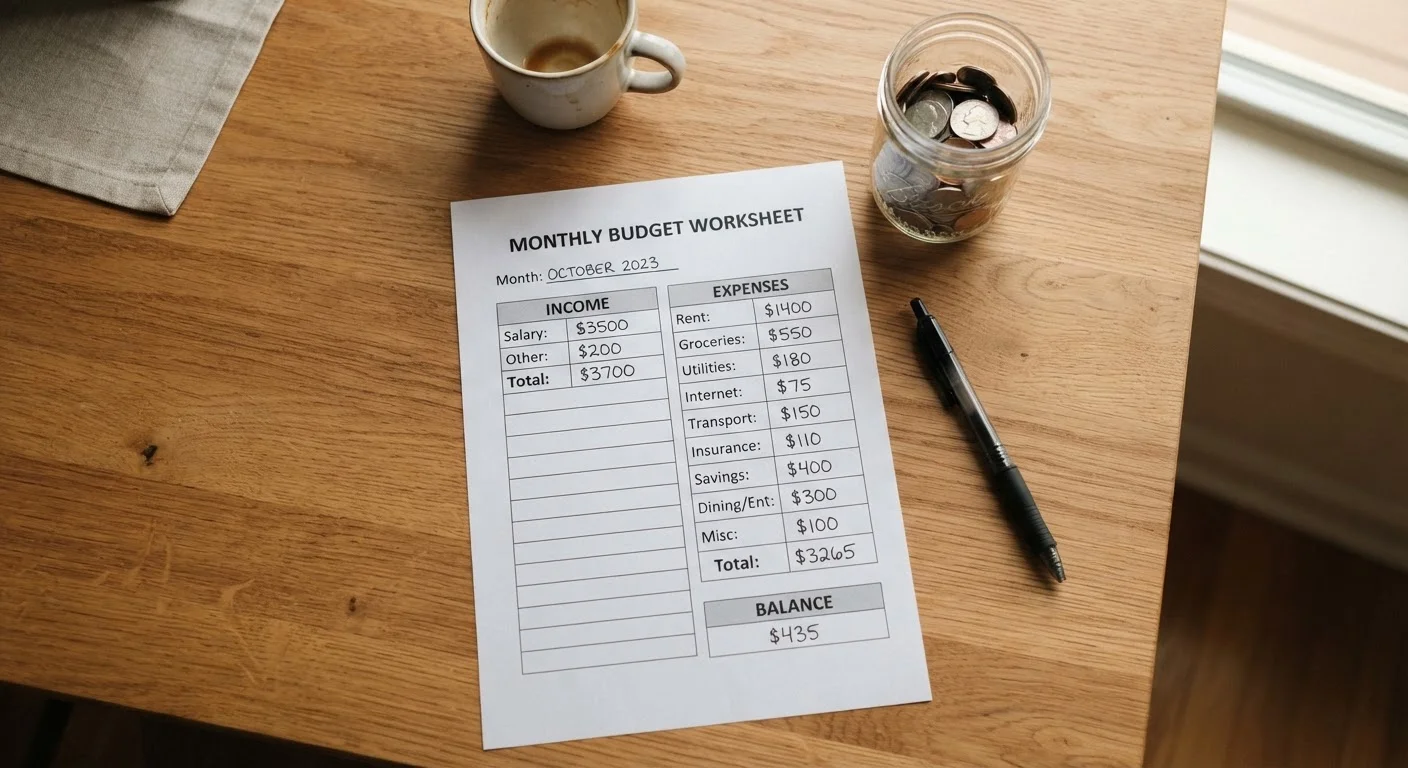
Start with a budget that reflects last month's actual spending, not an aspirational number.
Budgets built on wishful figures create instant failure. When your real grocery bill is $600 but you budget $300, you'll blow the category in two weeks and feel like the whole system doesn't work. Anchoring to actual history sets a realistic baseline you can then improve gradually.
Automate your savings transfer on payday, before you spend anything.
Saving what's left over at the end of the month rarely works because there's rarely anything left. Moving money to savings automatically — even a modest amount — removes the daily decision from the equation entirely.
Add a small 'buffer' category — roughly 3–5% of your monthly take-home — for unplanned but real expenses.
Every month has something unexpected: a parking ticket, a prescription, a birthday gift. Without a designated category, each surprise forces you to rob from another line item or give up on the budget entirely. A buffer absorbs the shock without breaking the structure.
Do a five-minute weekly check-in — not a full review, just a quick scan.
Budgets drift because people stop looking at them. A brief weekly glance catches overspending before it compounds into a problem. It also keeps the budget mentally present, which reduces impulsive spending throughout the week.
Choose a budgeting format you'll actually use, not the one that looks most thorough.
A detailed zero-based budget is powerful — if you'll maintain it. A simple spending cap by category is less precise but far better than an abandoned spreadsheet. Consistency beats complexity every time.
Quick Actions to Take Today
You don't need to overhaul everything at once. Pick one or two of these and do them now — small consistent moves build real staying power over time.
This article is for general informational and educational purposes only and does not constitute personalized financial advice. Consider speaking with a qualified financial professional for guidance specific to your situation.