

Key Takeaways
- Budgeting is useful at any income level, not just for people struggling with debt.
- A budget doesn't have to be rigid — it can flex as your spending habits and goals change.
- You don't need special software or financial expertise to build an effective budget.
- Irregular income makes budgeting more helpful, not less — it creates a framework for unpredictable months.
- Starting imperfectly is far more valuable than waiting until conditions feel ideal.
Why Myths About Budgeting Are So Sticky
Most people who don't have a budget aren't lazy or irresponsible — they're operating under a set of beliefs that make budgeting feel pointless, painful, or out of reach. These ideas get passed down through family, reinforced by pop culture, and hardened by a few bad early experiences. The result: millions of Americans put off one of the most reliable tools for financial stability.
The good news is that most budgeting myths fall apart quickly under scrutiny. The facts are more forgiving — and more practical — than the myths suggest. If you've been putting off building a budget, there's a reasonable chance one of the misconceptions below is part of why. Understanding what budgeting actually involves — versus what people assume it involves — is usually enough to get started.
For a no-jargon walkthrough once you're ready to act, see Building Your First Monthly Budget from Scratch.
Myth
Budgeting is only necessary if you're in debt or struggling financially.
Fact
Budgeting is a planning tool that helps anyone — at any income level — make intentional decisions about their money.
This is probably the most common reason people skip budgeting altogether: they think it's a rescue tool for financial emergencies, not a standard practice. In reality, a budget is simply a plan for your money. People with comfortable incomes who don't budget often find that lifestyle inflation quietly absorbs every raise — and they're no closer to their goals than they were years before. A budget isn't a sign of trouble. It's a sign of intention.
Myth
You need a high or steady income before a budget is worth making.
Fact
Irregular or limited income makes budgeting more useful, not less — it's the best tool for managing unpredictable cash flow.
Freelancers, gig workers, and anyone with variable paychecks often feel like a traditional budget won't work for them. But a budget built around your lowest expected monthly income — with a plan for what to do when you earn more — is exactly what makes inconsistent income manageable. Without a framework, low-income months tend to create debt that high-income months have to undo. A flexible budget breaks that cycle.
Myth
Budgeting means you can't spend money on things you enjoy.
Fact
A good budget explicitly includes spending on things that matter to you — that's the entire point of planning ahead.
The deprivation framing is one of the biggest reasons budgets get abandoned. When people think budgeting means cutting everything enjoyable, they either refuse to start or give up the moment they spend on something fun. In practice, budgets work best when they reflect real life — including dining out, hobbies, travel, or whatever spending genuinely adds value to your day. Allocating money for those things isn't failure; it's honest planning. See Making a Budget Actually Stick Past the First Week for more on building a plan you can live with.
Myth
Budgeting requires complex tools, spreadsheets, or financial know-how.
Fact
A pen, paper, and basic arithmetic are enough to build a functional budget — the tool matters far less than the habit.
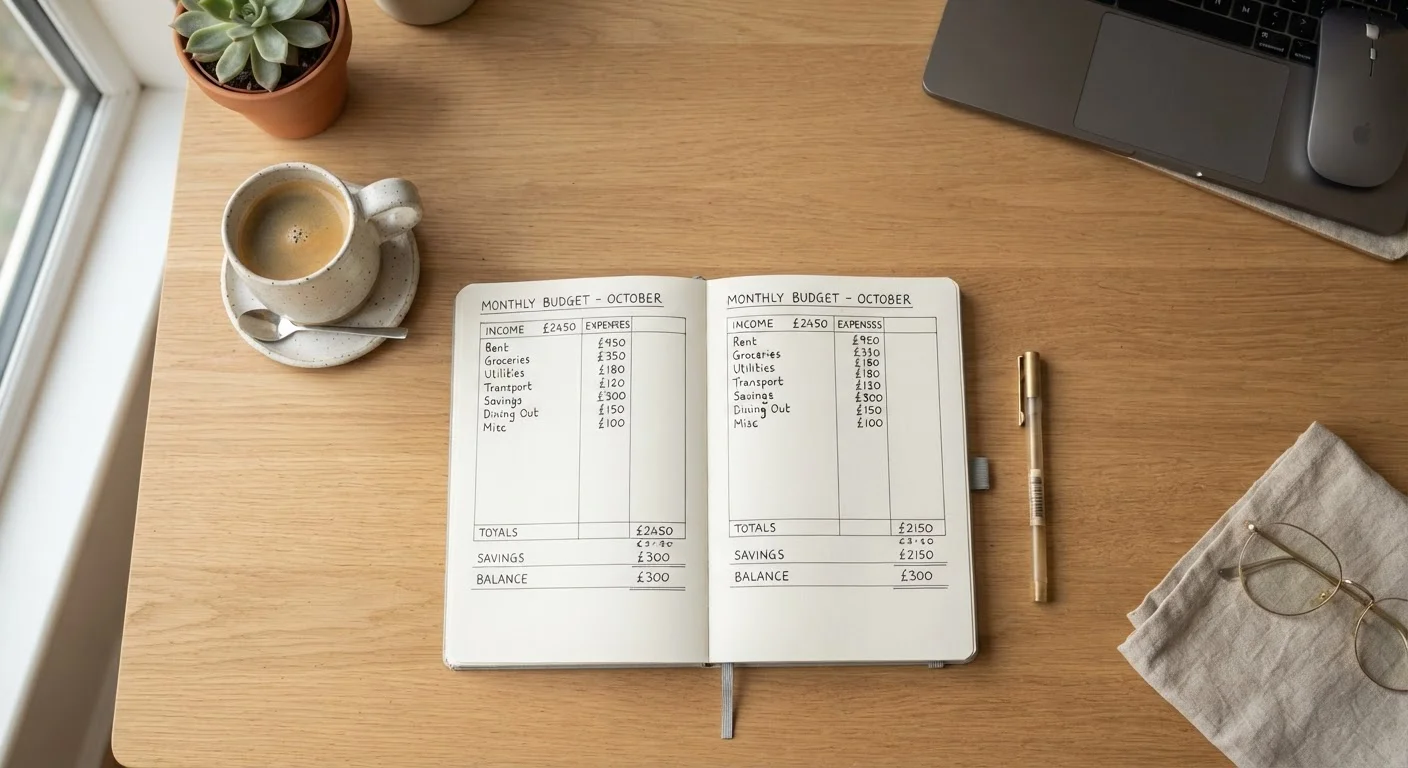
The personal finance industry has a vested interest in making budgeting feel complicated — it sells apps, courses, and software. But a workable budget can fit on a single notebook page. List what comes in, list what goes out, compare the two. From there, you adjust. The 50/30/20 guideline (roughly 50% to needs, 30% to wants, 20% to savings and debt) is one widely cited starting framework — simple enough to use without any special tools. The method matters far less than showing up consistently.
Myth
Once you make a budget, you have to stick to it exactly or it's failed.
Fact
Budgets are meant to be adjusted — a budget that gets revised is one that's actually being used.
Treating a budget as a rigid contract sets people up to quit the first time something unexpected happens — a car repair, a medical bill, a social event. Real budgets flex. Costs change, priorities shift, income fluctuates. The goal isn't to execute a perfect plan; it's to have a current, honest picture of your finances that you can make decisions from. Revising a budget mid-month isn't cheating. It's the practice working exactly as intended.
Myth
If you wait until your finances are more stable, budgeting will be easier to start.
Fact
Financial stability is typically the result of budgeting — not a prerequisite for it.
Waiting for the right conditions before starting a budget is one of the most common ways people stay stuck. The logic is understandable: things feel chaotic, so a system seems premature. But budgeting is the tool that creates order out of chaos. Starting with an imperfect, rough budget today is more valuable than waiting for a version of your finances that feels ready. If the whole picture feels overwhelming, Getting Started with Personal Finance When You Feel Behind offers a grounded place to begin from any starting point.
What Budgeting Actually Looks Like in Practice
The version of budgeting most people picture — rigid spreadsheets, obsessive receipt tracking, zero fun — bears little resemblance to what actually works for everyday households. Effective budgeting is mostly about awareness: knowing where your money goes, deciding in advance what matters, and catching problems before they become crises.
Even a rough budget — one that accounts for your major expenses and leaves some wiggle room — outperforms no budget at all. The point isn't perfection. It's giving your money a direction instead of wondering where it went at the end of the month.
An Imperfect Budget Beats No Budget
Many people delay starting because they're waiting to do it perfectly. But any budget — even a rough one — gives you more clarity and control than none at all. You don't need every expense categorized or every dollar accounted for on day one. Start with what you know and refine from there.
If you share finances with a partner, the same principles apply — though aligning on priorities takes an extra layer of communication. Budgeting as a household covers practical approaches when two people have different money habits.
And if a budget has slipped away from you before, that's common — Why Budgets Fall Apart breaks down the most common failure points and what to do differently.
This article is for general informational and educational purposes only and does not constitute personalized financial advice. For guidance specific to your financial situation, consider consulting a qualified financial professional.