

Key Takeaways
- Aggression in dogs is a behavior, not a personality trait — it almost always has an identifiable trigger.
- Veterinary behaviorists recognize several distinct types of aggression, each with different causes and management approaches.
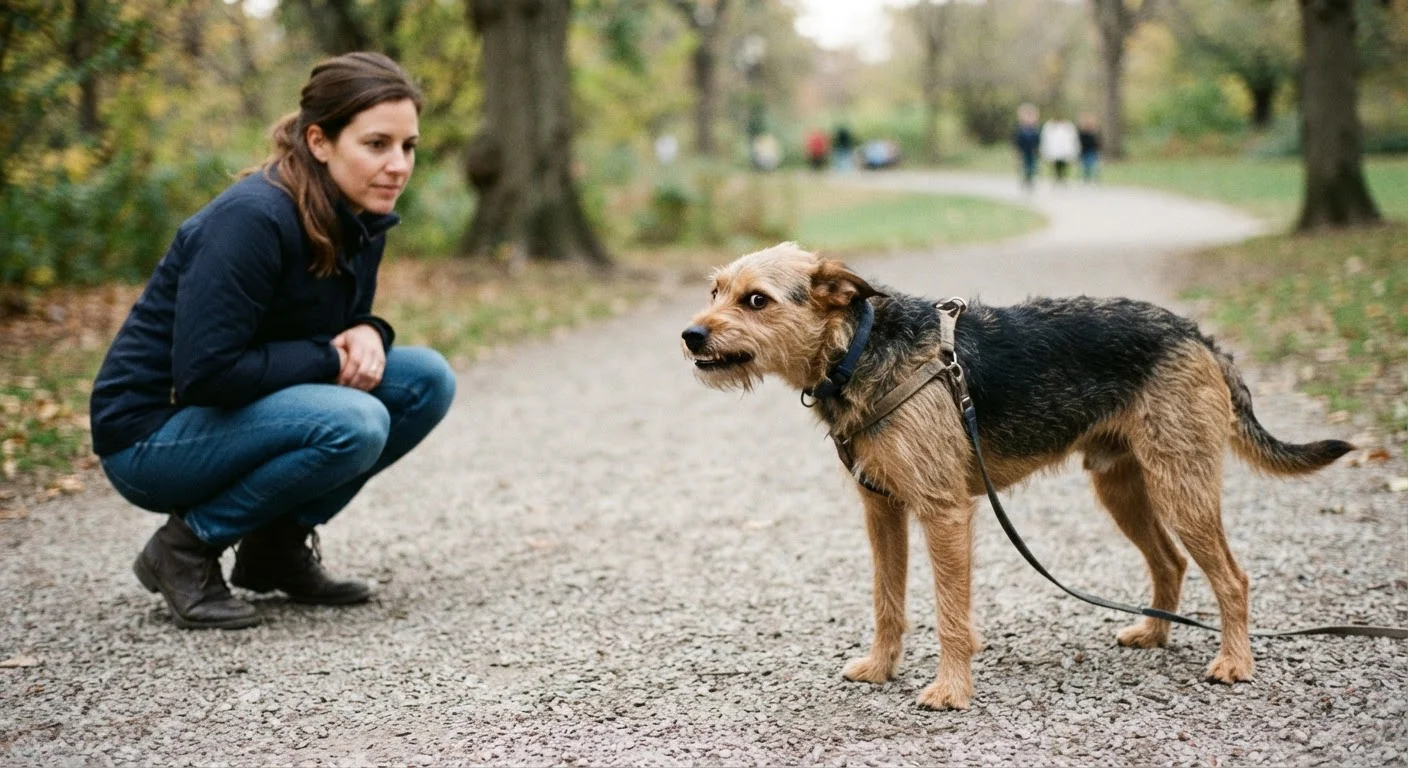
- Body language cues like stiffening, lip-lifting, and whale eye often precede a bite by several steps.
- Fear is the most common underlying driver of aggressive behavior in companion dogs.
- Professional help from a veterinary behaviorist or certified applied animal behaviorist is warranted when safety is at risk.
- Underlying medical conditions can cause or worsen aggression — a vet exam is always a sensible first step.
Start here
Why Aggression Is a Communication Problem, Not a Character Flaw
Next
The Main Types of Dog Aggression
Then
Common Triggers and What They Signal
Build on it
Reading the Warning Signs Before a Bite Occurs
When you're ready
When to Seek Professional Help
Why Aggression Is a Communication Problem, Not a Character Flaw
When a dog growls, snaps, or lunges, most owners feel a rush of alarm — and sometimes shame. It's easy to conclude that something is fundamentally broken in the dog. But veterinary behavioral science frames it differently: aggression is a behavior, not an identity. It is one of the few communication tools dogs have when they feel their options have run out.
Understanding this reframe matters because it changes what you look for and how you respond. A dog who growls when cornered is not a "bad dog" — it's a dog who is scared and telling you so. Suppressing that signal without addressing the underlying cause often makes the situation more dangerous, not less. Growling is part of a dog's warning system, and removing the warning does not remove the feeling behind it.
If you're also navigating stress-related behaviors more broadly, the signs your pet may be stressed guide covers the physical and behavioral cues that often show up before things escalate to aggression.
Aggression
A range of behaviors — including growling, snapping, and biting — that a dog uses to increase distance from a perceived threat or protect something it values. It is a behavioral response, not a fixed personality trait.
Resource guarding
Defensive behavior directed at anyone who approaches something the dog perceives as valuable, such as food, toys, or a favored resting spot.
Threshold
The point at which a dog's stress or arousal level crosses from manageable to reactive. Working 'below threshold' means keeping a dog calm enough to learn new responses to its triggers.
Displacement behavior
Low-level stress signals — like yawning, lip-licking, or sniffing the ground — that a dog performs when it feels conflicted or uncomfortable. Often an early sign that aggression may follow if the situation doesn't change.
Veterinary behaviorist
A licensed veterinarian who has completed advanced, board-certified specialty training in animal behavior. They can both diagnose behavioral conditions and prescribe medication when it is part of a treatment plan.
Behavior modification
A structured process of gradually changing a dog's emotional response and actions toward a trigger, typically using techniques like desensitization (slow, controlled exposure) and counter-conditioning (pairing the trigger with something positive).
The Main Types of Dog Aggression
Behavioral professionals typically categorize dog aggression by its context and function rather than by how it looks. Knowing which type you're dealing with helps identify the right approach.
- Fear-based aggression: The most common type. The dog perceives a threat — real or imagined — and chooses offense as a defense. It often appears after a dog has tried to escape or hide and been unable to do so.
- Resource guarding: Directed at anyone approaching food, toys, resting spots, or even a person the dog has bonded with. The dog is protecting something it values.
- Territorial aggression: Triggered by perceived intruders in the dog's defined space — the home, yard, or car. This is closely related to the instinct-driven behaviors explored in our article on territorial marking in dogs.
- Pain-elicited aggression: A dog in pain may bite when touched in a sensitive area, even by a trusted person. This is a reflex, not a learned behavior.
- Inter-dog aggression: Directed specifically at other dogs, whether familiar or unknown. Can be related to poor socialization, past negative experiences, or hormonal factors.
- Redirected aggression: Occurs when a dog is aroused or frustrated by one stimulus and directs aggression at something else — often a nearby person or animal — because the original target is inaccessible.
These categories can overlap. A dog may be both fearful and in pain, or territorial behavior may be amplified by underlying anxiety. For a deeper look at how anxiety feeds into many of these patterns, see our guide on anxiety in dogs and cats.
Common Triggers and What They Signal
Triggers are the specific situations or stimuli that reliably precede an aggressive response. Identifying them is one of the most useful things an owner can do, because patterns reveal motivation.
Keep a Trigger Log
When you notice an aggressive response, jot down the time, location, who or what was nearby, and what happened immediately before. After a few incidents, patterns often become clear — and that information is invaluable when you consult a professional. Even a simple notes app on your phone works well for this.
Common trigger categories include:
- Approach by strangers: Often signals fear or territorial behavior, particularly if the dog has had limited positive socialization experiences.
- Handling and grooming: Touching sensitive areas — ears, paws, mouth — can trigger fear or pain-elicited responses. This is especially worth noting in older dogs.
- Approaching food or objects: A reliable indicator of resource guarding. The dog may stiffen, freeze, or give a hard stare before escalating.
- Leash pressure: Leash reactivity is extremely common and often misread as aggression. Dogs on leash cannot retreat, so they may go on the offensive when another dog or person approaches. This is frequently frustration or fear rather than predatory intent.
- Loud noises or sudden movements: Startle responses can escalate quickly in already anxious dogs. Understanding why dogs bark at seemingly nothing can help owners spot this pattern early.
Reading the Warning Signs Before a Bite Occurs
Dogs rarely bite without warning — but the warning signals can be subtle and fast. Learning to read the escalation ladder helps owners intervene before the situation reaches a critical point.
The generally recognized sequence moves from low-level signals to high-intensity ones:
- Yawning, lip-licking, or looking away (displacement behaviors indicating discomfort)
- Body stiffening and a fixed, hard stare
- Whale eye (whites of the eyes visible)
- Growling or a low rumble
- Snarling — lip-lifting to expose teeth
- A snap or air bite (a final warning)
- A bite with contact
Many owners inadvertently punish early signals like growling, which teaches the dog to skip those steps. A dog that has learned its growl leads to punishment may go straight to a snap or bite without the preceding warning. This is why understanding the full communication chain matters so much.
Never Punish a Growl
It can be tempting to scold or correct a growling dog, but punishing this signal teaches the dog that warning you is not safe — so it may skip straight to snapping or biting next time. Instead, take the growl as important information: something about the situation needs to change. Safely increase distance between the dog and whatever triggered the response, then consult a professional about next steps.
When to Seek Professional Help
Not every growl requires specialist intervention — but certain situations call for professional assessment promptly. Seek qualified help if:
- Aggression has resulted in a bite that broke skin
- Your dog's triggers are unpredictable or appear to be escalating
- Children or vulnerable adults share the home with the dog
- The behavior began suddenly in a previously calm dog (rule out pain or illness with a vet exam first)
- You feel unsafe managing your dog in everyday situations
The right professional depends on the situation. A general veterinarian is the right first call — they can rule out medical causes and refer you onward. A board-certified veterinary behaviorist can diagnose behavioral conditions and, when appropriate, discuss medication as part of a broader plan. A certified applied animal behaviorist (CAAB) can design and oversee behavior modification programs.
Be cautious of trainers who promise quick fixes through punishment-based methods for aggression. Aversive techniques applied to a fearful or pain-driven dog can suppress warning signals while leaving the underlying problem — and the safety risk — unchanged. If your dog's aggression appears linked to anxiety when left alone, our article on separation anxiety in dogs may offer relevant context for that part of the picture.
This article is for general educational purposes only and does not constitute veterinary or behavioral advice. If your dog has shown aggressive behavior, please consult a licensed veterinarian or a credentialed animal behavior specialist for guidance tailored to your situation.