

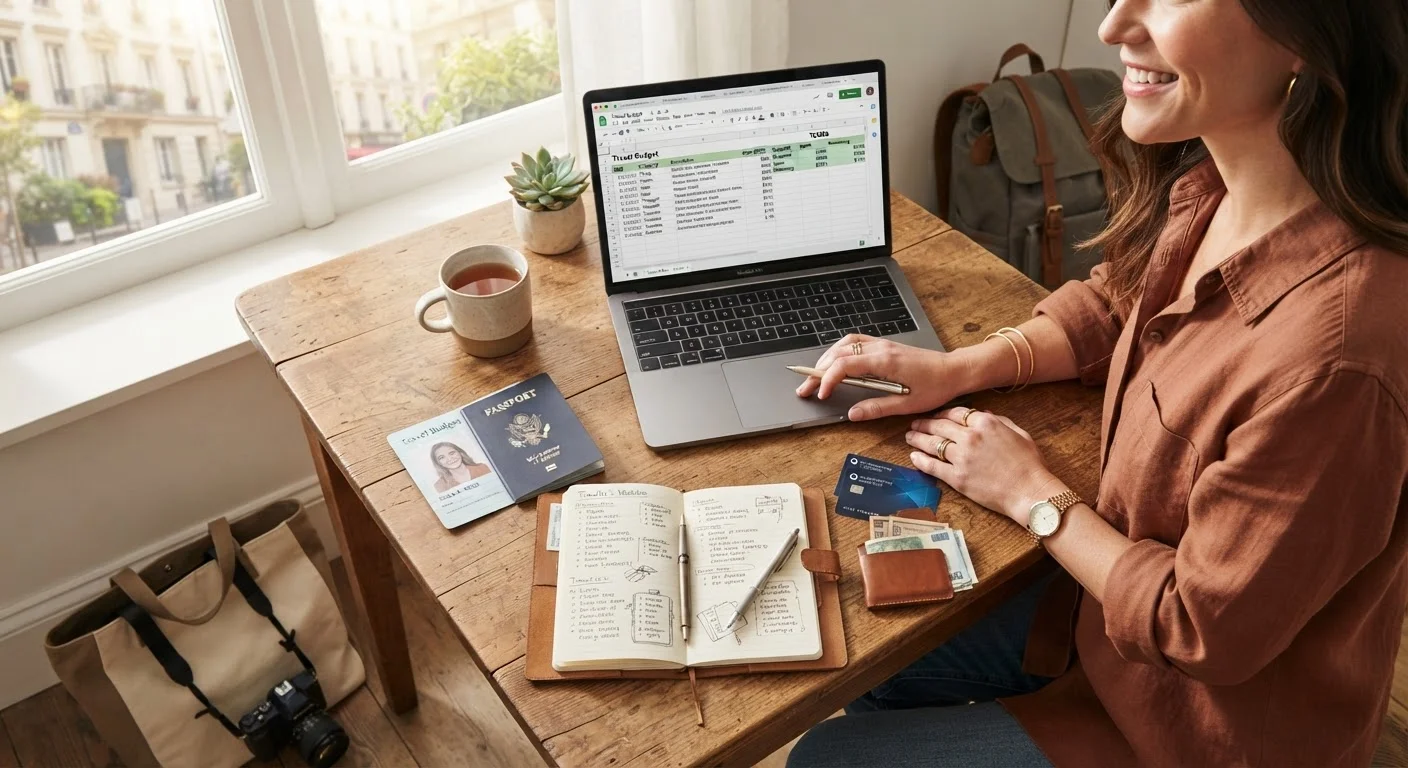
Key Takeaways
- Set a realistic total trip budget before booking anything, including hidden costs like fees and tips.
- Notify your bank and identify cards with no foreign transaction fees before departure.
- Establish a daily spending limit and track it in real time to avoid budget overruns.
- Evaluate travel insurance coverage relative to your trip's specific risks and costs.
- Keep emergency cash and a backup payment method separate from your primary wallet.
Summary
22 items · 30–60 minutes
Why Financial Prep Belongs at the Top of Your Pre-Trip List
Most travelers spend hours researching flights and hotels but only minutes — if that — thinking through the financial mechanics of their trip. That gap is where budgets quietly fall apart. Unexpected foreign transaction fees, ATM charges, resort fees, and tipping customs can add hundreds of dollars to a trip that looked affordable on paper.
This checklist is designed to close that gap. Work through it before you finalize any booking, not the night before you fly. The earlier you complete these steps, the more room you have to adjust your plans if the numbers don't add up. For a broader look at what travelers routinely forget to factor in, see The Real Cost of a Trip.
Budgeting Spreadsheet or App
Track your fixed and variable trip costs in one place, set a daily spending limit, and log actual expenses as you travel.
Currency Converter
Check live exchange rates before departure and at your destination so you can evaluate whether a conversion offer is fair.
Your Bank or Card Provider's App
Notify your bank of travel dates, review foreign transaction fees, check daily limits, and monitor transactions in real time.
Official Government Travel Site (travel.state.gov for US travelers)
Verify entry requirements, travel advisories, and any financial regulations applicable to your destination.
Trip-Planning Digital Tools
Itinerary builders and expense trackers help consolidate bookings and spending in one view; see our <a href="/travel-smarter/trip-planning/trip-planning-tools-worth-understanding">overview of trip-planning tools</a> for what each category is genuinely useful for.
The Financial Checklist: What to Verify Before You Book
Work through these items roughly in order — each group builds on the one before. If you're also coordinating logistics like itinerary and packing, the full pre-trip planning checklist covers those layers alongside these financial steps.
Set Your Total Budget
Cards, Bank Accounts, and Fees
Currency and Cash Planning
Travel Insurance Review
Hidden Costs and Booking Fine Print
Verify Insurance Terms Before You Need Them
Travel insurance is only useful if you understand what it actually covers before a problem occurs. Policies differ substantially on medical evacuation limits, trip cancellation triggers, and baggage reimbursement caps. Review the policy document — not just the marketing summary — and check for exclusions relevant to your itinerary. For a detailed breakdown of what coverage genuinely matters for budget travelers, see our guide on travel insurance on a budget.
Putting the Numbers Together Before You Commit
Once you've worked through the checklist, you should have a concrete total budget figure — not a rough guess. Add up your fixed costs (flights, accommodation, insurance) and your variable daily allowance, then multiply the latter by your trip length. If the total exceeds what you've saved or set aside, revisit the variable budget first before cutting fixed-cost items that may be harder to recover later.
For road trips within the US, fuel, lodging, and food each deserve their own line. The budget road trip planning guide walks through how to build that daily spending plan realistically. And for ongoing habits that keep your travel fund healthy between trips, the Everyday Money Moves hub is worth bookmarking.
Don't Rely on a Single Payment Method
Cards get frozen, lost, or demagnetized — often at the worst possible moment. Carrying only one form of payment abroad is a significant risk. Store a backup card and a small amount of emergency cash in a separate location from your primary wallet, and make sure at least one trusted contact at home knows how to reach you if you need funds transferred in an emergency.
This article is for general informational purposes only and does not constitute financial or travel advice. Verify entry requirements, insurance terms, and currency regulations with official sources before traveling.