

| Serpentine belt replacement interval | Typically 60,000-100,000 miles (Varies by manufacturer - check owner's manual) |
| Timing belt replacement interval | Commonly 60,000-105,000 miles (Varies significantly by vehicle make and model) |
| PCV valve replacement cost | Generally $20-$75 parts and labor (General estimate; prices vary by region and vehicle) |
| Coolant flush interval | Every 30,000-50,000 miles or 3-5 years (Consult your vehicle's owner's manual for exact specification) |
| CV joint warning sign | Clicking or popping during tight turns (Common industry indicator of CV joint wear) |
Why This Vocabulary Matters
When a mechanic says your serpentine belt is cracking or your PCV valve is clogged, do you know whether that's a $30 fix or a $300 one? Understanding basic engine and drivetrain terminology puts you in a far stronger position - whether you're approving a repair estimate, diagnosing a warning light, or simply following along with a service advisor's explanation.
This reference covers the terms that come up most in everyday shop conversations. It's not a repair manual - some of these jobs belong with a qualified mechanic - but knowing the language means you're never entirely in the dark. For a broader look at what your vehicle actually needs and when, see the maintenance schedule most drivers quietly ignore.
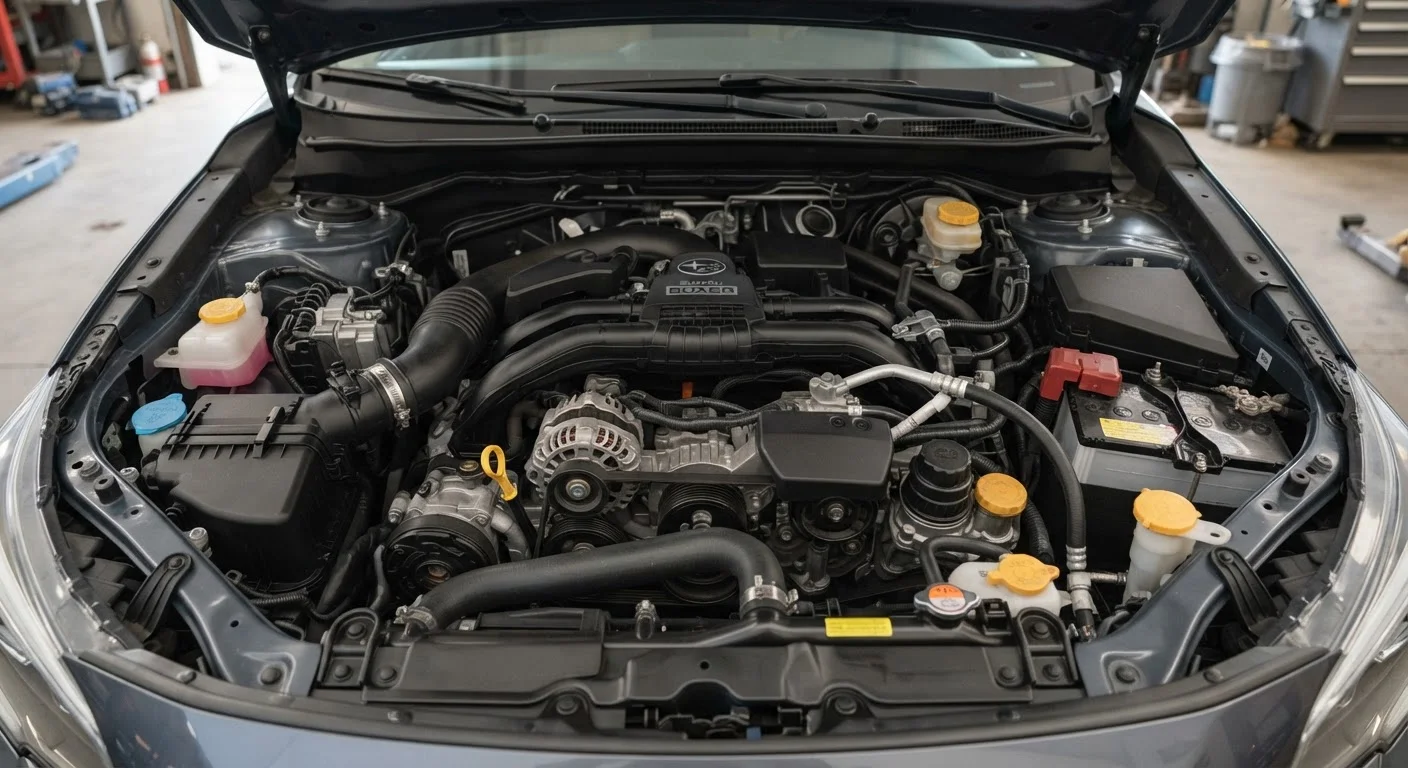
Alternator
An electrical generator driven by the engine that recharges the battery and supplies power to the vehicle's electrical systems while the engine is running.
Serpentine Belt
A single continuous drive belt that powers multiple engine accessories, including the alternator and air conditioning compressor. Replacement intervals vary by vehicle but are typically 60,000-100,000 miles.
Timing Belt
A rubber belt that synchronizes the rotation of the crankshaft and camshaft, ensuring valves open and close at the right time. It has a strict manufacturer-set replacement interval.
PCV Valve
The Positive Crankcase Ventilation valve redirects combustion gases from the crankcase back into the intake manifold. A failed PCV valve can cause oil leaks and rough engine operation.
Coolant
A fluid - typically a mix of antifreeze and distilled water - that circulates through the engine and radiator to regulate operating temperature and prevent freezing or boiling.
CV Joint
A Constant Velocity joint transfers drivetrain power to the wheels while accommodating suspension travel. Clicking sounds during turns are a common sign of wear.
Differential
A gear assembly that allows wheels on the same axle to spin at different speeds, which is necessary when cornering. It contains fluid that requires periodic replacement.
Thermostat
A temperature-controlled valve in the cooling system that regulates coolant flow to the radiator, helping the engine reach and maintain its optimal operating temperature.
Engine and Electrical Terms
The terms below describe components that keep your engine running and powered. Most appear on a standard inspection checklist.
| Serpentine belt replacement interval | Typically 60,000-100,000 miles (Varies by manufacturer - check owner's manual) |
| Timing belt replacement interval | Commonly 60,000-105,000 miles (Varies significantly by vehicle make and model) |
| PCV valve replacement cost | Generally $20-$75 parts and labor (General estimate; prices vary by region and vehicle) |
| Coolant flush interval | Every 30,000-50,000 miles or 3-5 years (Consult your vehicle's owner's manual for exact specification) |
| CV joint warning sign | Clicking or popping during tight turns (Common industry indicator of CV joint wear) |
Alternator
The alternator generates electricity while the engine runs, recharging the battery and powering accessories like headlights and the climate system. A failing alternator typically triggers a battery warning light. It is not the same as the battery - the battery starts the engine; the alternator sustains electrical output while driving.
Serpentine Belt
A single, continuous belt that drives multiple accessories - alternator, power steering pump, air conditioning compressor, and sometimes the water pump. Most manufacturers recommend inspection every 60,000-100,000 miles. A snapped serpentine belt can disable power steering and trigger rapid engine overheating.
Timing Belt / Timing Chain
These synchronize the crankshaft and camshaft so the engine's valves open and close at the correct moment. Timing belts are rubber and have a finite replacement interval (commonly 60,000-105,000 miles depending on the vehicle); timing chains are metal and generally last longer, though not indefinitely. Failure of either can cause significant internal engine damage.
PCV Valve (Positive Crankcase Ventilation)
A small valve that routes combustion gases from the engine crankcase back into the intake manifold to be burned rather than released as emissions. A stuck or clogged PCV valve can cause oil leaks, rough idle, or increased oil consumption. It is typically an inexpensive part to replace.
Throttle Body
Controls the amount of air entering the engine. Carbon buildup over time can cause rough idling or hesitation on acceleration. Cleaning the throttle body is a relatively routine service item.
Cooling, Fluids, and Drivetrain Terms
These components manage engine temperature and transfer power to the wheels - two systems where early diagnosis prevents costly failures.
Coolant (Antifreeze)
A fluid circulating through the engine and radiator that regulates operating temperature. Low or degraded coolant can cause overheating. Most manufacturers recommend a flush at specific mileage intervals; check your owner's manual for the correct type, since mixing coolant formulas can cause damage.
Radiator
The heat exchanger that dissipates engine heat by passing coolant through thin metal fins exposed to airflow. A leaking or clogged radiator leads to overheating; this is a job for a qualified technician.
Thermostat
A valve in the cooling system that opens once the engine reaches operating temperature, allowing coolant to circulate through the radiator. A stuck-closed thermostat causes rapid overheating; a stuck-open thermostat keeps the engine running too cold, hurting fuel efficiency.
CV Joint (Constant Velocity Joint)
Found on front-wheel-drive and many all-wheel-drive vehicles, CV joints transfer power from the transmission to the wheels while accommodating suspension movement. A failing CV joint often produces a clicking or popping sound during tight turns. The protective rubber boot around each joint should be inspected for cracks at every oil change.
Differential
A gear system that allows wheels on the same axle to rotate at different speeds during turns. Rear-wheel-drive vehicles have a rear differential; some all-wheel-drive vehicles have front, rear, and center differentials. Differential fluid needs periodic replacement - intervals vary by vehicle and driving conditions.
For drivers building foundational knowledge, car maintenance habits for new drivers pairs well with this reference as a practical next step.