

Key Takeaways
- Your owner's manual sets the authoritative maintenance schedule - manufacturer recommendations override generic timelines.
- Several high-impact services, including transmission fluid and timing belt replacement, are routinely skipped until failure occurs.
- Deferred maintenance compounds costs: a $150 service skipped today can become a $1,500 repair within months.
- Mileage and time both trigger service intervals - whichever comes first applies.
- A simple log of completed services protects resale value and helps identify patterns before they become problems.
Why Most Drivers Fall Behind
Routine maintenance rarely feels urgent. The car starts, it drives, nothing obvious is wrong - so the schedule slips. This is the central trap most vehicle owners fall into: deferring service until something breaks rather than acting on mileage milestones.
Part of the problem is information overload. Generic advice online often conflicts with what your specific vehicle actually needs, and quick-lube shops sometimes push services on timelines that don't match manufacturer guidance. The result is confusion, and confused drivers tend to do nothing.
The fix is simpler than most people expect: your owner's manual already contains a complete, model-specific maintenance schedule. If yours is missing, the manufacturer's website or a dealership service department can provide it. Everything else in this guide is meant to help you interpret and act on that schedule - not replace it. For drivers still building these habits, this practical introduction to vehicle upkeep covers the fundamentals of what to check and when.
The Mileage-by-Mileage Breakdown
While exact intervals vary by make, model, and driving conditions, the following framework reflects broadly accepted industry guidance. Always cross-reference with your owner's manual.
Every 5,000-7,500 Miles
- Engine oil and filter: Conventional oil typically needs changing every 5,000 miles; many modern synthetic formulations extend that to 7,500 miles or beyond. Check your manual - not the sticker from your last oil change.
- Tire rotation: Rotating tires evenly distributes wear and extends their usable life significantly.
- Visual fluid checks: Brake fluid, coolant, power steering fluid, and windshield washer fluid. See this walkthrough on checking your fluids for what healthy fluid looks like.
Every 15,000-30,000 Miles
- Air filter (engine): A clogged filter reduces fuel efficiency and engine performance.
- Cabin air filter: Often overlooked, this filter affects interior air quality and HVAC performance.
- Brake inspection: Pads, rotors, and lines should be assessed by a qualified mechanic at this interval.
Every 30,000-60,000 Miles
- Transmission fluid: One of the most commonly skipped services - covered in detail below.
- Coolant flush: Degraded coolant becomes acidic and can corrode cooling system components.
- Spark plugs: Standard plugs typically need replacement around 30,000 miles; iridium or platinum plugs may last up to 100,000 miles.
Every 60,000-100,000 Miles
- Timing belt: Failure can cause catastrophic engine damage. Some vehicles use a timing chain instead - confirm which your model has.
- Brake fluid flush: Moisture absorption over time lowers the fluid's boiling point, reducing braking effectiveness.
- Drive belts and hoses: Inspect for cracking, fraying, or softening.
$1,200+
Average cost of a neglected transmission repair
Industry estimates from ASE-certified repair facilities place automatic transmission rebuilds or replacements commonly between $1,200 and $4,000 depending on vehicle type.
30%
Drivers unaware of their oil change interval
Consumer surveys by automotive research organizations have consistently found a significant share of drivers unsure whether their vehicle uses conventional or synthetic oil intervals.
60,000-100,000 mi
Typical timing belt replacement window
Most manufacturers specify timing belt replacement within this mileage range; consult your owner's manual for the exact interval for your vehicle.
The Services People Skip Most Often
Three services consistently fall through the cracks - not because drivers are careless, but because the consequences of skipping them aren't immediately visible.
Transmission Fluid
Transmission fluid lubricates and cools one of your vehicle's most complex and expensive assemblies. Degraded fluid causes internal wear that accumulates silently. Many drivers only learn about this service when a transmission begins slipping - at which point repair costs can run into the thousands. Depending on the vehicle, the interval ranges from 30,000 to 60,000 miles for automatic transmissions under normal driving conditions; severe driving (towing, frequent stop-and-go traffic) shortens that window.
Timing Belt Replacement
This is the highest-stakes item on most maintenance schedules. If a timing belt snaps on an interference engine - the type where pistons and valves occupy overlapping space - the result is typically bent valves and serious internal engine damage. Replacement typically runs $500-$1,000, but the repair that follows belt failure can cost several times that. Check your manual for the specific interval; many fall between 60,000 and 100,000 miles.
Brake Fluid
Brake fluid is hygroscopic, meaning it absorbs moisture from the air over time. As water content rises, the fluid's boiling point drops - which can cause brake fade under hard braking. This service is inexpensive and takes less than an hour, yet it's frequently absent from many drivers' maintenance records.
When in doubt about a fluid change interval, drain a small sample and compare it to the new fluid's color and clarity. Dark, gritty, or milky fluid means it's already overdue.
Visual inspection of fluid condition is a fast, zero-cost indicator that gives you real information rather than relying solely on mileage estimates, which vary based on driving conditions.
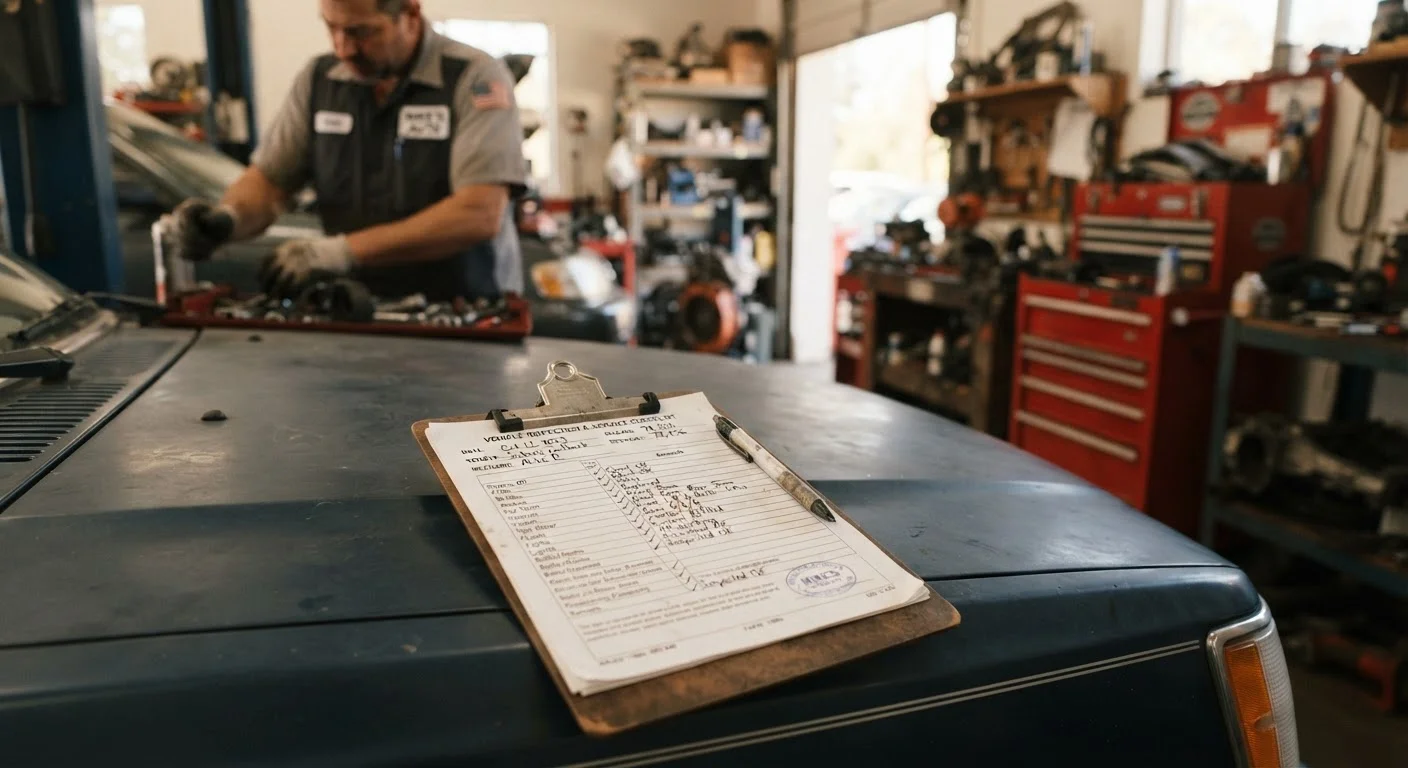
Ask your mechanic to perform a multi-point inspection at every oil change - most will do this at no extra charge - and keep the written report. It creates a paper trail of what was checked and when.
Documented inspections help you track gradual wear trends and provide evidence of diligent maintenance if a warranty claim or resale negotiation ever comes into question.
What Neglect Actually Costs
Deferred maintenance rarely saves money - it shifts costs forward while adding interest in the form of collateral damage. A straightforward example: neglecting coolant flushes over time can lead to a corroded water pump or a damaged radiator. Replacing those components costs significantly more than the flush would have.
What happens inside an engine when oil changes are skipped illustrates the cumulative nature of this damage at a chemical level. The same principle applies across the schedule: small, affordable services prevent large, expensive failures.
There are also indirect costs. Vehicles with documented maintenance histories command stronger resale or trade-in values. Missing service records - or records with large gaps - give buyers and dealers reason to reduce their offer. The real cost of car ownership extends well beyond the purchase price, and maintenance is one of the most controllable variables in that equation. If you want a fuller picture of expenses that tend to catch owners off guard, this overview of overlooked car costs is worth reviewing.
Building a Schedule That Sticks
Consistency matters more than perfection. A few habits make it significantly easier to stay current:
- Use both triggers - mileage and time. Some fluids and components degrade with age regardless of miles driven. Whichever milestone arrives first is the relevant one.
- Keep a simple service log. A notes app, a glove-box notebook, or a free mileage-tracking app all work. Record the date, mileage, and service performed each time. This log also protects you if a warranty dispute arises.
- Set calendar reminders. If you drive roughly 12,000-15,000 miles per year, a 5,000-mile oil change interval means service roughly every four months. Set a recurring reminder so the interval doesn't sneak up on you.
- Know which jobs you can handle. Cabin air filter swaps and visual fluid checks are within reach for most drivers. Brake work, timing belts, and transmission service require a qualified mechanic. Understanding the line between DIY and professional service helps you make that call confidently.
For drivers approaching higher mileage, the maintenance picture changes somewhat - certain components deserve more frequent attention and others can be evaluated based on condition rather than fixed intervals. Keeping a vehicle running reliably past 150,000 miles covers those adjustments in detail.
Understanding what's under the hood also helps you have more productive conversations with your mechanic. A plain-language glossary of common engine and drivetrain terms is a useful starting point if terms like serpentine belt or PCV valve are unfamiliar.