

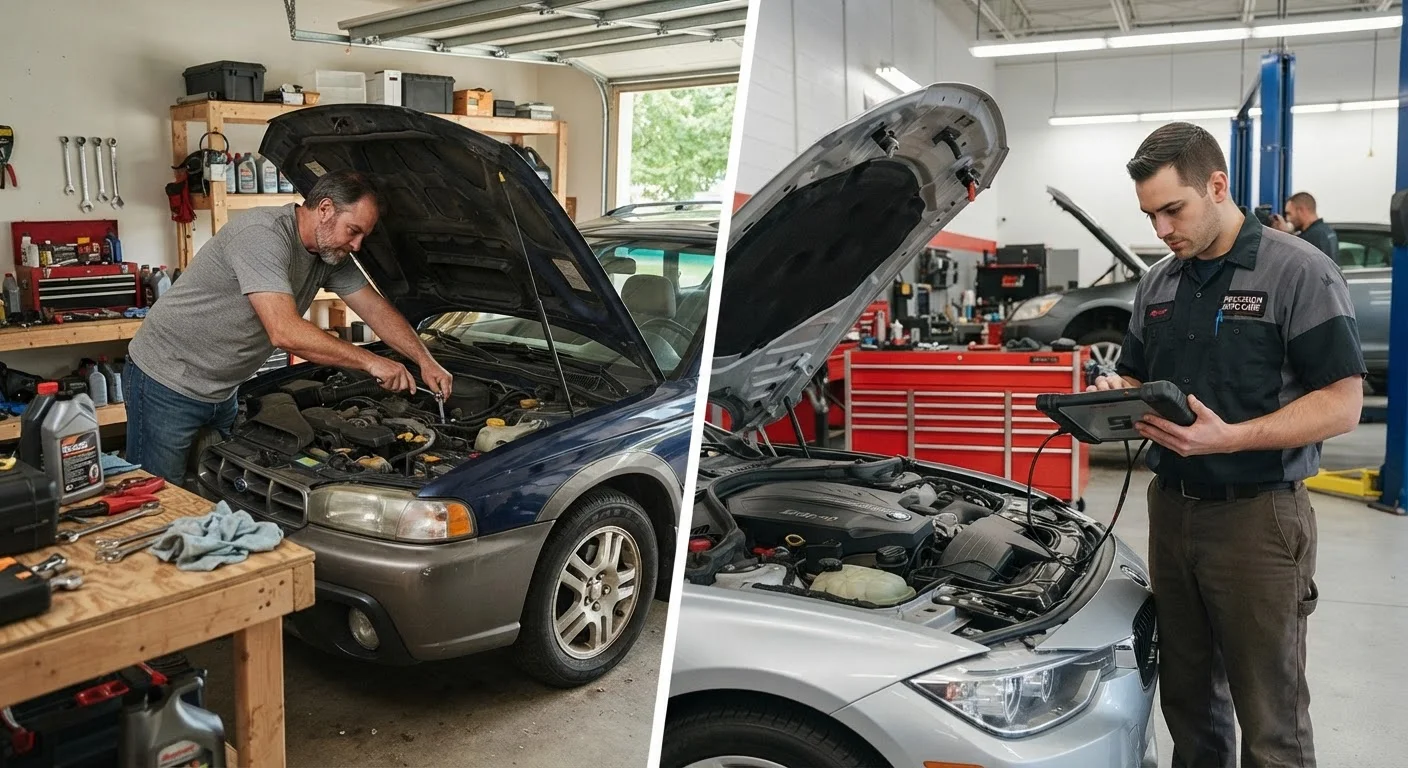
Key Takeaways
- Routine tasks like oil changes, air filters, and wiper blades are manageable for most home mechanics with basic tools.
- Brake system work, suspension repairs, and anything involving airbags should go to a qualified mechanic.
- DIY saves money on labor but carries real costs if a mistake causes vehicle damage or a safety failure.
- Your owner's manual is the most reliable guide for service intervals and fluid specifications.
- When in doubt, a diagnostic inspection at a shop is a low-cost way to confirm what actually needs fixing.
Our Verdict
DIY maintenance is genuinely worthwhile for straightforward, low-risk tasks where the consequences of a misstep are minor. Professional service is the right call whenever safety systems, complex diagnostics, or specialized tools are involved. Most drivers will save the most money-and avoid the most headaches-by learning to do the simple jobs themselves while building a relationship with a trustworthy shop for everything else.
| Best for | Recommended |
|---|---|
| Cost-conscious drivers comfortable with basic tools | DIY maintenance for routine tasks |
| Those who drive older, high-mileage vehicles regularly | Mix of DIY basics and professional inspections |
| Anyone dealing with brake, suspension, or electrical issues | Professional shop service |
| New vehicle owners within the warranty period | Professional shop service to protect warranty coverage |
The Core Question: Risk, Skill, and Consequences
The DIY-vs.-shop decision isn't really about pride or saving a few dollars - it's about honestly matching a job's complexity and safety stakes to your current skill level and available tools. Two factors matter most: what happens if something goes wrong, and what tools and knowledge the job actually requires.
A poorly installed cabin air filter is annoying but harmless. A brake caliper bolted incorrectly can cause brake failure at highway speed. That gap in consequence is what should drive your decision-making, not the difficulty of the task alone.
For a structured overview of what fits each category, see
| Task | DIY Feasibility | Safety Stakes | Special Tools Needed | Recommended Approach | |
|---|---|---|---|---|---|
| Oil & filter change | High | Low | Basic only | DIY | |
| Air filter (engine/cabin) | Very high | Very low | None | DIY | |
| Wiper blade replacement | Very high | Very low | None | DIY | |
| Brake pad replacement | Moderate | High | Torque wrench required | Shop recommended | |
| Timing belt/chain service | Low | Very high | Specialized tools required | Shop only | |
| Suspension components | Low | High | Alignment equipment needed | Shop only | |
| Battery replacement | High | Low-moderate | Basic only | DIY (check manual first) | |
| Airbag system work | Very low | Very high | Specialized equipment | Shop only |
If you're newer to vehicle ownership, building good maintenance habits early is the foundation everything else rests on.
Jobs That Suit a Home Mechanic
Several common maintenance tasks are well within reach for someone with basic mechanical aptitude, a few hand tools, and patience to follow instructions carefully.
- Engine air filter replacement: Usually a matter of unclipping a housing and swapping the filter. Your owner's manual specifies the correct part and interval.
- Windshield wiper blades: Most designs require no tools and take under five minutes per blade.
- Cabin air filter: Typically accessible behind the glove box or under the dashboard. Replacement requires no special tools in most vehicles.
- Oil and filter changes: Achievable at home with the right drain pan, oil filter wrench, and correct oil specification. Understand that used oil requires proper disposal - many auto parts retailers accept it.
- Battery replacement: Straightforward on most vehicles, though some newer cars with battery management systems may require a reset procedure. Check your manual first.
- Light bulb replacement: Exterior bulbs on many vehicles are DIY-friendly, though some modern headlight assemblies require partial disassembly that makes shop service more practical.
Following your vehicle's actual maintenance schedule ensures these routine jobs get done at the right intervals rather than by guesswork.
Start With Your Owner's Manual
Before attempting any maintenance task, check your owner's manual for the correct fluid specifications, torque values, and service intervals. Manufacturer specifications override generic advice found online. Many manuals are also available as free PDF downloads from manufacturer websites if you don't have a physical copy.
Jobs That Belong in a Professional Shop
Some tasks carry safety consequences serious enough that they warrant professional handling regardless of your confidence level.
- Brake system work: Pad replacement is often cited as a DIY-friendly task, but caliper condition, rotor thickness, and hydraulic integrity require accurate assessment. A mistake here is a safety failure, not a mechanical inconvenience.
- Suspension and steering components: Worn ball joints, tie rods, or control arm bushings affect vehicle handling directly. Improper torque on these components can cause loss of control.
- Airbag and supplemental restraint systems: These systems store electrical charge even with the battery disconnected. Work on them without the right training and equipment poses a genuine injury risk.
- Timing belt or chain service: Engine damage from an incorrectly installed timing component can be catastrophic and expensive. This is a job where specialized tools and knowledge are non-negotiable.
- Diagnostic trouble codes beyond simple fixes: A scan tool can read a code, but interpreting what's actually causing it often requires live data analysis and component testing that goes beyond consumer-grade tools.
For high-mileage vehicles, the calculus changes slightly - knowing which repairs are worth prioritizing on an aging car helps you spend wisely rather than reactively.
Warranty Implications to Know
If your vehicle is still under a manufacturer or extended warranty, some repairs must be performed by a certified facility to preserve coverage. DIY maintenance is generally protected under the Magnuson-Moss Warranty Act - meaning a dealer cannot void your warranty solely because you changed your own oil - but repair work done incorrectly that causes further damage may not be covered. When in doubt, check your warranty terms before proceeding.
Honest Cost Accounting
DIY maintenance genuinely saves money on labor - shop labor rates in the US typically run between $80 and $150 per hour depending on location and shop type. An oil change that costs $12 in materials can cost $60 to $90 at a shop. Over a year, that gap adds up.
But DIY carries its own costs. Tools are a real upfront investment. A mistake that damages a part - or requires a shop to redo the work - can erase months of savings. And time is a genuine cost: a first-time oil change can take two hours; a shop does it in 20 minutes.
The practical middle ground for many drivers: do the routine, low-risk tasks at home, and use a trusted shop for anything involving safety systems or specialized diagnostics. Understanding what your engine actually needs in terms of oil type is a good example of knowledge that makes DIY oil changes more confident and accurate.
Also worth knowing: tire rotation, balancing, and alignment are three distinct services - and alignment in particular requires shop equipment that can't be replicated at home.