

Key Takeaways
- Road rage is a criminal offense in most US states, not just a traffic violation.
- Common triggers include running late, anonymity behind the wheel, and perceived disrespect from other drivers.
- Most incidents escalate from minor traffic conflicts that neither driver intended as aggressive.
- The safest response to road rage is disengagement - do not make eye contact or retaliate.
- Defensive driving habits significantly reduce your likelihood of becoming a trigger for others.
Road Rage
Road rage is aggressive or violent behavior by a driver directed at another road user, triggered by traffic conflict or frustration. It goes beyond ordinary irritation to include deliberate actions like tailgating, cutting off, yelling, threatening gestures, or in extreme cases, physical confrontation. It is distinct from general aggressive driving, which refers to risky behavior without a specific target.
The NHTSA distinguishes aggressive driving (a traffic offense) from road rage (a criminal offense), though the two frequently escalate from one to the other.
What Actually Triggers Road Rage
Road rage rarely erupts from a single dramatic event. Most incidents trace back to a stack of smaller stressors that ignite when one driver perceives a slight from another. Understanding those triggers is the first step toward defusing them.
The most common psychological drivers include:
- Running late: Time pressure narrows attention and lowers frustration tolerance. A driver already stressed about being late will interpret a slow merge as a personal attack rather than ordinary traffic flow.
- Anonymity: Inside a vehicle, people feel separated from normal social consequences. Behavior that would never occur face-to-face - honking, obscene gestures, aggressive tailgating - feels easier when buffered by steel and glass.
- Perceived disrespect: Cutting someone off, even accidentally, is often read as intentional. Humans are hardwired to detect threats, and traffic conflicts can trigger the same defensive response as interpersonal confrontation.
- Accumulated stress: Workplace pressure, sleep deprivation, and personal conflict don't stay parked in the driveway. Drivers carry emotional loads onto the road, and minor friction becomes the final straw.
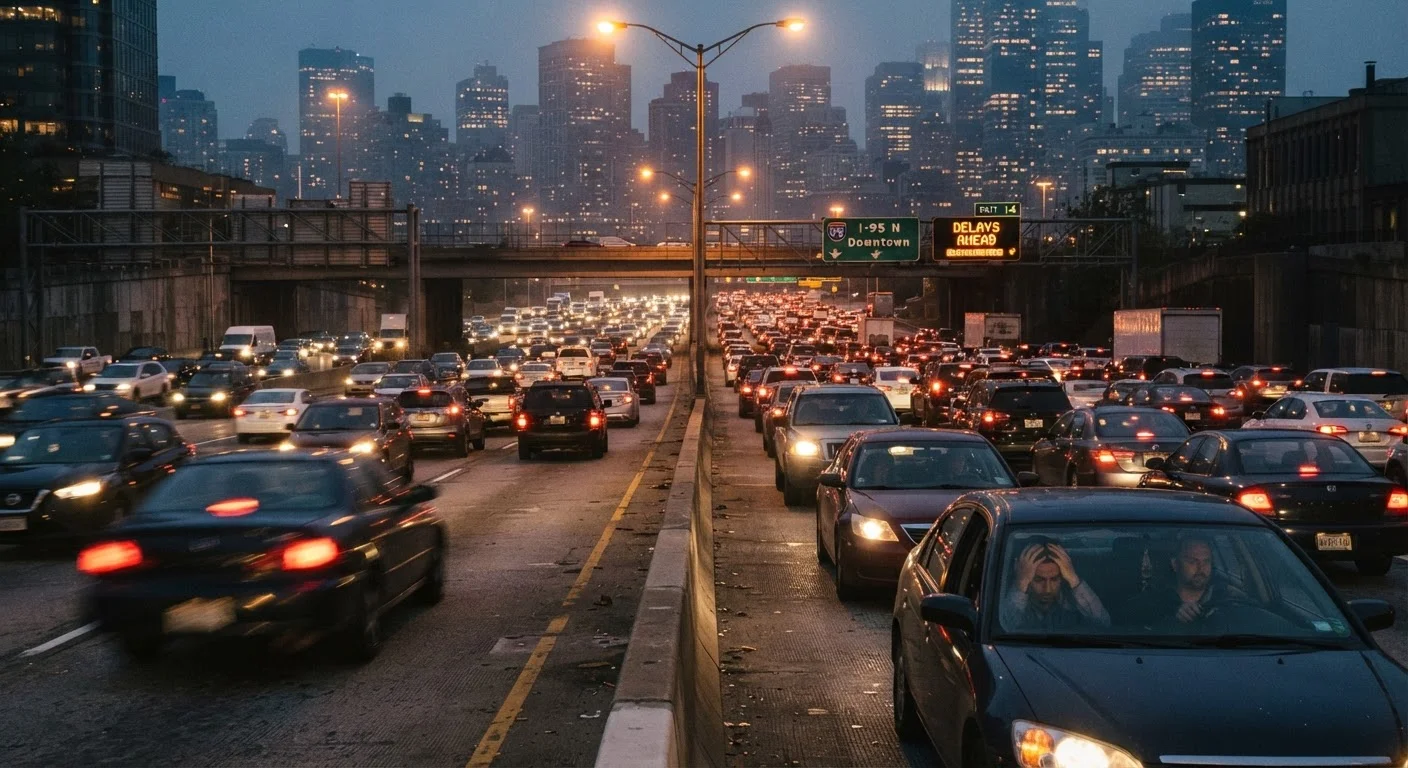
External conditions amplify all of these. Heavy congestion, construction delays, and poor weather conditions increase baseline tension for everyone on the road. Understanding how environment shapes behavior is part of driving safely in challenging conditions.
Road Rage vs. Aggressive Driving
These terms are often used interchangeably, but they carry different legal weight. Aggressive driving is generally a traffic offense - things like speeding, unsafe following distance, or improper lane changes. Road rage, by contrast, involves intent to intimidate or harm another person and is typically prosecuted as a criminal matter. The distinction matters if you're ever involved in an incident or filing a report.
The Real Costs of Road Rage
Road rage carries consequences that extend well beyond a heated moment on the highway.
~80%
US drivers who have expressed road rage
According to AAA Foundation for Traffic Safety research, roughly 80% of drivers admit to aggressive driving behaviors at least once in a given year.
30+
Deaths attributed to road rage annually
The National Highway Traffic Safety Administration has documented fatal crashes in which road rage was cited as a contributing factor each year.
37%
Road rage incidents involving a firearm
Everytown for Gun Safety has reported that more than a third of road rage incidents in the US involve the presence or use of a gun.
Physical danger: Incidents can escalate to vehicular assault or firearm use. The Gun Violence Archive has tracked hundreds of road rage shootings annually in recent years. Even a non-violent confrontation - two drivers getting out of their cars - creates immediate risk on a live roadway.
Legal exposure: Most states treat road rage behavior as a criminal offense. Assault, reckless endangerment, and in some cases, attempted murder charges have been applied to road rage incidents. Convictions carry fines, license suspension, and potential prison time.
Financial fallout: Any collision resulting from road rage can be ruled at-fault, which affects your insurance premiums. A criminal conviction may further limit your coverage options. The downstream costs - legal fees, higher premiums, civil liability - can far exceed anything that seemed worth the confrontation in the moment.
Psychological impact: Being the target of road rage is genuinely frightening. Witnesses - including children in the vehicle - can experience lasting anxiety. The aggressor may also face emotional consequences: guilt, shame, or a damaged sense of self-control.
How to Stay Out of Road Rage - As a Target and a Trigger
Staying safe on the road means managing your own behavior as carefully as you respond to others'.
If you're on the receiving end
- Don't engage. Avoid eye contact, do not respond to gestures, and do not retaliate - even honking can escalate a situation.
- Create distance. Change lanes, reduce speed, or take a different route. Yielding space is not weakness; it's risk management.
- Call for help if needed. If a driver is following you, drive to a police station or public area. Call 911 if you feel threatened. Do not stop in an isolated location.
To avoid becoming the trigger
- Build in travel time. Running late is a primary stressor. Leaving earlier removes one of the most common ignition points for rage.
- Acknowledge your own driving errors. A brief wave of acknowledgment after accidentally cutting someone off can defuse a situation before it starts.
- Practice situational awareness. The same habits that characterize defensive driving - anticipating others' behavior, maintaining safe following distance, signaling early - reduce the friction that triggers rage in others.
- Give large vehicles extra room. Unexpected conflicts often arise from misjudging how trucks move and stop. Reviewing how to share the road with large trucks can prevent the kind of near-miss that escalates quickly.
Before You React, Pause
When another driver does something that frustrates you, take two seconds before responding. Ask yourself: was that intentional, or just a mistake? Most driving errors are unintentional. That brief pause can prevent an escalation that costs far more than the original inconvenience.