

Key Takeaways
- Chronic inflammation is a real biological process linked to several long-term health conditions.
- No single food causes or cures inflammation; overall dietary patterns matter far more.
- Foods consistently associated with lower inflammatory markers include fatty fish, vegetables, legumes, and olive oil.
- Highly processed foods and excess added sugar are linked to higher inflammatory markers in research.
- Anti-inflammatory eating is not a proprietary diet - it overlaps with well-studied patterns like the Mediterranean diet.
- Always consult a qualified healthcare professional before making major dietary changes, especially if managing a health condition.
What Inflammation Actually Is - and Why It Matters
Inflammation is a core immune function, not an inherently harmful process. When your body encounters injury or infection, the immune system mounts an acute inflammatory response to protect tissue and promote healing. This short-term response is necessary and beneficial.
The problem researchers focus on is chronic low-grade inflammation - a persistently activated immune state that doesn't resolve. Studies published in journals including Nature Medicine and The Lancet have associated chronic systemic inflammation with an elevated risk of conditions such as cardiovascular disease, type 2 diabetes, and certain cancers. Biomarkers like C-reactive protein (CRP) and interleukin-6 are often used in research to measure inflammatory activity in the body.
Diet is one of many factors - alongside sleep, physical activity, smoking, and chronic stress - that can influence these markers. Understanding that context matters before evaluating any food claim through an "anti-inflammatory" lens. For a broader look at how everyday dietary choices relate to longer-term health, see our overview of gut health and daily diet.
Myth
You can reduce inflammation by eliminating one specific food or food group.
Fact
Research links inflammation to overall dietary patterns, not the presence or absence of any single food.
The "cut out nightshades" or "avoid all gluten" advice common in wellness circles is rarely supported by clinical evidence for the general population. Peer-reviewed nutrition research consistently shows that what predicts lower inflammatory markers is the overall quality of someone's habitual diet - not the elimination of a particular item. Restrictive elimination of whole food groups without a diagnosed medical reason (such as celiac disease) can reduce dietary variety and nutrient intake without measurable anti-inflammatory benefit.
Myth
Turmeric and other 'superfoods' can directly treat or prevent inflammatory disease.
Fact
While curcumin (turmeric's active compound) shows anti-inflammatory activity in lab studies, evidence in humans at typical dietary doses remains limited and inconsistent.
Cell culture and animal studies on curcumin are promising, but translating that to meaningful effects in humans is complicated by poor bioavailability - the body absorbs relatively little curcumin from food. Some small clinical trials show modest effects on certain inflammatory markers, but the evidence is not strong enough to support claims of disease treatment or prevention. Framing foods like turmeric, blueberries, or green tea as therapeutic agents overstates what the current science supports. They can absolutely be part of a healthy dietary pattern; they are not medicines.
Myth
An anti-inflammatory diet is a specific, standardized program you follow strictly.
Fact
'Anti-inflammatory diet' is a descriptive concept, not a single defined protocol - it describes a set of evidence-linked dietary characteristics, not a branded plan.
Unlike structured therapeutic diets developed for specific conditions, "anti-inflammatory eating" has no universal definition or governing body. This makes marketing claims around it difficult to verify and easy to exploit. The characteristics researchers consistently associate with lower inflammation - high vegetable and legume intake, adequate omega-3 fats, low ultra-processed food consumption - overlap substantially with established dietary frameworks like the Mediterranean diet, which has been studied rigorously for decades. Consumers are better served by focusing on those evidence-backed patterns than on any proprietary "anti-inflammatory program."
Myth
Inflammation is always bad and should be suppressed as much as possible.
Fact
Acute inflammation is a necessary, protective immune response; the concern in nutrition research is specifically chronic, low-grade systemic inflammation.
Conflating acute and chronic inflammation leads to misapplied dietary advice. A sprained ankle triggers beneficial acute inflammation that aids tissue repair; suppressing it entirely would be counterproductive. What diet research focuses on is persistent, low-level immune activation - a different biological state associated with long-term disease risk. Dietary patterns are believed to influence this chronic state through mechanisms including gut microbiome composition, oxidative stress, and adipose (fat) tissue signaling. The goal of evidence-informed eating is not to eliminate inflammation but to avoid the dietary inputs that may contribute to its chronic persistence.
Myth
Taking omega-3 supplements is equivalent to eating fatty fish for anti-inflammatory benefit.
Fact
Whole fish provides a different nutritional matrix - including protein, selenium, and vitamin D - that supplements do not replicate; evidence for supplement benefits is also more mixed.
Omega-3 supplements have shown modest benefits in some clinical trials, particularly for people with elevated triglycerides, but large randomized trials - including ASCEND and VITAL - have produced nuanced findings that complicate straightforward supplement recommendations. Eating fatty fish two to three times per week, as recommended by many national dietary guidelines, delivers omega-3s alongside a range of other nutrients in a food matrix the body processes differently than isolated supplements. Supplements may have a role for individuals who cannot consume fish, but that's a conversation for a healthcare provider, not a default assumption.
What the Evidence Actually Supports
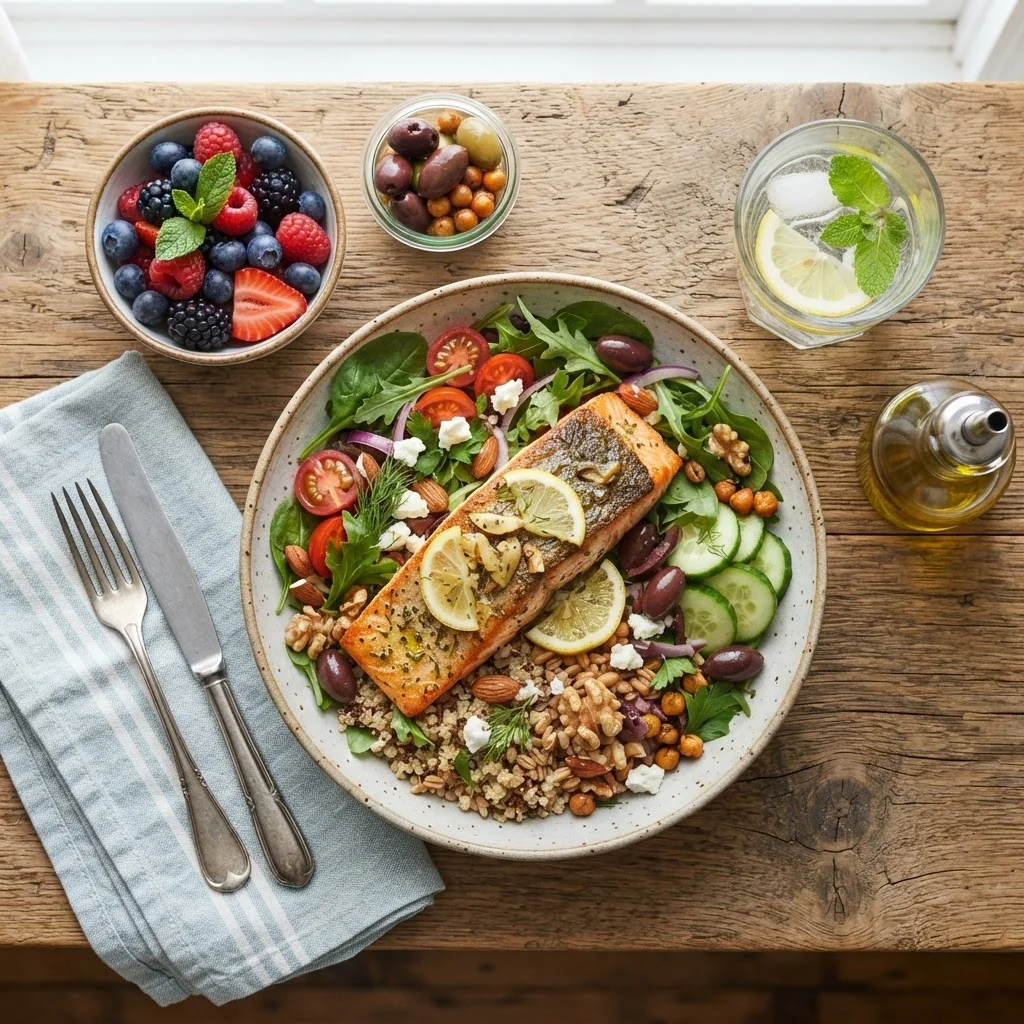
Rather than a branded diet protocol, the most research-supported approach to reducing chronic inflammation through food comes down to consistent dietary patterns - not individual superfoods or supplements. The eating patterns with decades of research behind them, such as the Mediterranean and DASH diets, share several features that researchers link to lower inflammatory markers:
- Abundant vegetables and fruit, providing fiber, polyphenols, and antioxidants
- Fatty fish (such as salmon, sardines, and mackerel) as a regular protein source, supplying omega-3 fatty acids
- Legumes, whole grains, and nuts for fiber and plant-based fats
- Olive oil as a primary fat source, associated with lower CRP levels in multiple observational studies
- Limited ultra-processed foods, refined carbohydrates, and added sugars
It's worth noting that most evidence linking diet to inflammation comes from observational studies, which establish association - not causation. Randomized controlled trials in this area are smaller and shorter-term, which limits the strength of conclusions we can draw. The overall picture is consistent enough to inform sensible dietary habits, but humility about certainty is warranted.
~38%
US adults with at least one chronic inflammatory condition
Estimates from the CDC suggest a substantial proportion of US adults live with conditions - such as heart disease, type 2 diabetes, or arthritis - in which chronic inflammation plays a recognized role.
30%+
Reduction in CRP linked to Mediterranean-style eating
Multiple meta-analyses, including a 2020 review in the journal Nutrients, found that adherence to a Mediterranean dietary pattern was associated with meaningfully lower C-reactive protein levels compared to control diets.
~57%
Of US caloric intake from ultra-processed foods
Research published in BMJ Open estimated that ultra-processed foods account for more than half of energy intake in the average US diet - a pattern associated with higher inflammatory biomarkers in multiple observational studies.
For a broader reality check on nutrition claims that circulate widely, the evidence-informed corrections to common diet myths article is a useful companion read.
This article is for general informational purposes only and does not constitute medical or nutritional advice. If you have a health condition or are considering significant dietary changes, consult a qualified healthcare professional.