

| Microorganisms in the gut | Estimated 38 trillion bacterial cells (Sender et al., Cell, 2016) |
| Key fiber sources | Legumes, whole grains, vegetables, fruit |
| Fermented food study finding | High fermented-food diet increased microbiome diversity in healthy adults (Sonnenburg et al., Cell, 2021) |
| Research status | Many associations identified; causality often still under investigation |
| Individual variability | Microbiome composition differs substantially between people |
What the Gut Microbiome Is - and Why Diet Matters
The human gut hosts trillions of microorganisms - bacteria, fungi, and viruses - collectively called the gut microbiome. Research over the past two decades has linked microbiome composition to digestion, immune function, and even mood regulation, though scientists emphasize that many of these relationships are still being mapped.
What emerges clearly from the literature is that diet is one of the most modifiable factors influencing which microorganisms thrive. Unlike genetics, what you eat is something you can adjust gradually over time. For a practical framework on building those adjustments into a routine, see our guide to sustainable daily health habits.
| Microorganisms in the gut | Estimated 38 trillion bacterial cells (Sender et al., Cell, 2016) |
| Key fiber sources | Legumes, whole grains, vegetables, fruit |
| Fermented food study finding | High fermented-food diet increased microbiome diversity in healthy adults (Sonnenburg et al., Cell, 2021) |
| Research status | Many associations identified; causality often still under investigation |
| Individual variability | Microbiome composition differs substantially between people |
This article is for general informational purposes only and does not constitute medical or nutritional advice. Consult a qualified healthcare provider for guidance specific to your health situation.
Dietary Patterns That Research Consistently Highlights
Rather than singling out individual superfoods, researchers tend to study patterns of eating. Several recurring findings appear across large observational studies and controlled trials:
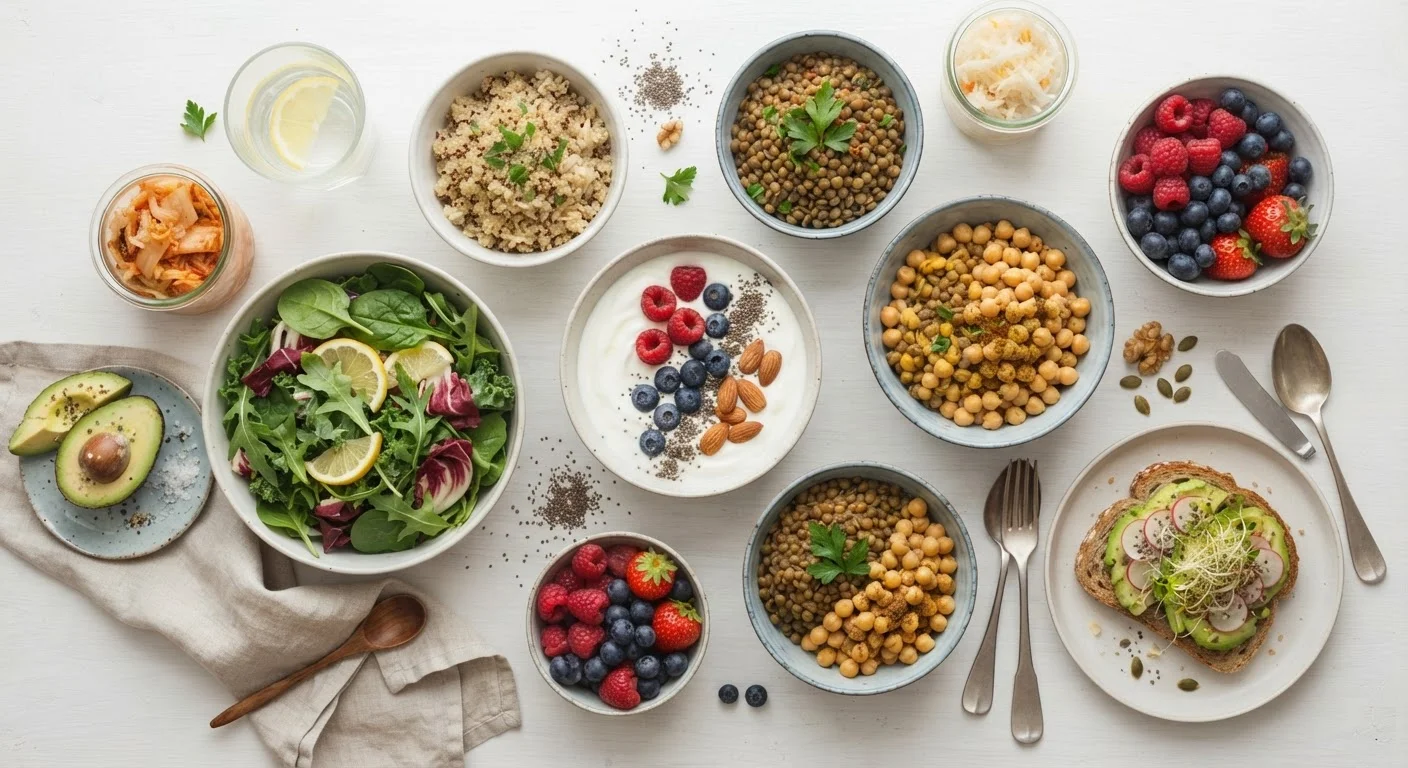
- Dietary fiber - found in vegetables, legumes, whole grains, and fruit - is fermented by gut bacteria into short-chain fatty acids, compounds associated with gut lining integrity and immune signaling. Higher fiber intake is among the most consistently supported dietary factors in microbiome research.
- Fermented foods such as yogurt, kefir, kimchi, and sauerkraut contain live microorganisms. A 2021 randomized trial published in Cell found that a high-fermented-food diet increased microbiome diversity in healthy adults - though researchers noted that individual responses varied considerably.
- Plant variety may matter as much as quantity. Some studies suggest that people who regularly eat a wider range of plant species tend to show greater microbial diversity, though causality is difficult to establish from observational data alone.
These patterns overlap significantly with eating approaches that have accumulated the strongest long-term evidence, such as Mediterranean-style diets.
Gut microbiome
The community of trillions of microorganisms - primarily bacteria - living in the digestive tract. These organisms play roles in digestion, immune regulation, and the production of certain metabolites.
Short-chain fatty acids (SCFAs)
Compounds produced when gut bacteria ferment dietary fiber. SCFAs such as butyrate are studied for their roles in gut lining health and immune signaling.
Microbiome diversity
A measure of how many different microbial species are present in the gut. Higher diversity is generally associated with better health outcomes in observational research, though the relationship is complex.
Fermented foods
Foods produced through controlled microbial growth, such as yogurt, kefir, kimchi, and sauerkraut. Many contain live microorganisms that may interact with the gut environment.
Prebiotics
Non-digestible food components, mainly certain types of fiber, that selectively feed beneficial gut bacteria. They occur naturally in foods like garlic, onions, oats, and legumes.
Probiotics
Live microorganisms that, when consumed in adequate amounts, may confer health benefits. Found naturally in fermented foods and also sold as dietary supplements, with varying evidence by strain.
What the Research Still Doesn't Fully Answer
Gut health science moves quickly, and headlines often outpace the evidence. A few important caveats are worth keeping in mind:
- Correlation vs. causation: Many microbiome studies are observational, meaning they identify associations without proving that diet directly causes changes in health outcomes.
- Individual variation: Microbiome composition differs substantially between people. A food that benefits one person's gut environment may have a neutral or different effect in another.
- Probiotic supplements: Evidence for specific probiotic supplements is more mixed than for fermented foods. Effectiveness appears to depend heavily on strain, dose, and the individual's existing microbiome - areas where research is ongoing.
- Ultra-processed foods: Several large cohort studies associate high ultra-processed food intake with lower microbiome diversity, but isolating the mechanism - whether it's additives, fiber displacement, or other factors - remains an active area of study.
For a deeper look at how food and inflammation intersect, our article on anti-inflammatory eating and what the science actually supports offers useful context.
Realistic Daily Habits Worth Considering
Based on the current weight of evidence, a few general principles stand out as practical starting points - without requiring dramatic dietary overhauls:
- Add variety incrementally. Eating a broader range of vegetables, legumes, and whole grains over time is more sustainable than sudden, wholesale changes.
- Include fiber at most meals. Beans, lentils, oats, and most vegetables contribute the fermentable fiber that gut bacteria rely on. See practical plate-building principles for a framework.
- Consider fermented foods as part of a varied diet. Yogurt with live cultures or fermented vegetables can fit easily into most eating patterns.
- Stay adequately hydrated. Water supports digestive transit and nutrient absorption. Our overview of how hydration interacts with nutrition covers this in more detail.
None of these suggestions replace personalized guidance from a registered dietitian or physician, particularly for anyone managing a digestive condition or chronic illness.