

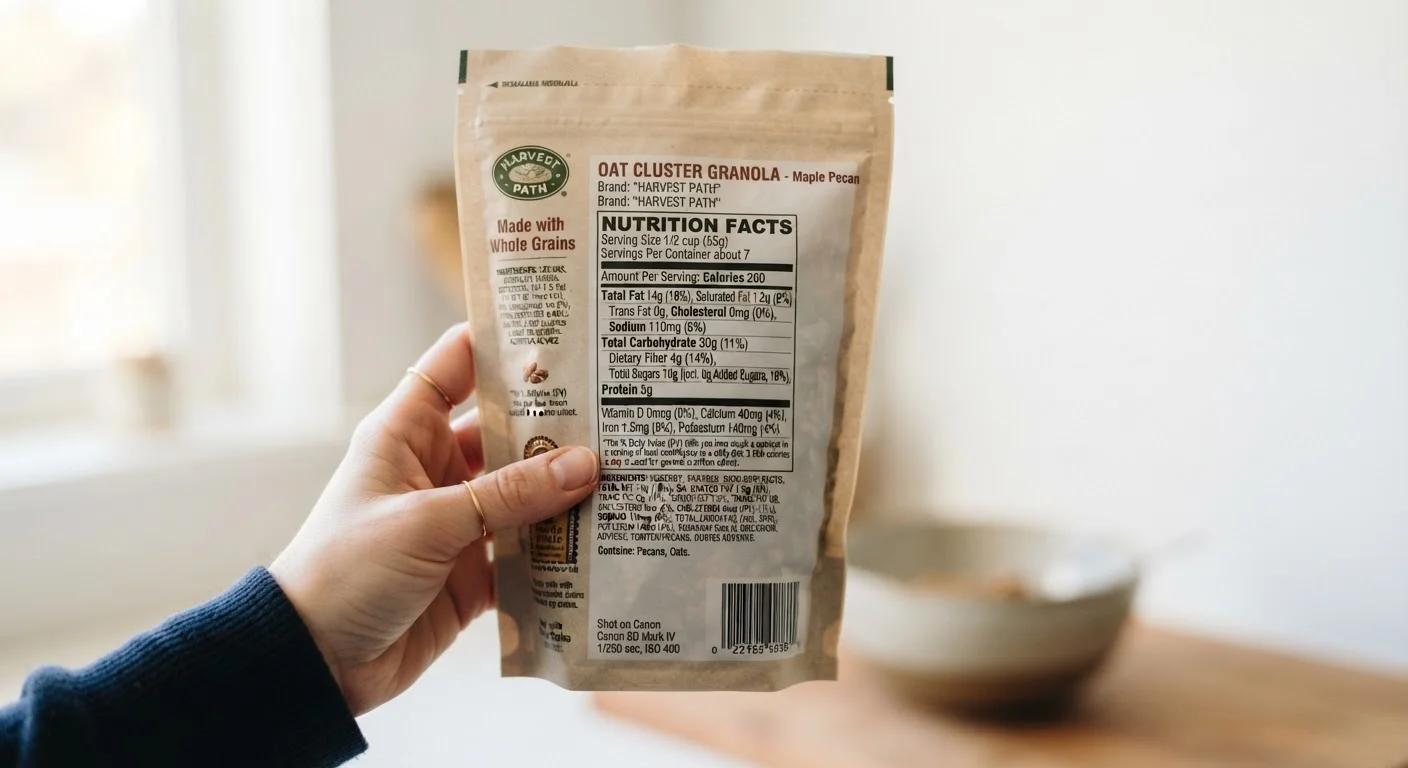
Key Takeaways
- Always check the serving size first - all other numbers on the label are tied to it.
- % Daily Value guides show whether a nutrient is high or low in a single serving.
- Added sugars are listed separately from total sugars and deserve close attention.
- The ingredient list and the Nutrition Facts panel work together - read both.
- Nutrition labels are educational tools, not prescriptions for how you should eat.
What you will need
Why Nutrition Labels Often Feel More Confusing Than Helpful
The Nutrition Facts panel is one of the most regulated pieces of text in your kitchen - yet it consistently confuses shoppers. Part of the problem is visual density: percentages, grams, milligrams, and footnotes all compete for attention in a small space. Another part is expectation. Many people approach the label looking for a verdict on whether a food is good or bad, when the panel is actually designed to deliver neutral information about composition.
Diet culture adds a further layer of noise, attaching moral weight to individual nutrients - fat was once the villain, then sugar took over - in ways that obscure the label's actual utility. Understanding what each section is designed to communicate, and what it isn't, cuts through that confusion. If you'd like a parallel look at how label-reading applies in a different context, the same logic applies when decoding pet food labels.
What you will need
How to Read Every Section of the Nutrition Facts Panel
Follow the steps below using any packaged food you have on hand. The panel is standardized by the FDA, so the layout will be consistent across products.
Packaged food product
Provides a real Nutrition Facts panel to practice reading as you follow each step.
Pen and notepad (or phone notes app)
Useful for jotting down key figures when comparing multiple products.
Start with the serving size
The serving size sits at the very top of the Nutrition Facts panel and is the foundation for every number that follows. It reflects a typical amount consumed at one time, as standardized by the FDA - not necessarily the amount you'll eat. Check both the serving size and the number of servings per container. If the package shows 2.5 servings and you eat the whole thing, multiply every nutrient figure by 2.5 to get your actual intake.
Note the calories per serving
Calories indicate the energy one serving provides. This number is prominent and large for a reason - it's often the quickest reference point for portion awareness. That said, calories alone don't capture the full picture of how a food affects your health or hunger. For more on this, see why calorie counts don't tell the whole story.
Evaluate nutrients to limit
Below calories, you'll find nutrients that health authorities generally recommend keeping in check: saturated fat, trans fat, and sodium. These are listed in grams (g) or milligrams (mg) per serving. Trans fat has no established safe level, so aim for as close to zero as possible. Sodium accumulates quickly across multiple foods in a day, so this figure is worth tracking if you're managing cardiovascular health - though that's a conversation best had with a healthcare provider.
Distinguish total sugars from added sugars
Total sugars include both naturally occurring sugars (like those in fruit or dairy) and added sugars - sweeteners introduced during manufacturing. Added sugars are now listed as a sub-item beneath total sugars, a labeling update that makes this distinction visible. The Dietary Guidelines for Americans advise limiting added sugars to less than 10% of daily calories. Be aware that added sugars appear under many names on ingredient lists. For a detailed breakdown, see common sweetener names to watch for.
Look for nutrients to get enough of
Dietary fiber, vitamin D, calcium, iron, and potassium are nutrients many people in the US don't consume in adequate amounts. The label highlights these to encourage intake. Fiber in particular supports digestive health and satiety - for a deeper look at how it functions, understanding dietary fiber types is a helpful companion read. Vitamins and minerals listed here represent only a fraction of what whole foods provide - see micronutrients your body can't make itself for broader context.
Use % Daily Value as a quick benchmark
The % Daily Value (%DV) column on the right shows how much of a nutrient one serving contributes toward a 2,000-calorie reference diet. Use this rule of thumb: 5% DV or less is considered low; 20% DV or more is considered high. This applies in both directions - high %DV for fiber is generally favorable, while high %DV for saturated fat or sodium warrants attention. These reference values are population-level benchmarks, not personal targets.
Cross-reference the ingredient list
The ingredient list appears below or beside the Nutrition Facts panel and is ordered by weight - the first ingredient is present in the largest amount. Scanning it alongside the label helps you understand what's actually driving those nutrient numbers. For example, if added sugars are high and the first few ingredients include multiple sweetener names, you've confirmed the source. The ingredient list also reveals whole food content and processing level in ways the numbers panel alone cannot.
Compare Products Using % Daily Value
When choosing between two similar products, the %DV column is your fastest comparison tool. Line up the nutrients you care about most and compare the percentages directly - the serving sizes may differ, but %DV normalizes the comparison. This approach works well for evaluating cereals, breads, soups, and snack foods side by side.
Putting the Label in Context
A single Nutrition Facts panel tells you about one food in isolation. Nutrition, however, plays out across an entire eating pattern over time. A food high in sodium isn't automatically problematic if the rest of your meals that day are low in sodium. Similarly, a food with limited fiber or micronutrients may still fit well within a varied diet that supplies those elsewhere.
The most useful frame for the label is nutrient density - the idea that foods can be evaluated by how much nutritional value they deliver relative to their calorie content. A label that shows high fiber, adequate protein, key vitamins, and modest added sugars typically signals a more nutrient-dense choice, regardless of total calories. For a companion guide to this article, see reading nutrition labels without getting lost in the numbers.
This article is for general informational and educational purposes only and is not a substitute for personalized dietary or medical advice. Consult a registered dietitian or qualified healthcare provider for guidance tailored to your individual health needs.