

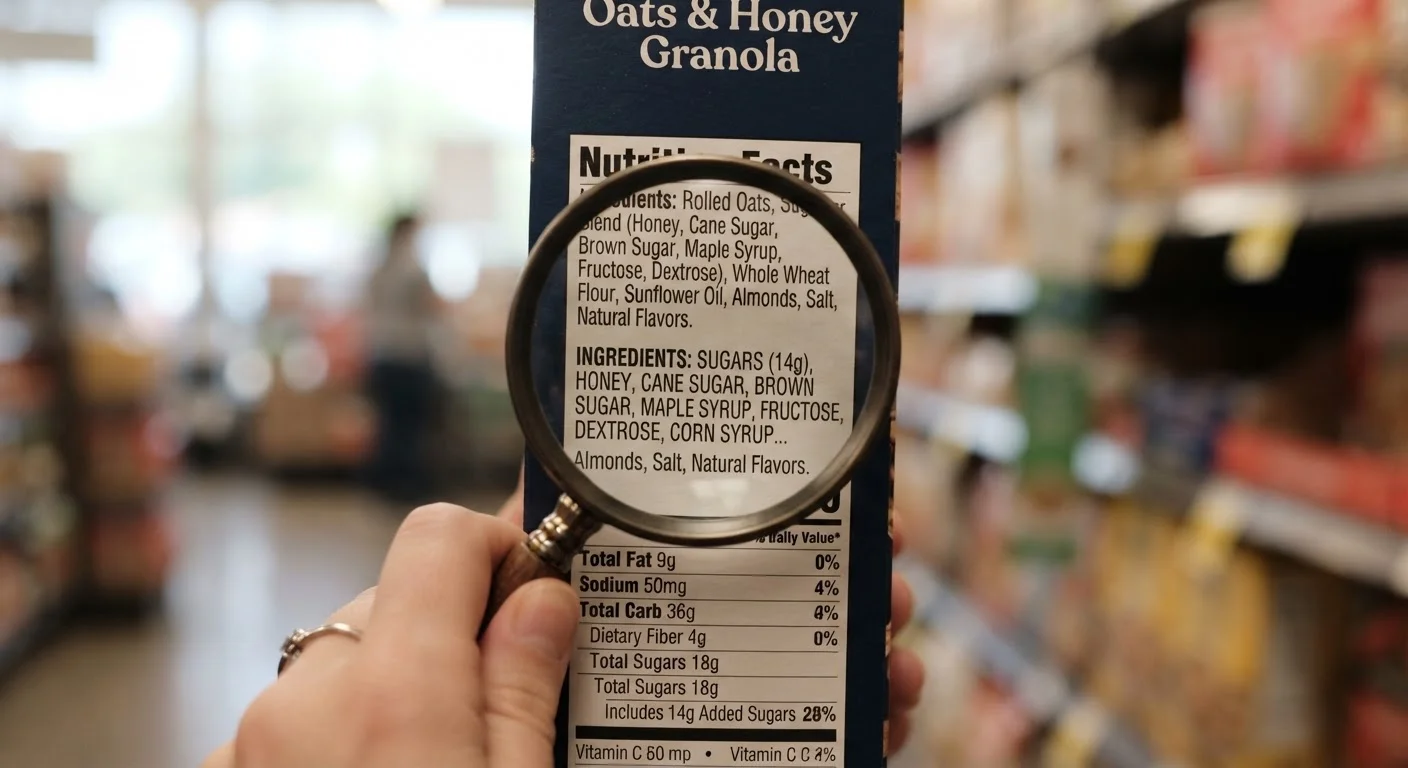
Why So Many Names?
Manufacturers are not trying to deceive consumers by using multiple sweetener names - many reflect genuinely different ingredients with distinct processing methods, sources, and functional properties. A bakery product may use both corn syrup and brown sugar because each behaves differently during baking. That said, the cumulative effect on an ingredient list can make it hard to gauge how sweet a product actually is.
Ingredient lists rank items by weight, from most to least. A single sweetener near the top is easy to spot. But when a product contains four or five different sugars, each in moderate amounts, they may fall lower on the list individually - even if together they represent the largest ingredient by weight. Learning the common aliases helps you see through that pattern.
For a broader look at how ingredient lists and Nutrition Facts panels work together, see our guide to reading a nutrition label.
A Practical Reference: Common Sweetener Names
The names below appear regularly on US ingredient labels, organized by category to make identification easier.
Cane- and Beet-Based Sugars
- Sucrose - standard table sugar from cane or beet
- Cane sugar, cane juice, evaporated cane juice - minimally processed cane-derived sugars
- Brown sugar, turbinado, muscovado, demerara - sucrose with varying amounts of molasses retained or added
- Molasses, blackstrap molasses - thick syrup byproducts of sugar refining; contain trace minerals
- Powdered sugar, confectioners' sugar - finely ground sucrose, often with added starch
Corn-Based Sweeteners
- Corn syrup - glucose syrup derived from corn starch
- High-fructose corn syrup (HFCS) - corn syrup with enzymatically converted fructose
- Dextrose - another name for glucose derived from corn
Fruit- and Plant-Derived Sweeteners
- Honey - primarily fructose and glucose; still counted as added sugar
- Maple syrup, maple sugar - sucrose-dominant with trace minerals
- Agave nectar - high in fructose, often marketed as low-GI
- Coconut sugar - sucrose-dominant with a small amount of inulin fiber
- Date sugar, date syrup - made from whole or dried dates; retains some fiber
- Fruit juice concentrates - apple, grape, or other juices with water removed; used as sweeteners
Grain-Derived Sweeteners
- Malt syrup, barley malt extract - primarily maltose; common in bread and cereal products
- Brown rice syrup - high in maltose with a relatively high glycemic index
Sugar Alcohols and Non-Nutritive Sweeteners
These two categories behave differently from conventional sugars and are worth distinguishing clearly.
Sugar Alcohols
Sugar alcohols provide sweetness with fewer calories than sucrose and have a lower glycemic impact. They are not zero-calorie, however, and can cause bloating or digestive discomfort in larger amounts. Common examples include: erythritol, xylitol, sorbitol, maltitol, mannitol, and lactitol. Products containing sugar alcohols are required to list them in the Nutrition Facts panel.
Non-Nutritive (High-Intensity) Sweeteners
These provide intense sweetness in very small amounts and contribute negligible calories. They include both synthetic options (sucralose, aspartame, acesulfame potassium, saccharin) and plant-derived alternatives (stevia, monk fruit extract). Regulatory bodies including the FDA have evaluated these substances and established acceptable daily intake levels. Research on long-term effects continues, and current guidance neither prohibits their use nor recommends unrestricted consumption.
For context on how all of these terms appear within a full Nutrition Facts panel, our guide to reading nutrition labels covers how to interpret the numbers alongside the ingredient list.
This article is for general informational and educational purposes only and does not constitute medical or dietary advice. For personalized guidance on your eating habits or health conditions, consult a qualified registered dietitian or healthcare professional.