

| USDA Hardiness Zones | Zones 1-13 (Zone 1 coldest, Zone 13 warmest) (USDA Plant Hardiness Zone Map) |
| Last Frost Range (US) | January (Zone 10+) to June (Zone 3-4) (USDA / university extension data) |
| Ideal Transplanting Soil Temp | Above 60°F for most warm-season crops (General horticultural guidance) |
| Mulch Depth Recommendation | 2-3 inches for weed suppression and moisture retention (Cooperative Extension Services) |
| Bulb Planting Soil Temp | Below 60°F (typically mid-to-late fall) (General horticultural guidance) |
| Seed Starting Lead Time | 6-8 weeks before last frost for warm-season crops (General horticultural guidance) |
Why a Seasonal Calendar Changes Everything
Gardening success depends less on natural talent and more on timing. Planting too early invites frost damage; pruning at the wrong moment can cost you a season of blooms. A seasonal calendar gives you a dependable framework - even when your specific weather varies - by anchoring tasks to the rhythms plants actually follow.
Because the US spans multiple climate zones (the USDA divides the country into 13 hardiness zones based on average annual minimum temperatures), this guide presents tasks by season rather than a fixed calendar month. Readers in Zone 5 may start seeds indoors weeks before gardeners in Zone 9 do the same outdoors. Always cross-reference with your local zone when in doubt. See reading plant tags and zone numbers for help decoding those details at the nursery.
| USDA Hardiness Zones | Zones 1-13 (Zone 1 coldest, Zone 13 warmest) (USDA Plant Hardiness Zone Map) |
| Last Frost Range (US) | January (Zone 10+) to June (Zone 3-4) (USDA / university extension data) |
| Ideal Transplanting Soil Temp | Above 60°F for most warm-season crops (General horticultural guidance) |
| Mulch Depth Recommendation | 2-3 inches for weed suppression and moisture retention (Cooperative Extension Services) |
| Bulb Planting Soil Temp | Below 60°F (typically mid-to-late fall) (General horticultural guidance) |
| Seed Starting Lead Time | 6-8 weeks before last frost for warm-season crops (General horticultural guidance) |
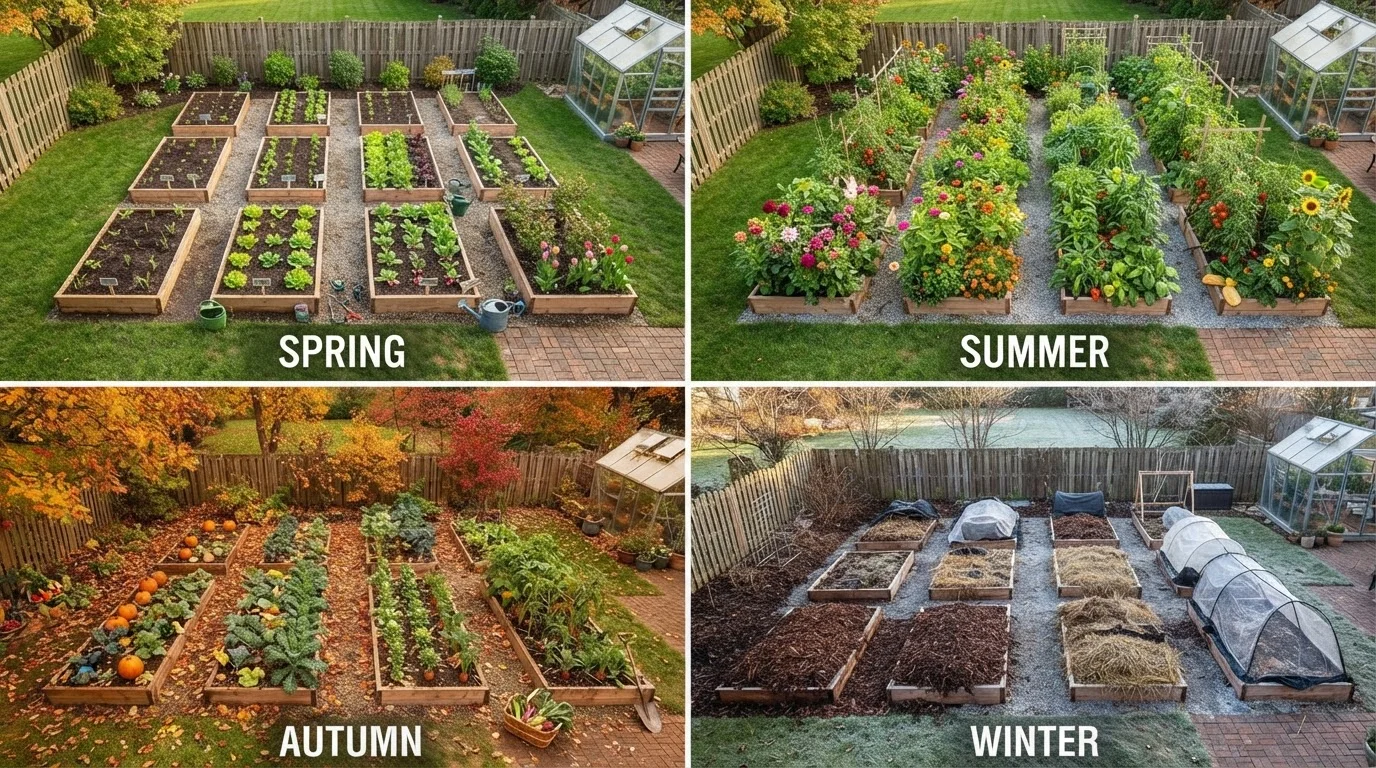
Spring: Starting Strong
Spring is the most active season for planning and planting. As soon as soil temperatures reach around 40°F and frost risk fades, gardeners can begin in earnest.
- Early spring: Start warm-season seeds (tomatoes, peppers, squash) indoors 6-8 weeks before your last frost date. Test and amend soil with compost.
- Mid-spring: Direct-sow cool-season crops outdoors - lettuce, peas, radishes, and spinach tolerate light frost. Divide and transplant perennials while they're still dormant or just emerging.
- Late spring: After your last frost date, transplant warm-season seedlings outdoors and apply a 2-3 inch layer of mulch to retain moisture and suppress weeds.
Spring is also the right time to prune spring-blooming shrubs after they flower, not before - cutting them in early spring removes the very buds that carry this season's display. For placement decisions based on sun exposure in newly cleared beds, matching plants to your yard's light conditions is a practical companion resource.
Hardiness Zone
A geographic area defined by average annual minimum winter temperatures, used to predict which plants are likely to survive the winter in that location. The USDA map divides the US into 13 zones.
Last Frost Date
The average date after which freezing temperatures are unlikely in a given location. It marks the safe window for transplanting frost-sensitive plants outdoors.
Deadheading
Removing spent or faded flowers from a plant to encourage continued blooming and prevent the plant from directing energy into seed production.
Succession Sowing
Planting the same crop in intervals of 2-3 weeks so harvests are spread over time rather than all ripening at once.
Crop Rotation
The practice of growing different plant families in a given bed each season to reduce the buildup of soil-borne pests and diseases and maintain soil fertility.
Summer and Fall: Maintain, Harvest, and Prepare
Summer calls for consistent maintenance rather than heavy planting. Focus on watering deeply but infrequently to encourage deep root growth, deadheading spent flowers to extend bloom periods, and watching for pest or disease pressure, which peaks in heat and humidity.
- Midsummer: Succession-sow fast-maturing crops like beans and lettuce for a second harvest before heat peaks. Feed heavy feeders (corn, squash, roses) with a balanced fertilizer.
- Late summer: Begin sowing fall cool-season crops (broccoli, kale, carrots) 6-8 weeks before your first expected fall frost. Cut back spent perennials to tidy beds and redirect energy.
Fall shifts the focus toward harvest and winterization. Collect and store seeds from open-pollinated varieties, plant spring-blooming bulbs (tulips, daffodils, alliums) after soil cools below 60°F, and apply a fresh layer of mulch to insulate roots against freeze-thaw cycles.
Zone Differences Matter - Check Yours
A task listed for 'early fall' may fall in August for northern gardeners and November for those in the Deep South. The USDA Plant Hardiness Zone Map (available free online) and your local cooperative extension service are the most reliable resources for pinpointing dates to your specific location. Many extensions also offer free soil-testing services in spring and fall.
Pairing your fall garden wind-down with other seasonal home tasks makes the workload manageable. seasonal home maintenance routines covers the structural and system checks that complement outdoor prep work.
Winter: Rest, Review, and Recharge
For most US gardeners, winter is a planning season rather than a planting one - though gardeners in Zones 9-13 may continue growing cool-season crops outdoors through January and February.
- Soil care: Avoid working frozen soil, which damages its structure. Instead, add compost or aged manure on top of beds and let winter precipitation work it in gradually.
- Tool maintenance: Clean, sharpen, and oil hand tools. A well-maintained spade or pruner lasts decades and performs safer cuts.
- Planning: Review what worked and what didn't. Order seed catalogs, sketch new bed layouts, and map crop rotations so you're not planting the same plant family in the same spot two years running.
Winter is also a good moment to consider the non-garden interior counterpart to seasonal rhythms. seasonal decluttering and organization follows a similar logic - certain tasks simply fit better at specific times of year.
This article provides general gardening guidance for educational purposes. Local conditions, microclimates, and specific plant requirements vary; consult your local cooperative extension service for region-specific recommendations.