

Key Takeaways
- Plant tags contain everything you need to place and care for a plant correctly from day one.
- The USDA hardiness zone number tells you whether a plant can survive your local winters.
- Sun icons indicate light requirements - full sun, part shade, or full shade - which must match your planting site.
- Mature size dimensions on the tag help you space plants properly and avoid overcrowding.
- Water-drop symbols give a general irrigation guide, not a precise watering schedule.
- The botanical name on a tag is your most reliable tool for researching a plant further.
Plant Tag (Nursery Label)
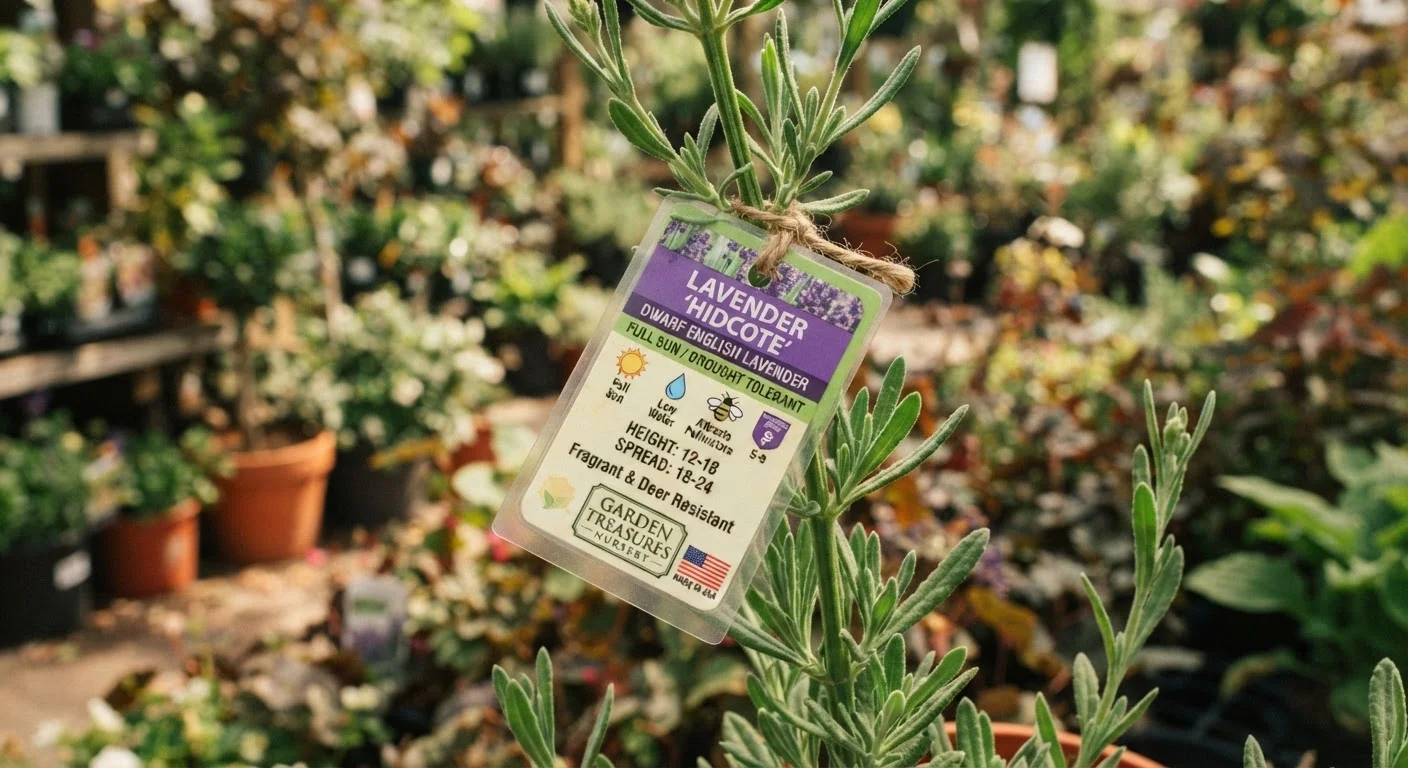
A plant tag is the small card or plastic stake attached to a plant at a garden center or nursery. It contains standardized information - including the plant's common and scientific name, preferred light conditions, watering needs, hardiness zone, and expected size - designed to tell you exactly where and how to grow that plant successfully.
Many tags use USDA Plant Hardiness Zone designations, which divide North America into 13 zones based on average annual minimum winter temperatures. Matching a plant's listed zone to your local zone is the single most reliable predictor of outdoor winter survival.
The Name Section: Common vs. Botanical
Most plant tags list two names at the top. The large, readable name is the common name - 'Purple Coneflower' or 'Lamb's Ear,' for example. Below it, usually in smaller italicized text, is the botanical name (e.g., Echinacea purpurea). The common name is convenient, but botanical names are precise. Because common names vary by region - 'bluebell' refers to different plants in different parts of the country - the botanical name is your most reliable research tool when you want to learn more about a plant's care requirements, native habitat, or pest vulnerabilities.
Beneath the names, many tags include a brief variety or cultivar note in single quotes, such as Echinacea purpurea 'Magnus.' Cultivar names signal that this is a specifically bred selection, which may have different flower color, size, or cold tolerance than the straight species.
Decoding the Light and Water Icons
The row of small icons below the name section does a lot of heavy lifting. Sun icons appear in three standard forms:
- Filled circle (full sun): The plant needs at least 6 hours of direct sunlight daily.
- Half-filled circle (part sun/part shade): The plant thrives with 3-6 hours of direct sun. Some tags distinguish between 'part sun' (prefers more light) and 'part shade' (prefers more cover), so read the accompanying text.
- Open or shaded circle (full shade): The plant performs best with fewer than 3 hours of direct sun per day.
Mismatching a plant's light need to your site is one of the most common reasons plants fail. Before purchasing, assess your planting site's actual daily light exposure over several hours - not just a quick glance.
Water-drop icons are less standardized but typically range from one drop (drought-tolerant) to three drops (consistently moist). Think of these as a relative guide, not a watering schedule. Soil type, climate, and season all affect how often you'll actually need to water.
Match the Icon to Your Actual Yard
Before buying, spend a morning tracking how many hours of direct sun each area of your yard receives. Light conditions change significantly with seasons, tree leaf cover, and neighboring structures. A spot that looks sunny in spring may be heavily shaded by summer. Accurate light assessment takes the guesswork out of choosing the right plant for the right place.
Hardiness Zone and Plant Type
The USDA Hardiness Zone listed on a tag tells you the coldest conditions a plant can reliably survive. Zones are numbered 1 (coldest) through 13 (warmest), and most US gardeners fall in Zones 3-10. If a tag reads 'Zones 5-9,' the plant will overwinter outdoors in those zones without needing to be dug up or protected. In colder zones, you may be able to grow it as an annual or bring it indoors.
Tags also identify whether a plant is an annual, perennial, or biennial. Annuals bloom for one season and are done. Perennials die back in winter but regrow from roots each spring (within their rated zones). Biennials complete their cycle over two years. Understanding this distinction affects how you budget for replanting and plan seasonal color.
Heat Zones vs. Hardiness Zones
The USDA Hardiness Zone covers cold tolerance, but some tags also list an AHS (American Horticultural Society) Heat Zone number, which reflects the number of days per year above 86°F. Plants in hot-summer regions like the South or Southwest benefit from checking both ratings. If a tag only lists a USDA zone, assume heat tolerance is unstated and research further if you garden in a high-heat climate.
Mature Size and Spacing: Plan Before You Plant
Every tag includes a height and spread range - for example, 'Height: 18-24 in. / Spread: 12-18 in.' These numbers reflect the plant's expected mature dimensions under typical conditions. Use them to map out spacing before you dig a single hole.
Spacing guidance on tags is usually expressed as the distance between plant centers. If you're planting ground covers or filling a border, respect these numbers even when young plants look small and sparse. Overcrowded plants compete for water and nutrients and suffer from poor airflow, which encourages fungal disease. Once you understand spacing, it connects naturally to understanding what's under your plants - see our guide to soil composition and preparation for the next step.
If you're gardening in pots, the spread measurement tells you the minimum container diameter you'll need. Our companion piece on container gardening covers how to match plant size to pot size effectively.
Additional Tag Details Worth Noting
Some tags include a few extra details that are easy to overlook:
- Bloom time
- Listed as a season or month range, this tells you when to expect flowers - useful for planning a garden that has color across the growing season.
- Deer resistance or pollinator value
- Small icons or text noting deer-resistant varieties or bee- and butterfly-friendly plants help you make choices that fit your yard's specific challenges or goals.
- Soil preferences
- Tags sometimes note 'well-drained soil' or 'tolerates clay.' These aren't suggestions - plants placed in unsuitable soil rarely thrive regardless of light or water.
Reading a plant tag is ultimately a habit, not a skill that requires expertise. Like learning to read a nutrition label - see our article on reading nutrition labels without getting lost in the numbers for a similar breakdown approach - decoding these small cards becomes second nature once you know what each element represents. Take a photo of every tag before planting so you have care information on hand throughout the season.
13
USDA Plant Hardiness Zones across the US
The USDA divides North America into 13 zones based on average annual minimum winter temperatures, with Zone 1 being the coldest and Zone 13 the warmest.
6+ hrs
Daily sun required for 'full sun' plants
The standard horticultural definition of full sun is a minimum of six hours of direct, unobstructed sunlight per day during the growing season.
~80%
Of plant failures linked to wrong site placement
Horticultural educators commonly attribute the majority of plant establishment failures to mismatched light, water, or hardiness conditions rather than pest or disease problems.