

Key Takeaways
- Overwatering is one of the most common causes of plant death, often mistaken for drought stress.
- Placing plants in the wrong light conditions sets them up to fail before they're even established.
- Skipping soil preparation leads to poor drainage, nutrient deficits, and stunted root growth.
- Planting at the wrong depth-too shallow or too deep-can prevent plants from anchoring and thriving.
- Ignoring plant hardiness zones means choosing plants that simply cannot survive your local winters.
Why Plants Fail More Often Than They Should
Most garden failures aren't caused by bad luck or mysterious disease-they're the result of a handful of predictable, avoidable mistakes. Understanding why plants die puts you in control of the outcome, whether you're tending a backyard vegetable patch, a container garden on a balcony, or a mixed perennial bed. The good news is that the most common errors all have clear, practical solutions.
The mistakes that follow repeat themselves across skill levels and garden types. Recognizing them before you plant-not after something has already declined-is what separates frustrating seasons from rewarding ones.
Overwatering plants on a fixed daily schedule rather than checking actual soil moisture.
Why it happens: Many gardeners assume more water always means healthier plants, and daily routines feel like attentive care.
Placing plants in spots that don't match their light requirements.
Why it happens: Light levels in a yard aren't always obvious, and plant labels often use vague terms like 'partial shade' that are easy to misjudge.
Planting without preparing or amending the soil first.
Why it happens: Soil looks fine to the naked eye, leading many gardeners to assume it's ready to plant without testing or improving it.
Planting at the wrong depth-either burying stems too deep or leaving roots too shallow.
Why it happens: Depth guidelines are often skimmed or misunderstood, and the temptation to 'secure' a plant by planting it deeper feels logical.
Choosing plants unsuited to the local hardiness zone or microclimate.
Why it happens: Attractive plants at a nursery may not carry clear zone information, or buyers may assume zone ratings are flexible guidelines rather than real limits.
Skipping mulch or applying it too thickly against plant stems.
Why it happens: Mulching feels optional, and when gardeners do apply it, piling it high seems like better insulation and protection.
Building Better Habits From the Start
Avoiding these mistakes doesn't require expert-level knowledge. It mostly requires slowing down before putting a plant in the ground. Ask three questions: Does this plant suit my climate? Does this spot get the right amount of light? Is my soil actually ready?
Overwatering Looks Like Underwatering
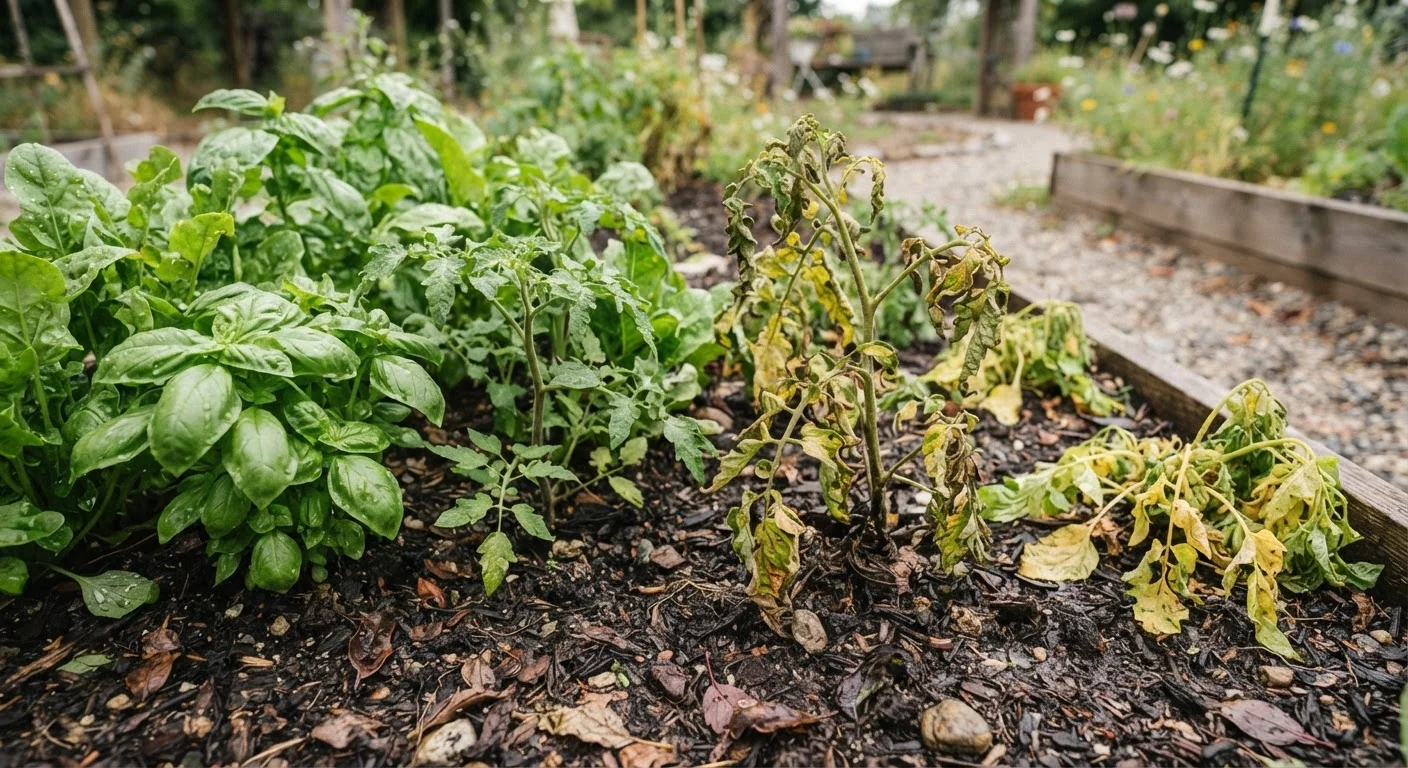
Yellowing leaves, wilting, and soggy soil are signs of overwatering-not drought. Before adding water, press a finger two inches into the soil. If it's still moist, hold off. Consistently waterlogged roots deprive plants of oxygen and invite fungal rot that is difficult to reverse.
If you're gardening in containers, be aware that drainage, root space, and watering frequency all behave differently than in-ground planting. Our container gardening guide covers those distinctions in detail. Similarly, if you're deciding whether to start from seed or buy transplants, that choice carries its own set of tradeoffs worth understanding-see seeds vs. transplants for a clear breakdown.
~90%
Of houseplant deaths linked to watering errors
Horticultural educators commonly estimate that the vast majority of houseplant failures stem from either overwatering or underwatering rather than disease or pests.
2-3x
Root growth improvement with amended soil
Research in soil science consistently shows that plants grown in well-amended, well-draining soil develop significantly stronger root systems than those planted in unimproved ground.
Every plant you keep alive builds your confidence and your eye for what's working. Starting with honest, research-backed practices-rather than inherited gardening folklore-is the fastest path to a garden that actually grows.