

| Number of standard interior finish levels | 5 (flat, eggshell, satin, semi-gloss, high-gloss) |
| Most durable finish for wet areas | Semi-gloss or satin |
| Best finish for hiding wall imperfections | Flat / Matte |
| Recommended finish for ceilings | Flat (ceiling-specific formula) |
| Standard finish for trim and baseboards | Semi-gloss |
| Finish requiring the most surface prep | High-gloss |
Why Paint Finish Matters as Much as Color
Most homeowners spend hours agonizing over paint color and about thirty seconds choosing a finish. That's a missed opportunity. The sheen level - how much light a dried paint surface reflects - directly affects how a room looks, how well the walls hold up to daily life, and how easy cleanup will be when things get messy.
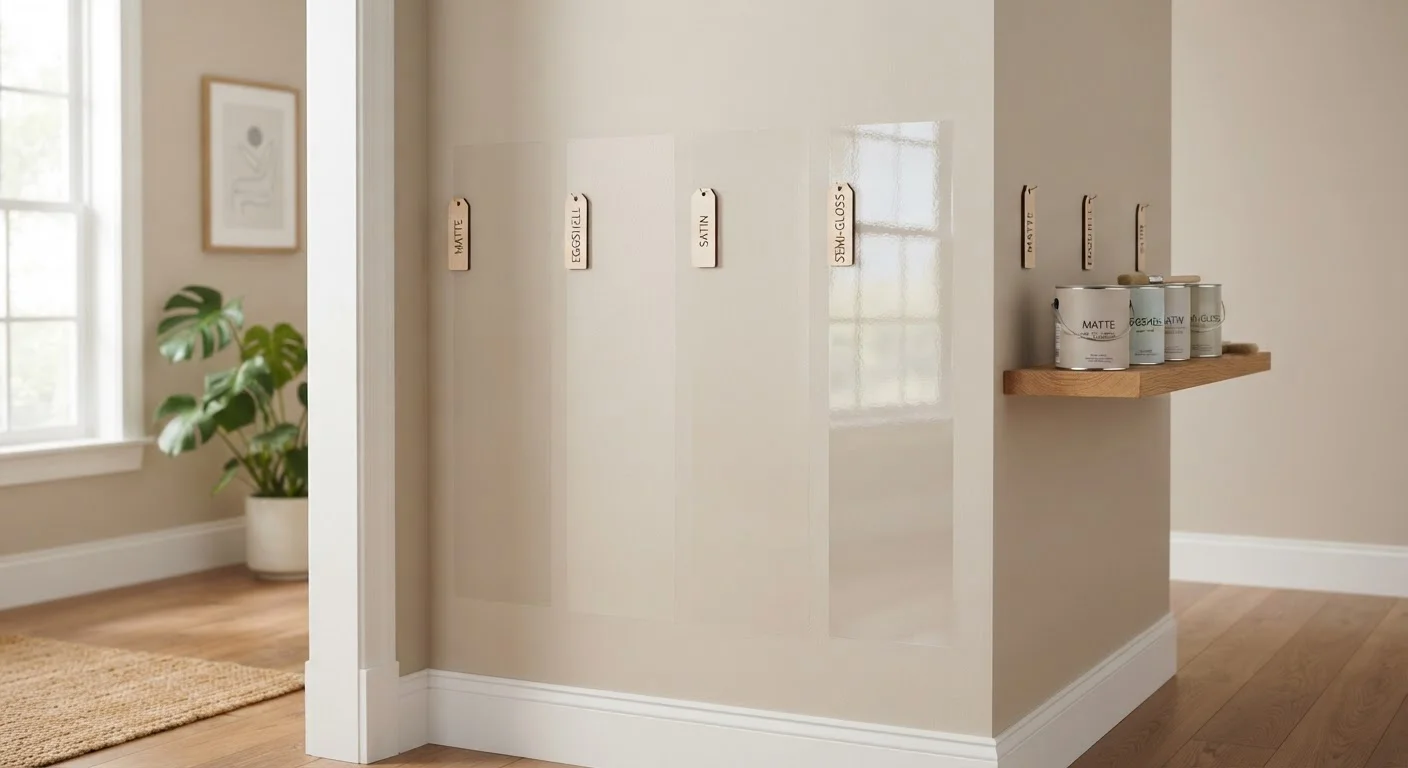
Paint finishes exist on a spectrum from completely flat (matte) to highly reflective (high-gloss). Each step up the sheen ladder adds durability and washability while also amplifying surface imperfections. Understanding that trade-off is the core skill here.
Before you even open a can, it's worth reading up on your wall surface. Drywall and plaster behave differently when painted, and knowing which you have can influence both your primer choice and which finish will adhere and look best.
| Number of standard interior finish levels | 5 (flat, eggshell, satin, semi-gloss, high-gloss) |
| Most durable finish for wet areas | Semi-gloss or satin |
| Best finish for hiding wall imperfections | Flat / Matte |
| Recommended finish for ceilings | Flat (ceiling-specific formula) |
| Standard finish for trim and baseboards | Semi-gloss |
| Finish requiring the most surface prep | High-gloss |
The Five Main Finishes Explained
Here's a plain breakdown of each finish type, what it looks like, and where it performs best.
Flat / Matte
Flat paint reflects almost no light, giving walls a velvety, non-reflective appearance. It hides dips, bumps, and patched spots better than any other finish because light doesn't bounce off the surface to reveal irregularities. The downside: it scuffs and stains easily, and scrubbing can damage the finish. Best for: adult bedrooms, formal dining rooms, ceilings, and walls with noticeable imperfections.
Eggshell
Named for the subtle, low-luster sheen of an actual eggshell, this finish offers slightly more washability than flat paint while still keeping surfaces looking soft. It strikes a comfortable middle ground for most living spaces. Best for: living rooms, hallways, and adult bedrooms where some durability is appreciated.
Satin
Satin has a smooth, pearl-like sheen and handles moisture and scrubbing noticeably better than eggshell. It cleans up easily with a damp cloth, making it a go-to finish for active areas. It will, however, highlight wall imperfections more than flatter finishes. Best for: kitchens, bathrooms, children's bedrooms, playrooms, and laundry rooms.
Semi-Gloss
Semi-gloss is noticeably shiny, highly moisture-resistant, and very easy to wipe clean. It's the standard choice for woodwork, trim, and cabinetry because it holds up to repeated contact and cleaning without degrading. On large wall surfaces, the sheen can look intense in bright light. Best for: trim, doors, window casings, bathroom walls, and kitchen cabinets.
High-Gloss
High-gloss paint is the most durable and reflective finish available. It creates a sleek, almost lacquered look and cleans effortlessly. Because it magnifies every surface flaw, it requires thorough surface prep - any imperfection will be visible. Best for: furniture, cabinets, exterior doors, and accent features where a bold, polished look is intentional.
Sheen
The amount of light a dried paint surface reflects. Higher sheen means more light reflection and generally more durability and washability.
Flat / Matte finish
A paint finish with little to no light reflection. It hides surface imperfections well but is the least durable and hardest to clean.
Eggshell finish
A low-luster finish with a very slight sheen, similar to the surface of an eggshell. It offers modest washability while maintaining a soft appearance.
Satin finish
A mid-range finish with a smooth, pearl-like sheen. It balances appearance and durability, making it suitable for high-traffic or moisture-prone areas.
Semi-gloss finish
A noticeably shiny and very washable finish. Commonly used on trim, doors, and cabinetry where frequent cleaning and moisture resistance are priorities.
High-gloss finish
The most reflective and durable paint finish available. It requires careful surface preparation because it magnifies any imperfections beneath it.
Room-by-Room Recommendations
Use this as your practical reference when planning a paint project:
- Living room: Eggshell for walls, semi-gloss for trim and baseboards.
- Kitchen: Satin for walls, semi-gloss or high-gloss for cabinets and trim.
- Bathrooms: Satin or semi-gloss for walls to handle steam and moisture.
- Primary bedroom: Flat or eggshell for a calm, soft appearance on walls.
- Children's bedroom or playroom: Satin - durable enough for handprints, scrubable without ruining the surface.
- Hallways and stairwells: Eggshell or satin - these high-traffic areas need more durability than a bedroom but don't need the intensity of semi-gloss on wide wall surfaces.
- Ceilings: Flat white specifically formulated for ceilings - this minimizes light reflection and hides roller texture.
- Trim, doors, and baseboards throughout the home: Semi-gloss as a reliable standard.
If you're planning a larger renovation that includes painting as one step among many, the guidance in what homeowners should know before starting any renovation can help you sequence the work sensibly and avoid common scheduling mistakes.
A Few Practical Tips Before You Start
Choosing the right finish is only half the equation. Keep these points in mind for better results:
- Always test a sample first. Sheen levels look different depending on lighting conditions - natural vs. artificial light changes how glossy a satin finish appears.
- Prep matters more at higher sheens. If you're using semi-gloss or high-gloss, fill nail holes, sand rough spots, and prime properly. Flaws that matte paint can forgive will be clearly visible under a shiny finish.
- Stick to one finish per surface type. Mixing finishes on the same flat wall surface creates uneven sheen lines that draw the eye.
- Moisture-prone rooms need the right finish, not just mold-resistant paint. A flat paint in a bathroom will absorb moisture regardless of its additive; choosing at least a satin finish is a structural defense, not just a style preference.
Sheen Consistency Matters in Touch-Ups
When touching up a painted wall, mismatched sheen - even from the same color - will create visible patches. Always keep leftover paint from the original batch and ensure any touch-up paint matches both color and finish level. If the original finish is unknown, bring a small scraped chip to a paint counter for matching.