

Key Takeaways
- Vertical wall space is one of the most underused storage resources in small homes.
- Hidden storage - inside furniture, under beds, above doors - adds capacity without visual clutter.
- Zoning distinct activities within a single room reduces chaos and improves daily function.
- Multi-purpose furniture dramatically expands usable storage without increasing floor footprint.
- Consistent maintenance habits are what keep small-space systems working over time.
Why Small Spaces Demand a Different Strategy
Compact homes and apartments don't just have less storage - they have less margin for error. A single cluttered surface in a large home barely registers; the same pile in a studio can make the entire space feel chaotic. The strategies that work in small spaces share a common principle: every inch needs a clear purpose, and the systems you build have to be easy enough to maintain daily.
The good news is that most small homes have significantly more usable storage than they appear to. Vertical wall space, furniture cavities, and overlooked zones throughout the home often go untapped simply because their potential isn't obvious. The approaches below cover the most effective ways to find and use that hidden capacity - without making your home feel like a storage facility.
Start With One Zone, Not the Whole Home
Trying to reorganize every room at once often leads to burnout and abandoned systems. Choose the single most frustrating area - a cluttered entryway, an overloaded closet - and build a working system there first. Success in one zone builds momentum and helps you refine your approach before tackling larger spaces.
Six Approaches Worth Putting Into Practice
Go vertical with wall-mounted shelving
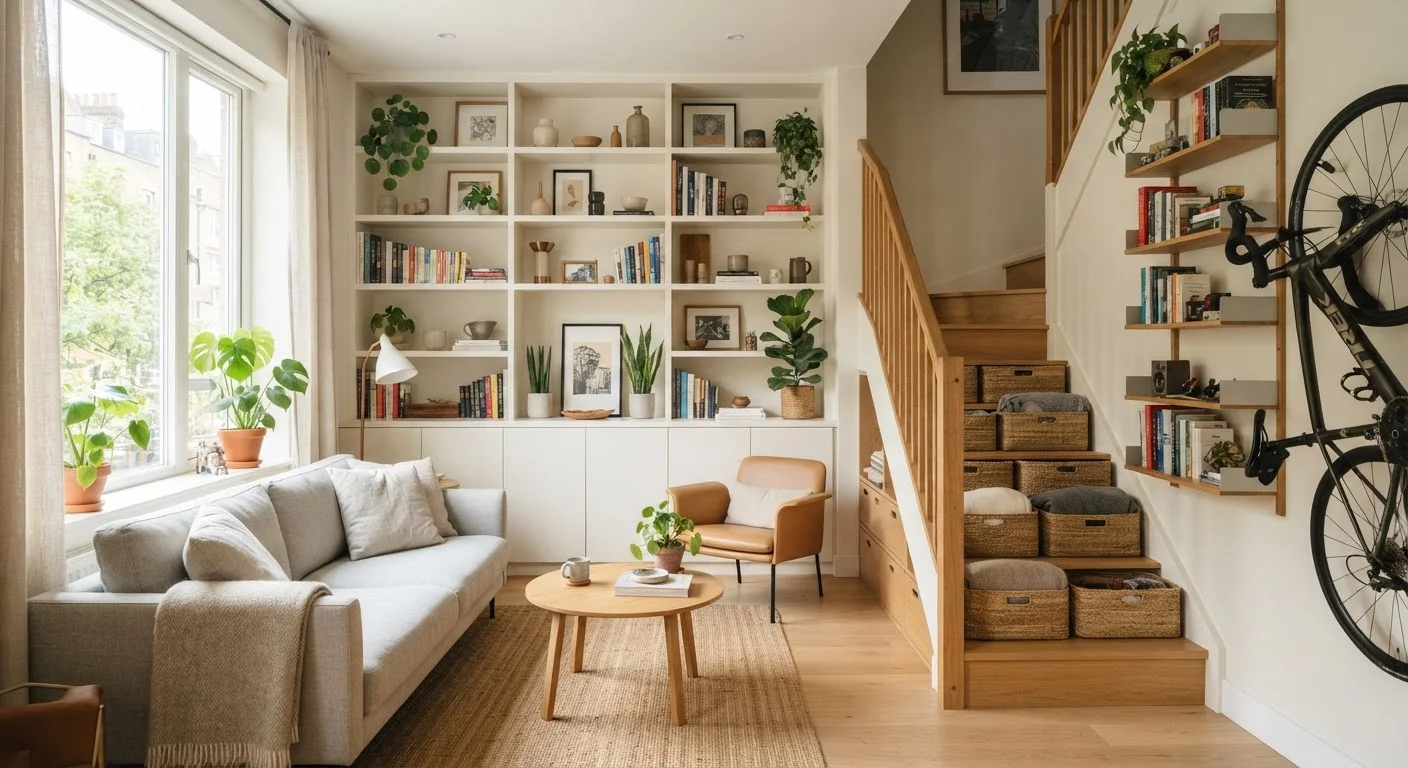
When floor space runs out, the walls become your next frontier. Installing shelves that run from mid-wall up toward the ceiling - in hallways, above sofas, or flanking windows - can add meaningful storage capacity without consuming a single square foot of floor. Adjustable shelving systems let you reconfigure as your needs shift.
Use higher shelves for rarely accessed items like seasonal décor or archival documents, and keep eye-level shelves for everyday essentials. Open shelving looks best when items are loosely grouped and edited - overcrowding negates the benefit and adds visual noise.
Walls running floor to ceiling are often the most overlooked storage opportunity in any small home.
Use furniture that works double duty
A storage ottoman, a bed frame with built-in drawers, a bench with a hinged lid - each of these replaces a piece of furniture you'd have anyway while quietly adding storage. In a small living room, a coffee table with lower shelves or interior compartments can hold blankets, remotes, and books that would otherwise migrate to surfaces.
When evaluating any new furniture purchase, make storage capacity part of the criteria alongside aesthetics and function. Over time, swapping out single-purpose pieces for dual-purpose alternatives meaningfully reduces clutter accumulation.
Every piece of furniture in a small home should earn its place by serving at least two purposes.
Exploit hidden zones throughout your home
Hidden zones are the pockets of space that don't read as storage until you look intentionally: the cavity above kitchen cabinets, the gap between a refrigerator and a wall, the area under a staircase, the space above a door frame. These spots work particularly well for items you don't need frequent access to.
Under-bed storage is among the most efficient hidden zones available. Low-profile bins or vacuum-compression bags can house off-season clothing, extra bedding, or shoes. If your bed frame sits too low, risers can create clearance. The key is keeping these zones intentional - assigned to specific categories rather than becoming overflow dumps.
Under beds, above doors, and beside appliances are often completely untapped storage zones.
Zone single rooms for multiple functions
In a studio apartment or a home with an open floor plan, the absence of walls means the absence of visual cues that signal where one activity ends and another begins. Zoning corrects this by creating implied boundaries using rugs, lighting, or furniture arrangement to mark a sleep area, a work area, and a relaxation area within the same room.
Effective zoning also reduces clutter by giving every activity its own home. Work materials stay in the work zone; relaxation items stay in the lounge area. This kind of spatial discipline is especially useful when multiple adults share the same space and have different organizational habits.
Defining zones within a single room gives every activity - and its clutter - a designated home.
Adopt a category-based approach to drawers and cabinets
In small spaces, disorganized drawers and cabinets erase the benefit of having them. A category-based approach assigns every item to a consistent, logical group - kitchen tools together, batteries and small electronics together, cleaning supplies together - and keeps each group in one place. This eliminates the searching and restacking that slowly unravels even well-intentioned storage systems.
Drawer dividers and small bins are the workhorses of this approach. They don't need to be expensive - simple cardboard or fabric dividers work as well as custom inserts. The goal is to make it obvious at a glance where something lives and where it should return. For a room-by-room audit of your current storage gaps, the Room-by-Room Home Organization Checklist is a practical starting point.
Category-based storage means every item has a known home, which makes both finding and returning things effortless.
Edit your belongings before organizing them
No storage system compensates for too much stuff. Before investing in bins, shelves, or new furniture, take stock of what you actually own. Items that are broken, duplicated, or unused for over a year are strong candidates for donation, recycling, or disposal. Reducing volume is always more effective than adding containers.
The editing process doesn't need to be a single overwhelming purge. Working through one category at a time - clothing, kitchen equipment, paperwork - in manageable sessions is more sustainable. Once your space reaches a functional baseline, maintenance habits like the one-in, one-out rule help prevent re-accumulation without requiring constant effort.
Reducing what you own is always more effective than finding smarter ways to store more of it.
Renting? Know Your Limits First
Many wall-mounting and shelving solutions require drilling, which may be restricted under your lease. Before installing anything permanent, review your rental agreement and check with your landlord. Freestanding shelving units and tension-rod systems are often a practical alternative that leaves walls intact. Some adhesive mounting systems are also renter-friendly, though weight limits apply - always check manufacturer guidance before loading them.
Keeping Your System Working Over Time
Small-space organization isn't a one-time project - it's an ongoing practice. The most thoughtfully designed storage system will gradually break down without light, consistent maintenance. The good news is that maintenance doesn't require a weekend overhaul if the foundational systems are sound. When everything has a clear, logical home, returning items to their place becomes the default rather than the exception.
If you're working within a tight household budget while making these improvements, it's worth noting that most of the highest-impact changes - editing belongings, zoning rooms, reorganizing drawers - cost nothing at all. For improvements that do involve purchases, pacing them over time can make a meaningful difference. Strategies for saving on a tight income can help you fund upgrades incrementally without financial strain. And if open-plan layouts are a factor in your space planning, it's worth understanding the trade-offs of open-plan living before making any structural changes.