

Key Takeaways
- Payment history is the single biggest factor in your credit score, accounting for roughly 35% of your FICO Score.
- Credit utilization - how much of your available credit you're using - makes up about 30% of your score.
- Your score does not include your income, employment status, or bank account balances.
- Late payments can stay on your credit report for up to seven years and significantly drag down your score.
- Regularly checking your own credit score does not hurt it - only hard inquiries from lenders do.
- Small, consistent habits - like paying on time - have a greater long-term impact than any quick fix.
Credit Score
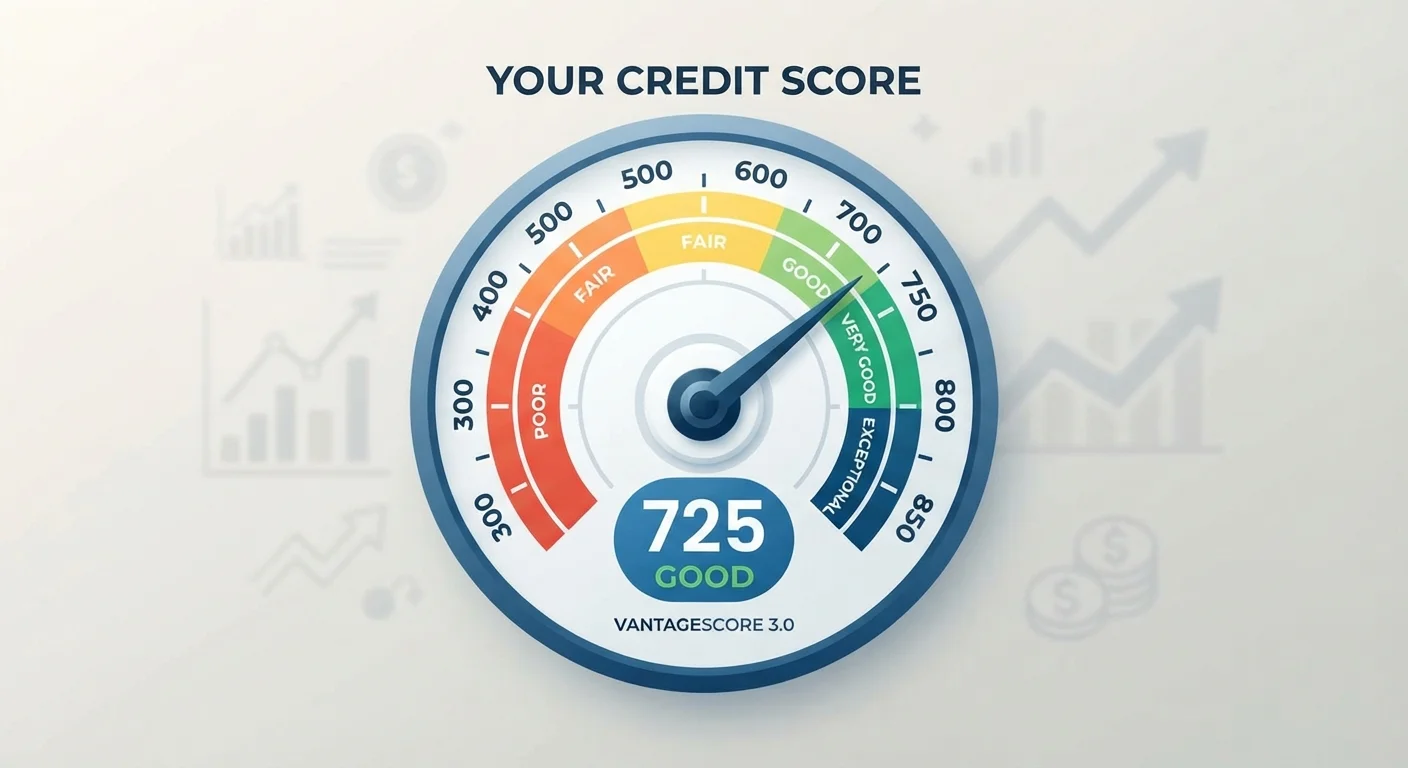
A credit score is a three-digit number - typically ranging from 300 to 850 - that represents how reliably you've managed borrowed money. Lenders use it to quickly assess the risk of lending to you. The higher the score, the more confident a lender is that you'll repay what you borrow.
The most widely used scoring model in the US is the FICO Score, though VantageScore is also common. Both use similar input data but weight factors slightly differently, so your score can vary between models and bureaus.
The Five Factors That Build Your Score
Credit scores don't come from a single data point - they're calculated from five categories of information, each weighted differently. Understanding the breakdown is the fastest way to understand why your score is where it is.
- Payment history (35%): Whether you've paid bills on time. A single 30-day late payment can noticeably drop your score.
- Credit utilization (30%): The percentage of your available revolving credit you're currently using. Using less than 30% of your limit is widely recommended - lower is generally better. For a deeper look, see The Full Picture on Credit Utilization.
- Length of credit history (15%): How long your accounts have been open, including the age of your oldest account and the average age of all accounts.
- Credit mix (10%): Having a variety of account types - credit cards, installment loans, mortgages - shows you can manage different kinds of debt.
- New credit (10%): Recent applications for new credit. Each hard inquiry can temporarily lower your score by a few points.
These percentages apply to the standard FICO Score model. VantageScore uses similar inputs but weights them differently.
35%
Weight of payment history in FICO Score
According to FICO, payment history is the single largest factor in calculating a standard FICO Score.
~1 in 5
Americans with errors on their credit report
A Federal Trade Commission study found that roughly one in five consumers had an error on at least one of their three credit reports.
300-850
Standard FICO Score range
FICO Scores range from 300 (poorest) to 850 (exceptional), with most US consumers scoring between 600 and 750.
What Your Score Doesn't Measure
Just as important as what's included is what's left out. Your credit score tells lenders nothing about your income, your savings, your job title, or how much money is in your checking account. Many people are surprised to learn that a high earner with poor payment habits can have a lower score than someone earning minimum wage who pays every bill on time.
This is a key point worth understanding: creditworthiness and wealth are not the same thing. For more on this distinction, see why a good income doesn't automatically mean a good credit score.
Your score also doesn't reflect your race, gender, age, or where you live - these are legally prohibited from influencing credit scoring models under the Equal Credit Opportunity Act.
Credit Scores vs. Credit Reports: Not the Same Thing
Your credit report is the full document - a detailed record of every account, payment, and inquiry. Your credit score is a number calculated from that report. You can have errors on your credit report that are dragging down your score without even knowing it. Checking your report (not just your score) is how you catch those problems. Under federal law, you're entitled to free reports from each of the three major bureaus annually at AnnualCreditReport.com.
Why the Number Matters in Real Life
Your credit score affects more than just loan approvals. Lenders use it to set your interest rate - a lower score typically means a higher rate, which can cost you thousands of dollars over the life of a mortgage or auto loan. Landlords often check credit scores before approving rental applications. Some employers review credit reports (though not scores directly) as part of background checks. Even some utility providers use credit history when deciding whether to require a security deposit.
The score is ultimately a tool - one piece of information lenders use to make decisions. Understanding what drives it puts you in a better position to manage it intentionally. For a closer look at the raw data that feeds your score, see everything on your credit report and what it means.
Building and Protecting Your Score Over Time
There's no shortcut to a strong credit score, but there is a reliable path. Paying every bill by its due date - even if it's just the minimum - is the single most effective habit you can build. Keeping your credit card balances low relative to your limits is the next most impactful move.
Beyond those two, avoid opening several new accounts in a short period, keep older accounts open when possible, and review your credit report at least once a year to catch errors. Mistakes on credit reports are more common than most people realize, and disputing inaccurate information is your right under federal law.
For a structured way to do this, your annual credit health audit walks through exactly what to look for and when.
This article is for general informational and educational purposes only and does not constitute personalized financial or legal advice. For guidance specific to your situation, consult a qualified financial professional.