

| Primary need categories | Housing, food, utilities, health care, transportation to work |
| 50/30/20 rule allocation for needs | 50% of after-tax income (50/30/20 budgeting framework) |
| 50/30/20 rule allocation for wants | 30% of after-tax income (50/30/20 budgeting framework) |
| 50/30/20 rule allocation for priorities | 20% of after-tax income (savings & debt repayment) (50/30/20 budgeting framework) |
| Most common misclassification | Upgraded lifestyle expenses reclassified as needs after income rises |
| Financial priority examples | Emergency fund, retirement contributions, high-interest debt payoff |
Why the Lines Keep Moving
Most personal finance advice tells you to separate wants from needs. Simple enough in theory. In practice, it falls apart the moment you're standing in a grocery aisle debating whether the name-brand cereal is a necessity or an indulgence — or deciding whether your gym membership counts as a health need or a lifestyle want.
The problem isn't that you lack discipline. It's that the categories themselves are incomplete. A third category — financial priorities — is what actually drives sound money decisions, and most frameworks leave it out entirely.
This article gives you cleaner definitions and a practical way to apply them in everyday spending decisions.
Need
A spending category covering goods or services whose absence causes direct, concrete harm to health, safety, or basic functioning. Examples include housing, food, utilities, and essential medications.
Want
A purchase that improves comfort, enjoyment, or quality of life but isn't required for basic functioning. Wants are a legitimate part of any budget but should be chosen consciously.
Financial Priority
A savings or debt-related goal that you deliberately treat as a fixed commitment, even though it may feel optional in the moment. Examples include emergency fund contributions and high-interest debt repayment.
Lifestyle Creep
The gradual process by which wants become reclassified as needs as income rises, leading spending to expand alongside earnings without a corresponding increase in financial security.
Minimum Payment Trap
The habit of paying only the minimum required on a debt balance, which extends repayment timelines significantly and results in substantially more interest paid over time.
Definitions: Needs, Wants, and Financial Priorities
Here's how to think about each category with enough precision to be useful:
Needs
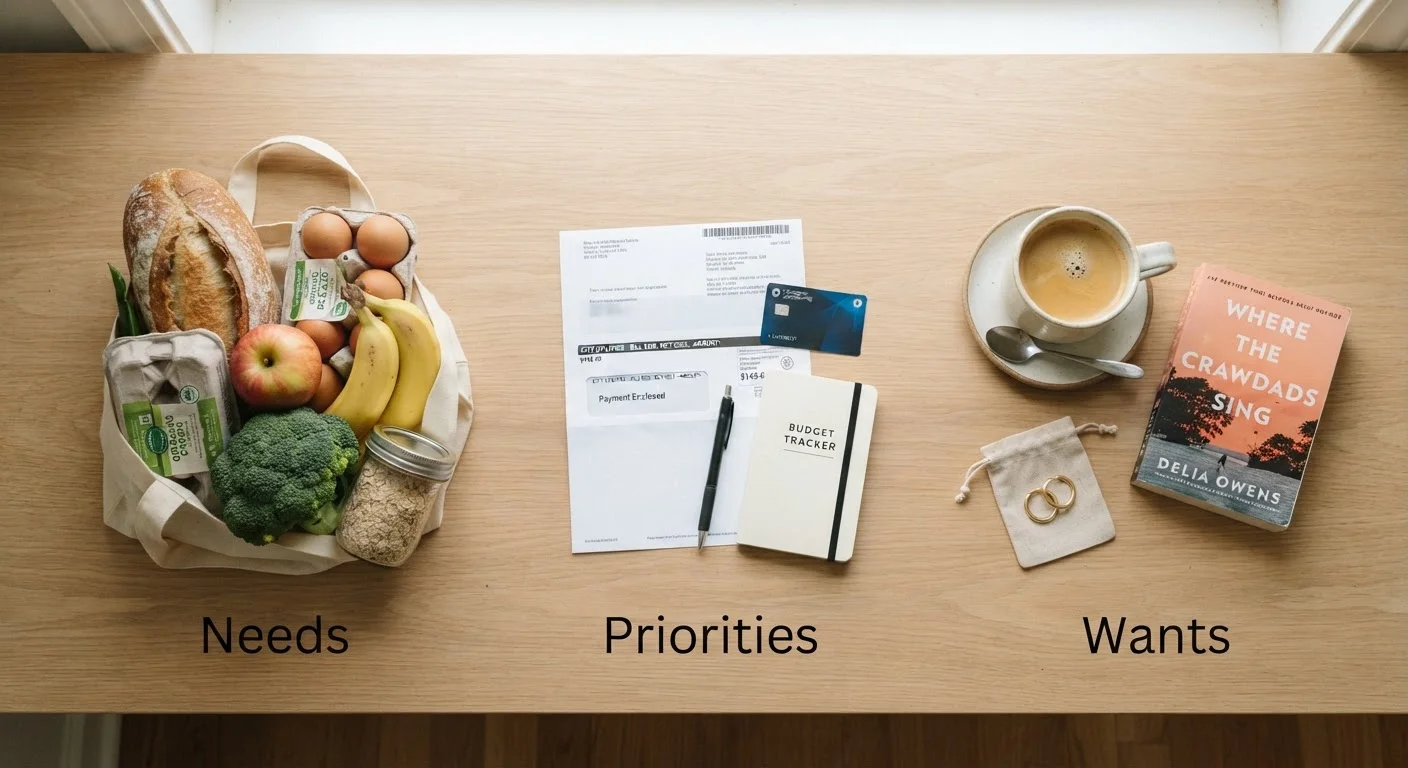
A need is something whose absence creates a direct, concrete harm — to your health, safety, or ability to function in society. Rent, utilities, food (not any specific food, but adequate nutrition), basic clothing, and essential medications are needs. The test isn't emotional — it's functional. If going without it causes real harm, it's a need.
Wants
A want is a purchase that improves comfort, enjoyment, or quality of life but isn't required for basic functioning. Streaming subscriptions, restaurant meals, a new phone when yours still works, a vacation — these are wants. That doesn't make them bad. Wants are a legitimate part of spending. The goal isn't to eliminate them; it's to choose them consciously.
Financial Priorities
This is the category most frameworks skip. A financial priority is a spending or saving choice you deliberately move to the front of the line because it serves a specific, meaningful goal — even when it feels optional in the moment. Paying down high-interest debt, building an emergency fund, or contributing to a retirement account are financial priorities. They aren't needs in the immediate sense, but treating them as optional is what keeps people financially stuck.
The 50/30/20 budgeting framework captures some of this logic by ring-fencing 20% of income for savings and debt repayment — effectively codifying financial priorities as a fixed line item rather than an afterthought.
| Primary need categories | Housing, food, utilities, health care, transportation to work |
| 50/30/20 rule allocation for needs | 50% of after-tax income (50/30/20 budgeting framework) |
| 50/30/20 rule allocation for wants | 30% of after-tax income (50/30/20 budgeting framework) |
| 50/30/20 rule allocation for priorities | 20% of after-tax income (savings & debt repayment) (50/30/20 budgeting framework) |
| Most common misclassification | Upgraded lifestyle expenses reclassified as needs after income rises |
| Financial priority examples | Emergency fund, retirement contributions, high-interest debt payoff |
Where People Get Stuck
The most common mistake is letting emotional context reclassify spending in the moment. A want starts to feel like a need when you're tired, stressed, or comparing yourself to others. A financial priority gets downgraded to optional when money feels tight and the payoff is invisible in the short term.
Two scenarios worth knowing:
- Lifestyle creep: As income rises, wants quietly get reclassified as needs. The upgraded apartment, the newer car — these feel essential after a while, but they weren't before. If you're wondering whether a car purchase is a want or a need, the financial trade-offs between leasing and buying are worth examining carefully before committing.
- Priority avoidance: Paying minimum balances on debt while spending freely on wants is one of the most expensive habits in personal finance. High-interest debt repayment is a financial priority — the interest compounds against you every month you delay it. For a broader look at how debt fits into the picture, the Debt & Credit hub is a useful reference.
Shared finances add another layer of complexity. When two people have different instincts about what counts as a need versus a want, spending disagreements become frequent. Budgeting as a household means getting those definitions aligned explicitly, not just assuming you agree.
A Simple Test You Can Actually Use
Before any non-routine purchase, run it through three questions:
- Does going without this cause real harm? If yes, it's a need. Act accordingly.
- Does this serve a defined financial goal I've already committed to? If yes, it's a priority. Treat it like a fixed expense.
- Is this adding genuine value to my life, or am I just reacting to stress, habit, or social pressure? If it's the latter, it's a want — worth pausing on before spending.
The point isn't to judge every purchase. It's to make the decision consciously rather than by default. Small, consistent choices made with this kind of clarity are exactly what compound into meaningful financial outcomes over time.
This article is for general informational purposes only and does not constitute personalized financial advice. For guidance specific to your situation, consider consulting a licensed financial professional.