

Key Takeaways
- Mental stimulation is as essential to pet health as physical exercise and proper nutrition.
- Indoor enrichment is generally safer and more controllable, but requires intentional setup.
- Outdoor enrichment provides richer sensory input, though it carries environment-specific risks.
- The ideal approach for most pets combines elements of both, tailored to species and lifestyle.
- Enrichment quality matters more than quantity — activities should match your pet's natural behaviors.
Our Verdict
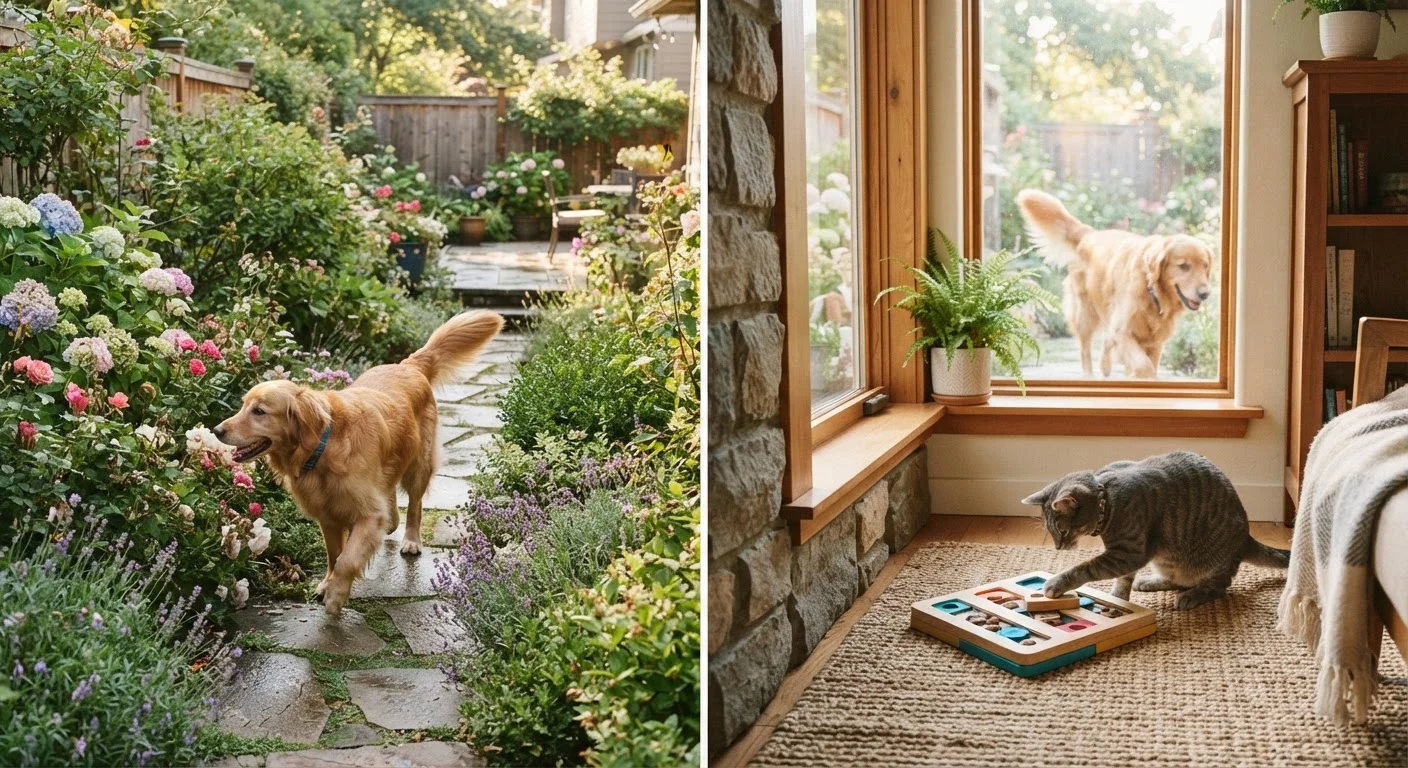
Neither indoor nor outdoor enrichment is universally superior — each has meaningful strengths and limitations. Indoor activities offer consistency, safety, and accessibility regardless of weather or space, while outdoor experiences deliver unmatched sensory variety and physical engagement. For most pets, a thoughtful combination of both, adapted to their species, temperament, and your living situation, provides the most complete mental stimulation.
| Best for | Recommended |
|---|---|
| Apartment dwellers or owners with limited outdoor access | Indoor enrichment |
| Dogs with high energy or strong scent-driven instincts | Outdoor enrichment |
| Cats or small animals with sensitive temperaments | Indoor enrichment |
| Most pets in varied living situations | A blend of both approaches |
Why Mental Enrichment Is Non-Negotiable for Pets
Boredom in pets isn't just an inconvenience — it's a welfare concern. Without adequate mental stimulation, many animals develop stress-related behaviors like excessive barking, destructive chewing, over-grooming, or repetitive pacing. These behaviors are often misread as disobedience when they're actually signs of an under-stimulated mind.
Enrichment — any activity that engages a pet's senses, problem-solving abilities, or natural instincts — helps fill that cognitive need. The question most owners face isn't whether to provide enrichment, but which kind works best for their pet and situation. Enrichment activities matched to natural behavioral needs can make an especially significant difference when problem behaviors are already present.
What Indoor Enrichment Offers
Indoor enrichment covers a wide range of activities: puzzle feeders, snuffle mats, interactive toys, scent games, training sessions, and environmental modifications like climbing structures or window perches. Its biggest advantages are consistency and control.
- Weather-independent: Enrichment happens rain or shine, in any season.
- Safer for vulnerable pets: No exposure to off-leash dogs, toxic plants, parasites, or traffic.
- Easy to supervise: You can monitor your pet's engagement and stress levels closely.
- Adaptable for small spaces: Many effective indoor activities require minimal room.
The main limitation is sensory variety. Indoor environments, no matter how thoughtfully arranged, can't fully replicate the richness of a natural setting. Rotating activities and introducing novel scents or textures helps counteract habituation over time. See how to set up a home your pet will feel safe in for room-by-room ideas that support mental comfort.
Rotate Activities to Prevent Boredom
Even the most engaging puzzle toy loses its appeal once a pet has mastered it. Aim to introduce at least one new indoor enrichment activity or variation each week. Swapping toys in and out of rotation — rather than leaving everything available at once — helps maintain novelty without requiring constant new purchases.
What Outdoor Enrichment Offers
Outdoor environments are naturally rich in stimulation — shifting smells, sounds, textures, and sights engage a pet's senses in ways that are difficult to recreate indoors. For dogs especially, a 20-minute sniff-led walk can be more mentally tiring than a longer structured exercise session, because it activates their primary sense in a complex, unpredictable way.
- Richer sensory input: Smells, sounds, and visual variety change daily.
- Species-appropriate behaviors: Foraging, tracking, and exploration are expressed naturally.
- Social opportunities: Controlled exposure to other animals and people supports behavioral confidence.
That said, outdoor enrichment requires more planning. Traffic, wildlife, parasites, and unpredictable dogs are real risks that vary by location. Leash manners, vaccination status, and supervision level all affect how safely a pet can benefit from outdoor time. For a broader look at how environment shapes feline wellbeing specifically, the health trade-offs of indoor vs. outdoor cat life is worth reviewing.
| Indoor Enrichment | Outdoor Enrichment | |
|---|---|---|
| Sensory variety | Moderate; requires active rotation | High; naturally varied daily |
| Safety level | High; controlled environment | Variable; depends on location and supervision |
| Weather dependence | None | Significant |
| Space required | Minimal; adaptable to small homes | Moderate to high |
| Setup effort | Moderate; needs regular rotation | Low to moderate; nature provides variety |
| Best suited for | All pets, especially sensitive or vulnerable animals | Dogs, high-energy breeds, confident pets |
Building a Routine That Works for Your Pet
The most effective enrichment strategy isn't about choosing one setting over the other — it's about building a consistent, varied routine that draws on the strengths of both. Predictability itself is calming for most animals; knowing that stimulating activities happen at regular intervals reduces background anxiety.
A practical starting point: anchor two or three indoor enrichment activities into your daily schedule (a puzzle feeder at mealtimes, a short training session in the evening), then layer in outdoor time as your situation allows. A daily routine that supports good pet behavior offers a helpful checklist for evaluating whether your current schedule meets your pet's needs.
For owners in apartments or areas with limited safe outdoor access, indoor enrichment can absolutely meet a pet's needs — provided activities are rotated frequently and match the animal's natural behavioral profile. Small animals like rabbits or guinea pigs, for instance, thrive with indoor foraging setups and rarely require outdoor time at all.
This article provides general educational information about pet enrichment and is not a substitute for personalized guidance from a veterinarian or certified animal behaviorist.