

Key Takeaways
- Pets need a designated retreat space where they can decompress without interruption.
- Consistent placement of food, water, and resting areas reduces daily confusion and anxiety.
- Sensory inputs — noise, scent, and lighting — matter as much as physical layout.
- Gradual introductions to new spaces help pets build confidence at their own pace.
- Small hazard checks before arrival prevent the most common home-safety incidents.
- A calm setup on day one makes long-term behavior and bonding much easier to establish.
What you will need
Why the Physical Environment Shapes Pet Well-Being
When a pet arrives in a new home, everything is unfamiliar — the smells, the sounds, the layout, the people. That novelty alone can be overwhelming, especially for animals who had little early socialization or who came from chaotic backgrounds. A thoughtfully arranged space doesn't just prevent accidents; it actively communicates safety to a nervous animal.
Behavioral research consistently shows that animals experiencing chronic low-level stress are more likely to develop unwanted habits — excessive vocalization, destructive chewing, house-soiling, or withdrawal. Understanding what triggers that stress is the first step toward preventing it. Our guide on signs your pet may be stressed walks through the behavioral cues worth watching for once your pet settles in.
The good news: most of what makes a home feel safe to a pet is practical, low-cost, and achievable before your animal even walks through the door.
What you will need
Room-by-Room Setup: What to Prioritize
Not every room needs a complete overhaul — but a few targeted changes across key areas make a meaningful difference.
Entryways and Common Areas
Keep these spaces calm during the first few days. Loud televisions, frequent visitors, and sudden loud noises are among the most common triggers for new-pet anxiety. Position your pet's initial resting area away from the front door if possible, so arrivals and departures don't constantly disrupt their sense of security.
Sleeping and Retreat Zones
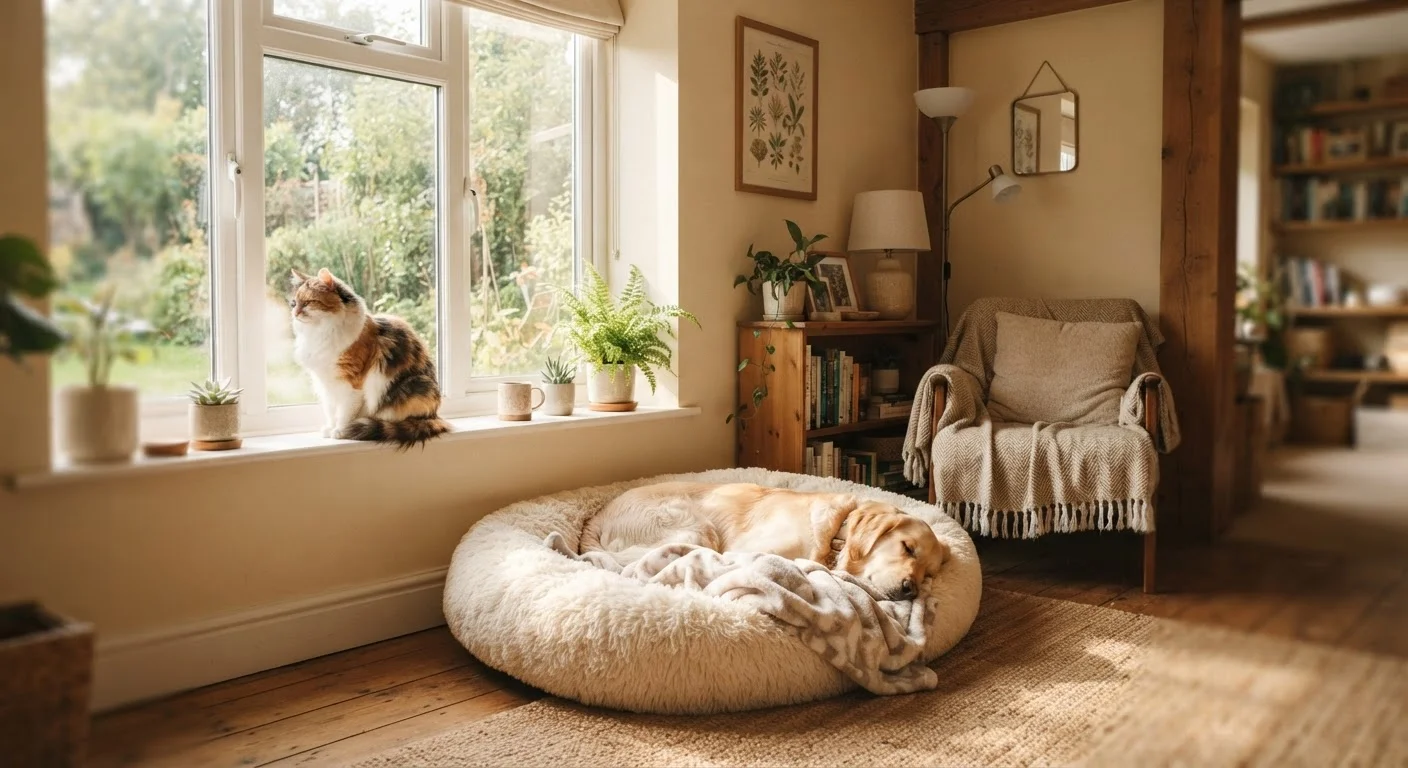
Every pet needs at least one dedicated retreat — a place they can go where they will not be disturbed. For dogs, a crate with the door left open (lined with soft bedding and a worn item of your clothing) often works well. Cats typically prefer elevated resting spots or enclosed hideaways. Small animals like rabbits or guinea pigs need a quiet, draft-free corner away from high foot traffic.
Feeding Stations
Place food and water bowls in a consistent location from day one. Cats, in particular, are sensitive to bowl placement — many prefer their water source to be separated from their food. Keep feeding areas away from litter boxes or pet toileting zones. Predictability in feeding location supports the kind of daily routine that supports good behavior in most animals.
Litter Boxes and Elimination Areas
For cats, the standard guidance is one litter box per cat, plus one extra. Place boxes in low-traffic, accessible spots — never cornered in a noisy laundry room or near loud appliances. For dogs, designate a consistent outdoor toileting spot from the first walk, and use the same exit each time to reinforce the pattern.
Scent Is a Powerful Settling Tool
Placing an unwashed item of your clothing in your pet's sleeping area introduces your scent in a non-threatening way, which can help them feel less alone during the adjustment period. This is particularly effective for dogs and rabbits. For cats, synthetic pheromone products (available in diffuser form) are sometimes used to support settling — ask your vet whether they're appropriate for your situation.
Step-by-Step: Setting Up Before Arrival
Complete a room-by-room hazard check
Walk through each room at your pet's eye level. Look for loose electrical cords, small objects that could be swallowed, toxic houseplants (such as lilies for cats or xylitol-containing foods for dogs), open trash bins, and gaps where small animals could become trapped. Address these before your pet arrives — not after their first unsupervised hour.
Set up the primary retreat space
Choose one quiet area — a spare room, a bathroom, or a sectioned-off corner — and make it your pet's home base for the first few days. Add familiar-smelling bedding if possible (ask the shelter or breeder for a piece of fabric with the pet's existing scent). Place water here. Keep this zone off-limits to children and other pets initially.
Install consistent feeding and water stations
Place food and water bowls in the location you intend to keep them long term. Changing bowl locations frequently causes unnecessary confusion. Use appropriately sized bowls — wide, shallow dishes are often more comfortable for cats with sensitive whiskers, while dogs with long ears may benefit from narrower, deeper bowls.
Reduce sensory overload on arrival day
On the day your pet comes home, keep the environment as calm as possible. Limit visitors, lower television or speaker volume, and avoid rearranging furniture. Let your pet investigate the retreat space first before giving access to additional rooms. Allow them to approach you rather than initiating prolonged contact immediately.
Gradually expand access to the rest of the home
After your pet is eating, drinking, and resting comfortably in their initial zone — typically within a few days to a week — begin opening access to one additional room at a time. Supervise these explorations early on. Watch for signs of confidence (relaxed body posture, curiosity, normal appetite) before expanding further.
Sensory Comfort and Long-Term Adjustments
Physical layout is only part of the equation. Sensory inputs — particularly sound and scent — play a significant role in how secure a pet feels. White noise machines or quiet background music can buffer startling sounds for dogs and cats alike. Avoid strong chemical cleaning products or air fresheners in your pet's primary spaces; their sense of smell is far more acute than ours, and harsh scents can be genuinely distressing.
As your pet settles in over days and weeks, gradually expand their access to more of the home rather than giving free run immediately. This phased approach helps animals build confidence and reduces the chance of overwhelm. If you're adding a second animal to the home, a careful structured introduction process is essential — their separate safe spaces should be established before the first meeting.
For a broader view of what the first year looks like, The First-Year Pet Owner's Roadmap covers the key milestones beyond the initial setup. And once your pet is settled at home, indoor and outdoor enrichment becomes the next priority for long-term mental health.
This article is for general informational purposes only and does not constitute veterinary or behavioral advice. If your pet shows persistent signs of stress, fear, or unusual behavior, consult a licensed veterinarian or certified animal behaviorist.
Don't Skip the Hazard Check for Small Animals
Rabbits, guinea pigs, ferrets, and birds face household hazards that dog- and cat-proofing often misses — including non-stick cookware fumes (toxic to birds), gaps in baseboards, and foods harmless to humans but dangerous to small mammals. Research species-specific hazards before your pet's first day at home, and consult your veterinarian if you're unsure.