

Why Dental Health Varies So Much Between Species
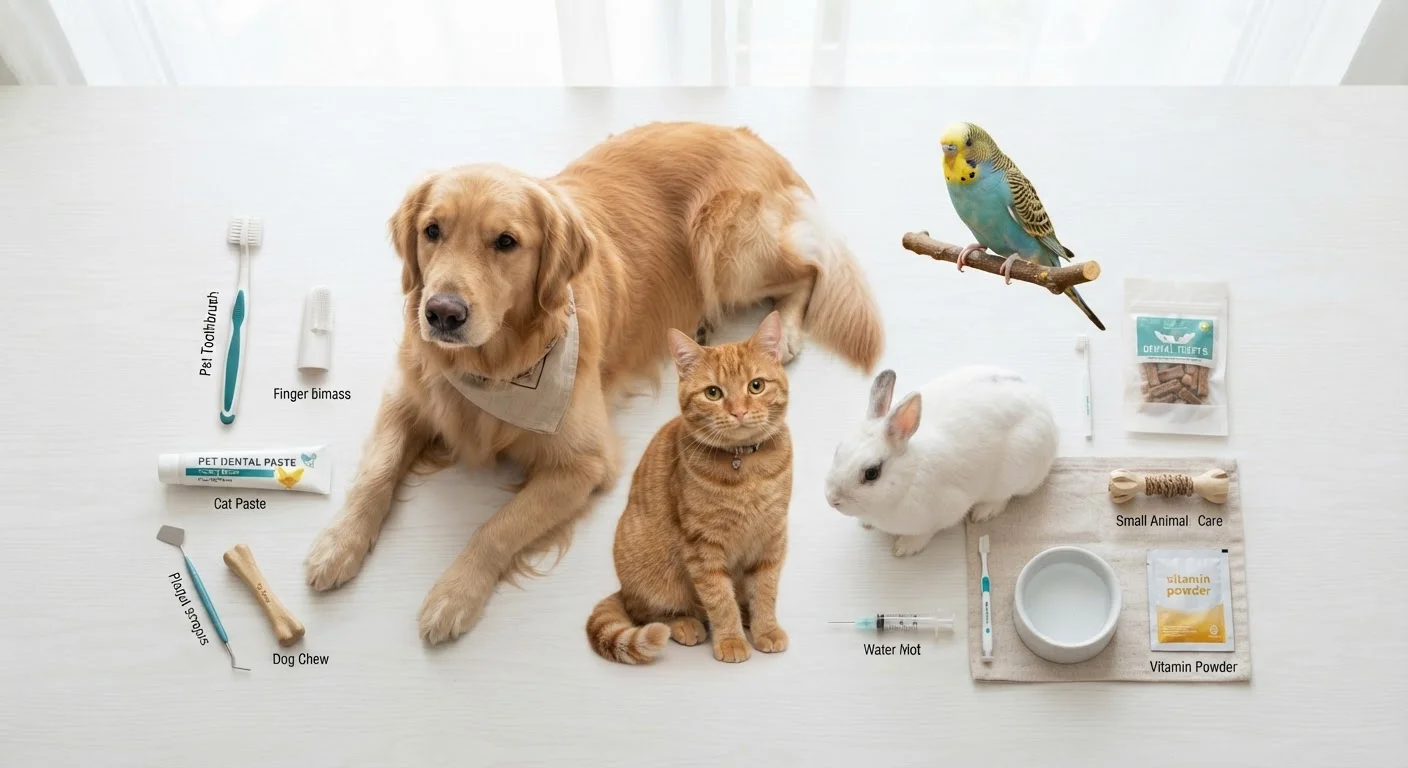
Pet dental health isn't one-size-fits-all. The structure of an animal's mouth, what they eat, how their teeth grow, and which problems they're prone to all differ significantly by species. Yet many owners apply the same assumptions across every animal they care for — often missing warning signs unique to a particular pet.
This reference breaks down what dental health actually looks like for the most common household pets, and what owners should be paying attention to. For a broader look at how routine care differs with age, see our guide on senior pet health needs.
Dogs: Periodontal Disease Is the Main Concern
Dogs are highly susceptible to periodontal disease — infection and inflammation of the structures supporting the teeth. Veterinary dental research consistently finds that a significant proportion of dogs show signs of dental disease by age three. The condition progresses silently, often without obvious pain signals until it's advanced.
What to look for: yellowing or brown tartar buildup along the gumline, persistent bad breath, red or swollen gums, and reluctance to chew hard food or toys. Daily tooth brushing with a pet-safe toothpaste is the gold standard for prevention. Professional cleanings under anesthesia allow vets to examine below the gumline where home care can't reach.
Small-breed dogs tend to develop dental problems earlier due to crowded teeth. Common dental misconceptions — like assuming bad breath is just "normal dog breath" — are worth reviewing for any dog owner.
Cats: Resorptive Lesions and Hidden Pain
Cats share periodontal disease risks with dogs, but they also face a condition almost unique to their species: tooth resorption (sometimes called feline odontoclastic resorptive lesions, or FORLs). In this process, the tooth structure erodes from the inside out, often at the gumline. It can be extremely painful, yet cats are skilled at masking discomfort.
Signs worth noting include dropping food while eating, chewing on one side, excessive drooling, or pawing at the mouth. Because cats hide pain instinctively, many resorptive lesions are only found during professional dental exams — another reason annual vet visits that include a mouth check matter.
Brushing a cat's teeth is effective, though many cats require gradual, patient introduction to the process. Even partial compliance is better than none. This fits neatly into a broader manageable grooming routine.
Periodontal disease
Infection and inflammation affecting the gums, ligaments, and bone that support the teeth. It is the most common dental disease in dogs and cats, often progressing without obvious symptoms until advanced stages.
Tooth resorption
A painful condition, most common in cats, in which the internal structure of a tooth breaks down over time. It often appears at the gumline and is typically discovered during professional veterinary exams.
Hypsodont / elodont teeth
Types of continuously growing teeth found in rabbits, guinea pigs, and many rodents. Without sufficient wear from chewing fibrous material like hay, these teeth can overgrow and cause serious health problems.
Malocclusion
The misalignment of upper and lower teeth so they do not meet correctly. In rabbits and rodents, malocclusion can interfere with eating and require veterinary correction.
Stomatitis
A bacterial infection of the mouth tissues, sometimes called 'mouth rot' in reptiles. Signs include swelling, discoloration, and unusual mucus inside the mouth.
Tartar (dental calculus)
Hardened mineral deposits that form on tooth surfaces when plaque is not removed. Tartar buildup along the gumline contributes to periodontal disease in dogs and cats.
Rabbits, Guinea Pigs, and Rodents: Teeth That Never Stop Growing
This is where dental care looks fundamentally different. Rabbits, guinea pigs, chinchillas, and many rodents have continuously erupting (hypsodont or elodont) teeth — meaning their teeth grow throughout their lives. Without proper wear, teeth can overgrow, misalign, and cause serious problems including difficulty eating and painful mouth injuries.
For rabbits, the most critical factor is diet: unlimited grass hay (such as timothy or orchard grass) provides the necessary chewing motion to wear teeth down naturally. Pellets and soft foods alone are insufficient. Malocclusion — misalignment of teeth — is common and often requires veterinary correction. Signs include weight loss, drooling, a wet chin, or reduced appetite.
Owners often don't realize that rabbits have both incisors (the visible front teeth) and cheek teeth (molars) far back in the mouth. Cheek tooth problems can only be assessed by a vet with appropriate equipment. Small-animal exotic vets often have the most experience with these species.
For a comprehensive look at everything routine pet care involves — including species-specific considerations — visit our full routine pet care guide.
Birds and Reptiles: A Different System Entirely
Birds do not have teeth at all — they use a beak and, internally, a muscular gizzard to process food. Beak health, however, is still a legitimate concern. Overgrown, misaligned, or cracked beaks can interfere with eating and signal nutritional deficiencies or underlying health issues. Cuttlebone, mineral blocks, and appropriate foraging toys support natural beak wear.
Reptiles vary widely. Some, like ball pythons, have many small, recurved teeth used for gripping prey. Others, like tortoises, have no teeth and use a keratinous beak similar to birds. Reptile dental concerns are largely species-specific and best discussed with an exotic animal veterinarian. Stomatitis — a bacterial mouth infection sometimes called "mouth rot" — is a condition to watch for in snakes and lizards, presenting as swelling, mucus, or discoloration in the mouth.
This article is for general informational purposes only and does not constitute veterinary advice. Always consult a licensed veterinarian for guidance specific to your pet's health and dental care needs.