

Key Takeaways
- Bad breath in pets is not normal — it's often an early sign of dental disease.
- Dental disease can affect a pet's heart, kidneys, and overall health if left untreated.
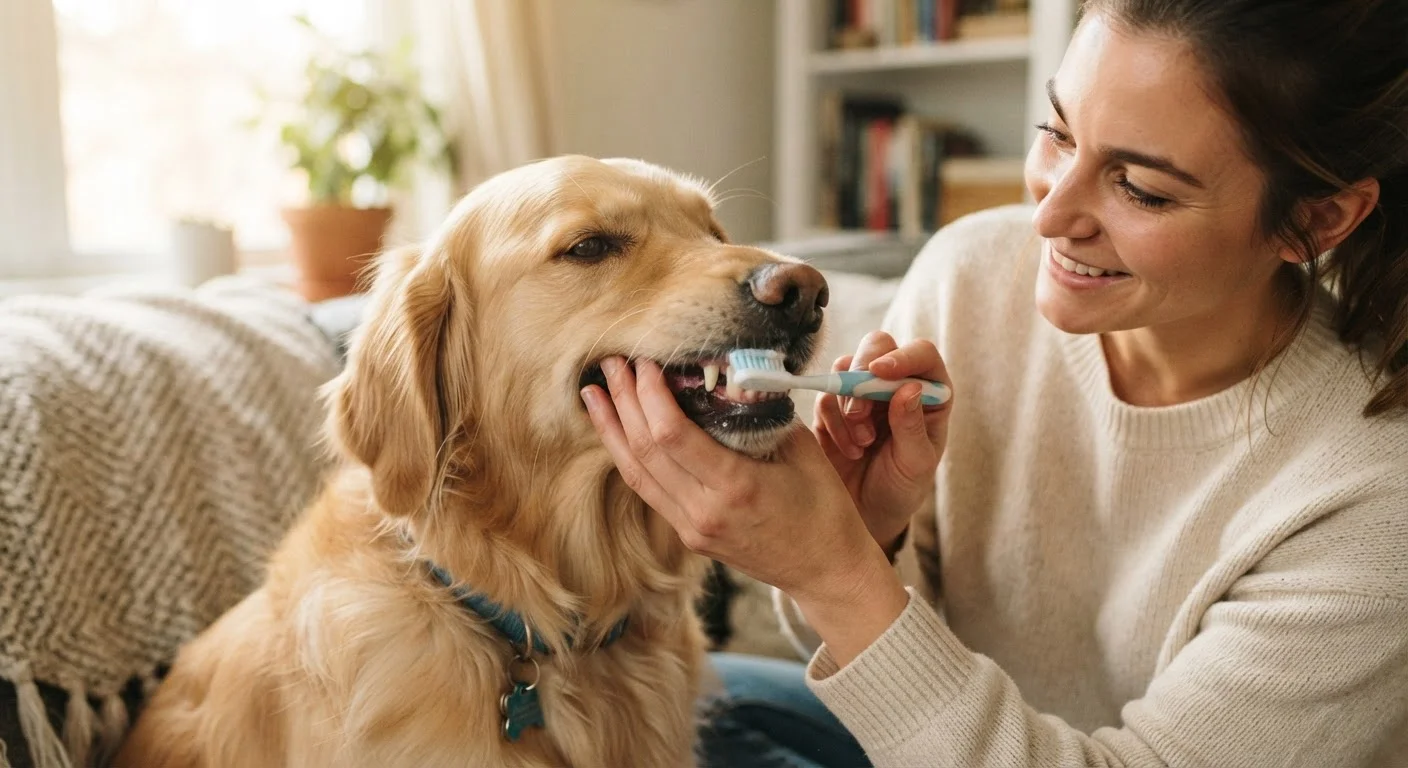
- Brushing remains the gold standard for home dental care, but technique and consistency matter.
- Annual veterinary dental exams are essential even when teeth appear clean.
- Dental chews and toys can help, but they do not replace brushing or professional cleanings.
Why Dental Health Deserves More Attention
Dental disease is one of the most common health conditions diagnosed in adult dogs and cats, yet it consistently gets overlooked in day-to-day pet care routines. According to veterinary professionals, a significant majority of pets over the age of three show some signs of periodontal disease — a condition that begins quietly and progresses without obvious symptoms until it becomes serious.
Part of the challenge is perception. Owners often equate dental health with cosmetic concerns, when in reality oral bacteria can travel through the bloodstream and affect internal organs. Understanding what proper dental care involves — and where well-meaning owners tend to go wrong — is one of the most practical steps you can take for your pet's long-term wellbeing. For a broader view of what routine care looks like from nose to tail, see our complete routine pet care guide.
Dental Disease Is a Whole-Body Issue
Veterinary research suggests that untreated periodontal (gum) disease in pets can allow bacteria to enter the bloodstream, potentially affecting the heart, liver, and kidneys. This means skipping dental care isn't just a cosmetic concern — it can have serious systemic health consequences. Always consult your veterinarian if you notice signs of oral discomfort, persistent bad breath, or changes in eating behavior.
The Mistakes That Compromise Your Pet's Oral Health
Most dental missteps come from misunderstanding what's normal, what's sufficient, and how disease actually develops. The mistakes below are among the most common seen by veterinary professionals — and all of them are correctable once you know what to look for.
Assuming bad breath is just a normal part of pet ownership.
Why it happens: Many owners have grown so accustomed to their pet's breath that they accept it as inevitable, not realizing it signals bacterial buildup or disease.
Skipping home brushing because the pet resists or the owner finds it inconvenient.
Why it happens: Many pets aren't introduced to brushing gradually, making it stressful for both animal and owner. This leads to avoidance rather than consistent habit.
Relying on dental chews or water additives as a complete dental care solution.
Why it happens: Marketing for these products can imply they're sufficient on their own, which leads owners to feel they've covered dental hygiene without brushing.
Waiting until visible symptoms appear before addressing dental health.
Why it happens: Pets instinctively hide discomfort, so owners often don't realize there's a problem until disease has significantly progressed.
Using human toothpaste on pets.
Why it happens: It seems like a convenient substitute, but human toothpaste contains ingredients — including fluoride and xylitol — that are toxic to animals.
It's also worth noting that dental needs vary by species. Dogs, cats, and small mammals like rabbits each face different oral health challenges. Our article on dental health across different pets breaks down what to expect for each.
Building a Dental Routine That Actually Works
Consistency is the cornerstone of effective pet dental care. Brushing several times per week — ideally daily — makes a measurable difference in plaque accumulation compared to monthly or sporadic efforts. Pair home brushing with annual professional cleanings performed under veterinary supervision, which allow for thorough scaling below the gumline where a toothbrush can't reach.
If your pet is still resistant to brushing, speak with your veterinarian about alternative approaches suited to their temperament and species. Dental health also fits naturally into broader annual health planning — our annual pet care checklist includes dental milestones alongside vaccinations and parasite prevention.
This article is for general informational purposes only and is not a substitute for professional veterinary advice. Always consult a licensed veterinarian regarding your specific pet's health needs.