

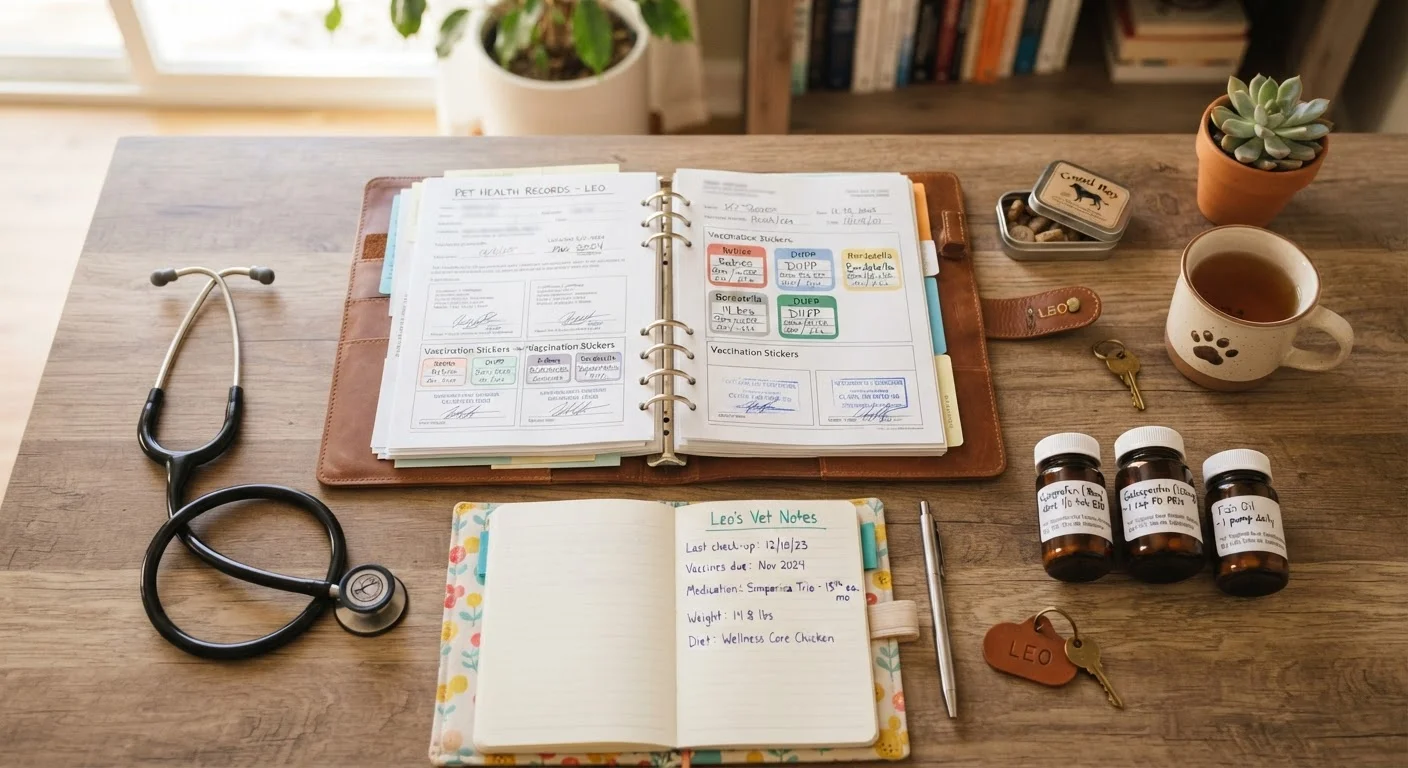
Key Takeaways
- A complete pet health record includes vaccination history, medications, vet contacts, and baseline weight.
- Both digital and physical backup copies protect you from losing critical information during emergencies.
- Keeping records current takes only minutes after each vet visit but pays off significantly over time.
- A centralized system helps any vet — including an emergency clinic — care for your pet more safely.
- Sharing records with all household members ensures someone can always act quickly in a crisis.
What you will need
Why a Pet Health Records System Matters
Most pet owners accumulate years of vet paperwork in random drawers, inboxes, and forgotten folders — then scramble to find key information when it's urgently needed. A structured health records system changes that entirely. It gives any veterinarian who treats your pet a clear, reliable picture of their history, which directly supports better, safer care.
This matters most in two situations: routine wellness exams and emergencies. During a routine annual visit, having complete records helps your vet spot trends — a gradual weight change, a recurring infection — that individual appointments might miss. During a crisis, organized records can prevent dangerous medication errors and save time that could otherwise mean the difference between a good outcome and a poor one. See our guide on pet emergency preparedness for the full picture of what to have ready before a crisis hits.
Beyond emergencies, a solid records habit supports the kind of preventive care approach that keeps pets healthier over time — catching issues early rather than treating them once they've escalated.
What you will need
What to Include and How to Keep It Current
A useful pet health file has four core categories: baseline identity data, vaccination and preventive care history, medication records, and veterinary contacts. Together these cover the information any provider — your regular vet or an unfamiliar emergency clinic — needs to treat your pet responsibly.
Physical binder or accordion folder
Stores printed records, vaccination certificates, and prescription copies in one accessible place.
Cloud storage or notes app (e.g., Google Drive, Apple Notes)
Provides a digital backup accessible from any device, including during emergencies away from home.
Pet health tracking app
Offers structured templates for logging vet visits, medications, and weight in one organized interface.
Scanner or smartphone camera
Digitizes paper documents so they can be stored and shared electronically.
The most common reason records systems fail is that they're never updated after the initial setup. Treat each vet appointment like a trigger: within 24 hours, log what was discussed and any changes to your pet's care. Pair this with a yearly care review to catch anything that's drifted out of date — expired medications, missed booster windows, or changes to your emergency contact list.
If your household includes multiple people who care for the pet, make sure everyone knows where the records are stored and how to access them. A system only one person knows about isn't much of a system at all.
Gather every existing document you can find
Start by pulling together whatever you already have — discharge summaries, vaccination records, prescription labels, surgical reports, and any insurance paperwork. Check old emails for digital records your vet may have sent. Even incomplete records are a starting point. Don't worry if there are gaps; you'll fill those in as you go.
Record baseline health data
Write down your pet's current weight, approximate age or date of birth, breed, and any known allergies or sensitivities. Note their microchip number if they have one. These details form the foundation of every future conversation with any veterinarian and are the first things an emergency clinic will ask for.
Create a vaccination and preventive care log
List every vaccine your pet has received, including the date administered and the due date for the next booster. Add flea, tick, and heartworm prevention products, noting the type used and dosing schedule. Include dental cleanings and any routine screenings. This log is particularly important when boarding, grooming, or crossing state lines with a pet.
Document all current and past medications
For each medication — past or present — record the drug name, the condition it was prescribed for, the prescribed dose, frequency, and the prescribing vet's name. Note any adverse reactions your pet experienced. This list is critical for preventing dangerous drug interactions if your pet ever needs emergency treatment or sees a different provider.
Set up a vet contact and referral directory
Create a single list that includes your primary vet's name, clinic address, phone number, and hours. Add the nearest 24-hour emergency animal hospital and any specialists your pet has seen (dermatologist, cardiologist, etc.). If you use a pet poison helpline, note that number too. Having this list visible — on your fridge or phone — removes critical delays when seconds matter.
Choose your storage format and create a backup
Decide on a primary format — a labeled physical binder or a dedicated digital folder works well for most people. Then create a backup in the opposite format: scan paper documents to the cloud, or print key digital records and file them. A physical copy matters most when internet access fails during a disaster or evacuation.
Build a simple update habit
After every vet visit, take five minutes to update your records. Add the date, what was discussed, any new diagnoses, lab results, and prescription changes. Set a calendar reminder every six months to review the file for anything outdated. A records system only works if it's current — a brief, consistent habit keeps it that way.
Building these habits alongside a stable daily routine for your pet — covered in our guide to daily routines that support good pet behavior — creates a foundation of care that benefits both your pet's physical health and their overall wellbeing.