

Key Takeaways
- A dedicated pet emergency kit should be assembled and reviewed at least twice a year.
- Copies of medical records and vaccination history are essential for shelters and emergency vets.
- Identification — microchip and ID tags — is your pet's best chance of returning home if separated.
- Knowing your evacuation route and pet-friendly destination options before a crisis saves critical time.
- A calm, familiar-smelling item in the kit can help reduce your pet's stress during displacement.
Summary
22 items · 45–90 minutes to assemble
Why Preparation Matters Before the Emergency Arrives
Emergencies rarely give advance notice. Whether it's a house fire, a severe weather event, or a sudden illness, the moments immediately after a crisis strikes are not the time to start locating your pet's vaccination records or searching for an extra leash. The decisions you make before anything goes wrong are what keep both you and your animal safer when it matters most.
This checklist is designed for everyday pet owners — not trained first responders — who want practical, realistic steps they can take this week. Work through it at your own pace, and revisit it every six months to make sure supplies haven't expired and records are up to date. If you're still building foundational habits, The First-Year Pet Owner's Roadmap is a helpful companion resource covering vet visits and early care basics.
Never Use Human Medications on Pets
Many over-the-counter medications safe for humans — including ibuprofen, acetaminophen, and certain antacids — can be toxic or fatal to dogs and cats. Always consult your veterinarian before administering any medication to your pet, and never substitute human products unless explicitly directed by a vet. In a poisoning emergency, contact the ASPCA Animal Poison Control Center or an emergency animal hospital immediately.
What You'll Need to Get Started
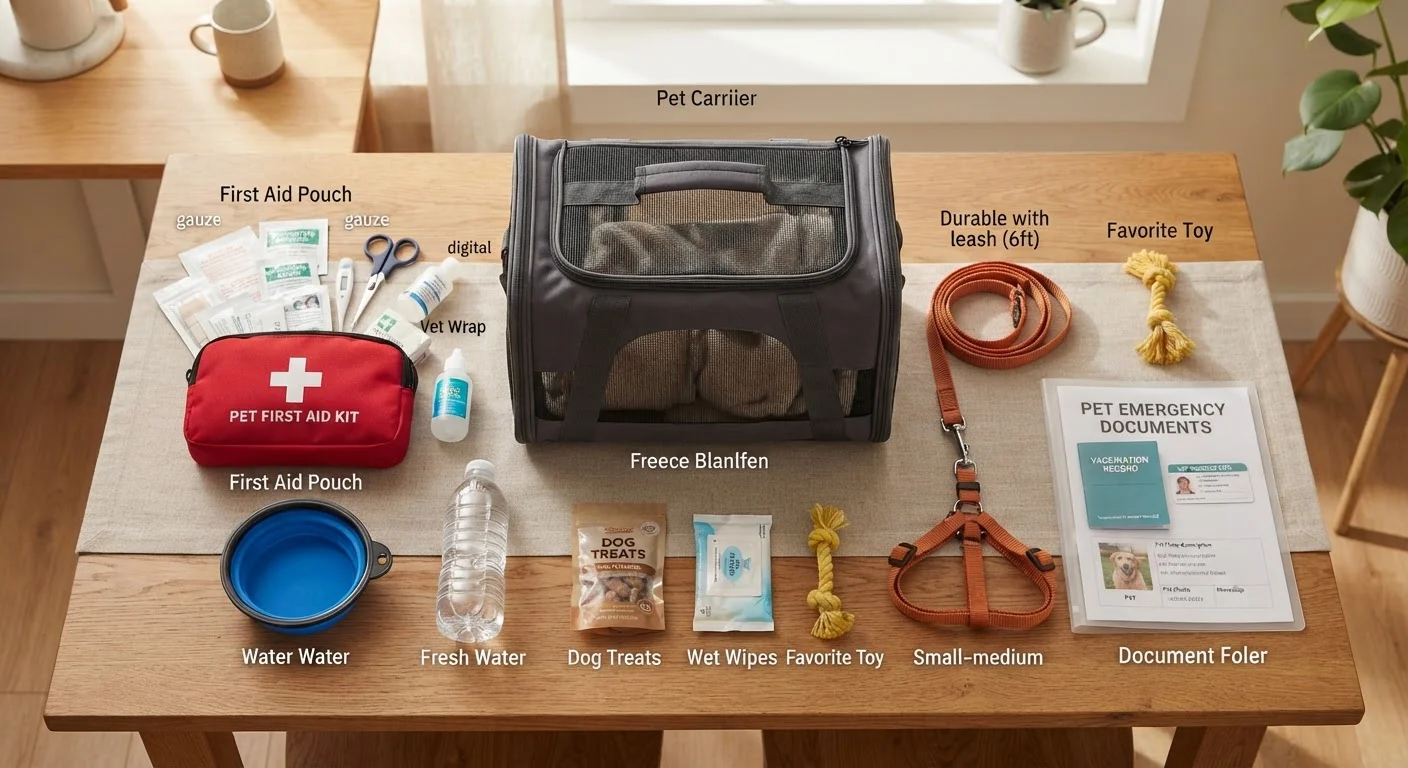
Before you begin assembling your kit, gather the tools and materials below. Most items are inexpensive and can be stored together in a waterproof bag or dedicated container that's easy to grab quickly.
Waterproof storage container or bag
Keeps all kit supplies dry and organized in one grab-and-go location.
Pet carrier or crate
Provides a safe, secure transport option during evacuation or veterinary emergencies.
Pet first-aid reference guide
Offers quick, accessible guidance on basic animal first aid when a vet is unavailable.
Microchip registration account access
Allows you to verify and update your contact information in the national microchip database.
Collapsible food and water bowls
Compact, portable bowls for feeding your pet when away from home.
Digital pet thermometer
Measures your pet's body temperature to help identify fever or hypothermia in an emergency.
A well-organized kit doesn't need to be elaborate — it just needs to be complete, accessible, and current. Label your container clearly and store it somewhere every household member knows about.
The Complete Pet Emergency Preparedness Checklist
Use the checklist below to audit what you already have and identify any gaps. Items are grouped by category so you can tackle one section at a time. For a deeper dive into organizing your pet's health documentation, see Building a Pet Health Records System That Actually Works.
Identification & Documentation
First-Aid Supplies
Medications & Health Supplies
Food, Water & Comfort
Evacuation Essentials
Rotate Supplies Before They Expire
Food, water, and medications have expiration dates that sneak up quickly. A kit assembled once and forgotten can give false confidence — expired medications may lose effectiveness and old food can cause digestive issues. Review your kit every six months and after any significant change in your pet's health status or medications.
After You've Built the Kit: Keep It Current
Assembling the kit is step one — maintaining it is just as important. Set a recurring reminder every six months to check expiration dates on medications and first-aid supplies, update records after each vet visit, and refresh food and water stores. The Annual Pet Care Checklist for Responsible Owners is a practical companion for scheduling these reviews alongside routine health tasks.
It's also worth thinking through finances. Emergencies involving veterinary care can be costly, and having a dedicated savings buffer — separate from your general emergency fund — offers meaningful peace of mind. For general guidance on sizing household emergency funds, Emergency Funds: What They Are, How Big They Should Be, and Where to Keep Them provides a useful framework (note: consult a qualified financial professional for advice tailored to your situation).
Finally, reduce the stress of any future vet visit — emergency or routine — with practical strategies for calmer vet visits that you can practice now, before a crisis arrives.
This article is for general informational and educational purposes only. It is not a substitute for professional veterinary or medical advice. In any pet health emergency, contact your veterinarian or an emergency animal hospital immediately.