

Key Takeaways
- Car batteries typically last three to five years, and age is the single strongest predictor of failure.
- Extreme temperatures-both heat and cold-accelerate battery degradation significantly.
- Slow engine cranking, dimming lights, and frequent jump-starts are early warning signs worth acting on.
- Corrosion on battery terminals reduces electrical contact and can mimic a dead battery.
- A battery load test, available at most auto parts stores, gives a more accurate picture of remaining capacity than a simple voltage check.
Car Battery Failure
Car battery failure occurs when a battery can no longer hold or deliver enough charge to start the engine or power the vehicle's electrical systems. Batteries degrade gradually through a chemical process, but the final failure can appear sudden because the last few percent of capacity drops off quickly. Most batteries have a service life of three to five years under typical conditions.
A lead-acid battery loses capacity as its lead plates sulfate over repeated charge-discharge cycles; once internal resistance rises high enough, voltage drops below the threshold needed to crank the starter motor-often around 9.6 volts under load.
Why Batteries Seem to Die Overnight
A battery that fails on a cold Tuesday morning usually didn't become defective overnight. Lead-acid batteries-the type found in most conventional vehicles-degrade through repeated charge and discharge cycles over months and years. Internal lead plates gradually sulfate, meaning lead sulfate crystals accumulate and reduce the surface area available for chemical reactions. The battery's capacity shrinks slowly, but the voltage drop that actually prevents the engine from starting can happen over just a few cold minutes.
Drivers rarely notice the gradual decline because the car keeps starting-until it doesn't. The final failure threshold is crossed quickly once internal resistance rises high enough, which is why the experience feels sudden even when the underlying process took years.
Not All Batteries Are Lead-Acid
Hybrid and electric vehicles use different battery chemistry-typically nickel-metal hydride or lithium-ion for traction batteries-with different failure patterns and much longer replacement intervals. The signs and timelines in this article apply to the 12-volt lead-acid auxiliary batteries found in conventional gasoline vehicles and as secondary batteries in many hybrids. If you drive an EV or plug-in hybrid, consult your owner's manual and manufacturer guidance for battery health monitoring.
Early Warning Signs Worth Recognizing
Catching a battery in decline gives you time to plan rather than react. The most common early signals include:
- Slow engine crank: If the starter motor sounds sluggish or labored-especially on the first start of the day-that's a classic sign of reduced cranking amps.
- Dimming headlights at idle: Lights that brighten when you rev the engine but dim at idle suggest the battery isn't holding charge well enough between alternator cycles.
- Electrical gremlins: Infotainment resets, power window sluggishness, or erratic dashboard readings can indicate voltage instability. Our guide on dashboard warning lights can help you decode what the instrument cluster is flagging.
- Swollen battery case: Excess heat can cause the plastic casing to bulge. A visibly deformed battery should be replaced promptly.
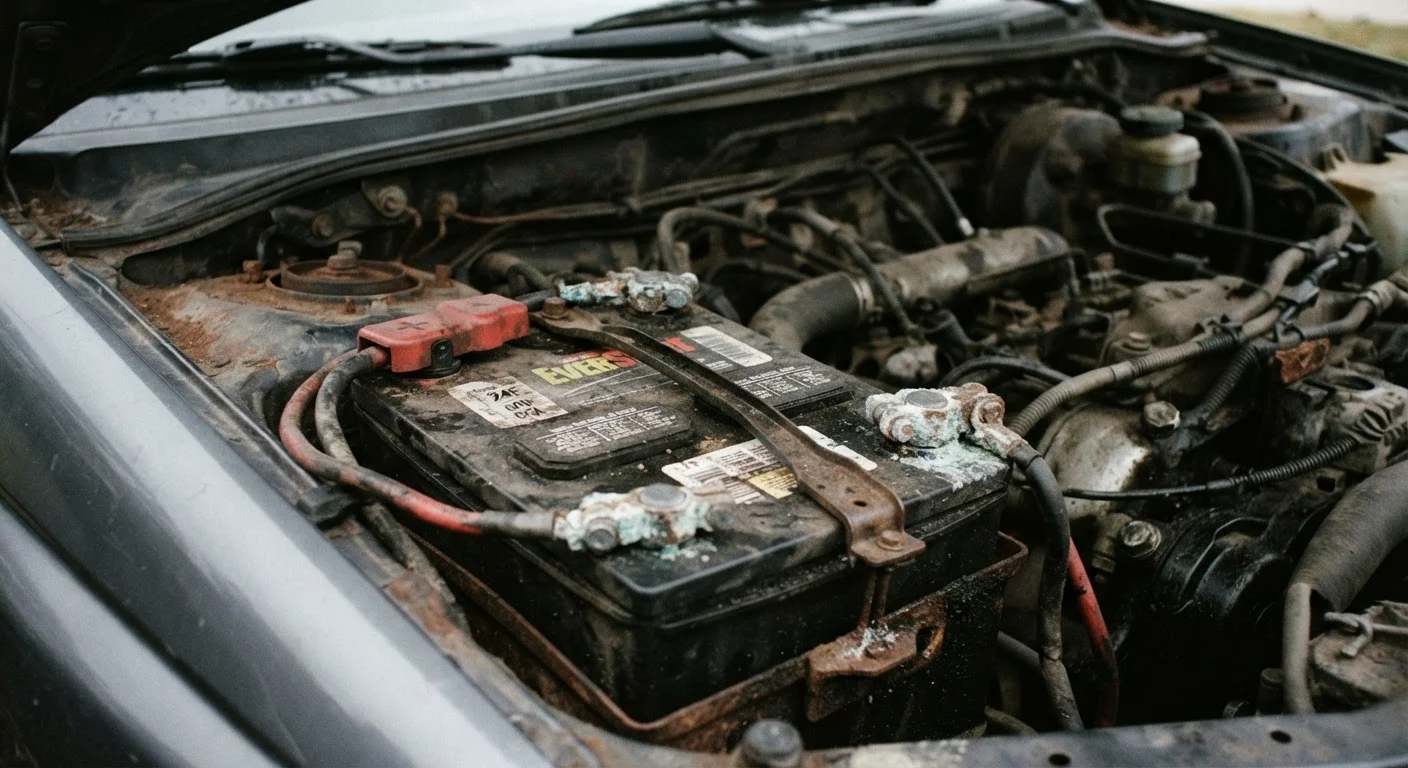
- Visible corrosion: White or blue-gray buildup on terminals increases resistance and can mimic battery failure even when the battery still has capacity.
Check the Battery Date Sticker
Most batteries have a date code printed or stickered on the case. If your battery is approaching three years old and you've noticed any of the warning signs above, request a load test at your next oil change or seasonal inspection. Catching decline early is far less disruptive than an unexpected breakdown.
How Age and Climate Accelerate Decline
Age is the most reliable predictor of battery failure. Industry data consistently shows that failure rates increase sharply after the three-year mark, with most batteries reaching the end of their reliable service life between four and five years. Note the battery installation date-often printed on a sticker on the case-and factor that into your maintenance planning.
Climate plays a significant role as well. Heat is the battery's primary long-term enemy: sustained high temperatures accelerate water loss from the electrolyte and corrode internal plates faster. Cold weather doesn't destroy batteries so much as expose weakness-a battery at 0°F delivers only about 40% of the cranking power it produces at 80°F. If you live in a region with temperature extremes, consider checking your battery condition at seasonal transitions. Our seasonal car care guide covers what to inspect as temperatures shift.
Driving habits matter too. Frequent short trips-under 10 miles-don't give the alternator enough time to fully recharge the battery after each start, which compounds degradation over time.
Testing and What to Do Next
A resting voltage check with a multimeter gives a rough snapshot: a healthy, fully charged 12-volt battery should read around 12.6 volts or higher at rest. But voltage alone doesn't tell the full story. A load test-which stresses the battery under a simulated starting draw-reveals how much usable capacity actually remains. Many auto parts retailers offer free load testing if you bring the vehicle in.
If the battery tests weak or is approaching the four-year mark with symptoms present, replacement is the practical path forward. Continuing to rely on a marginal battery also stresses the alternator, which is a more expensive component to replace. Just as brake symptoms deserve early attention-see our article on recognizing brake wear early-battery warning signs are most useful when acted on before a failure leaves you stranded.
3-5 years
Typical car battery service life
The Battery Council International notes that average battery life in the US ranges from three to five years depending on climate and usage.
~40%
Cranking power lost at 0°F
Cold temperatures dramatically reduce the available cranking amps a battery can deliver, making a marginal battery far more likely to fail in winter.
50%+
Battery failures occurring in hot climates
Studies from AAA and battery industry groups indicate that heat-related battery degradation is responsible for the majority of premature failures in the US.