

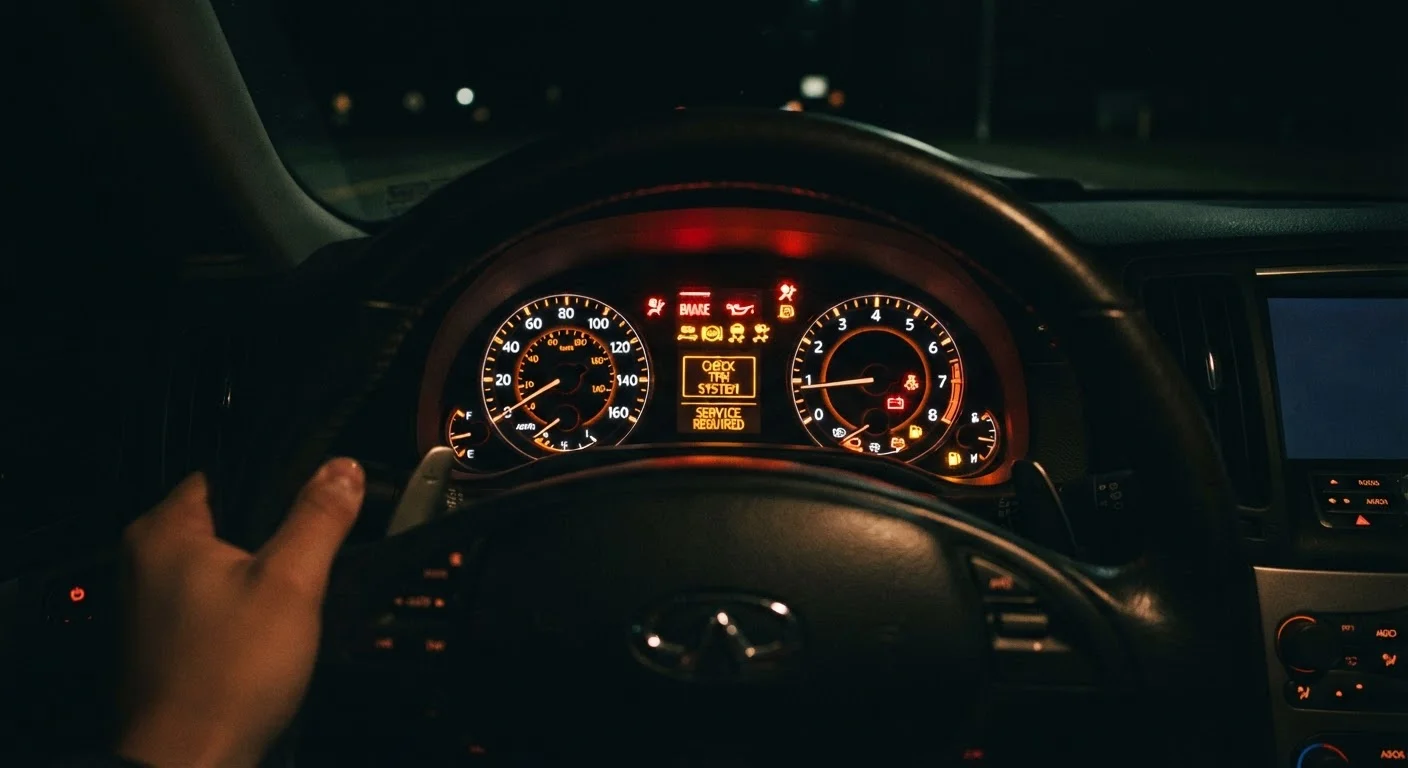
Color Codes: What the Light Colors Mean
Before decoding individual symbols, understand the color system that applies across virtually all modern vehicles sold in the US:
- Red: Stop or act immediately. A red warning light signals a condition that could cause engine damage, brake failure, or a safety risk if you keep driving.
- Amber/Yellow: Caution required. Something needs attention soon - often within days - but the vehicle is generally still safe to drive short distances.
- Green/Blue: Informational. A system is active, such as high beams or cruise control. No action required.
This color logic is standardized under SAE and ISO guidelines and is consistent across most passenger vehicles. When in doubt about any light your owner's manual doesn't clearly explain, a dealership or qualified mechanic can read the stored fault codes with a scan tool.
Red Lights: Stop and Investigate
These lights warrant pulling over safely as soon as possible and, in most cases, not restarting the vehicle until the cause is identified.
Oil Pressure Warning
Shaped like an old-fashioned oil can, this light signals that oil pressure has dropped dangerously low. Driving with insufficient oil pressure can destroy engine bearings within minutes. Pull over, shut off the engine, and check the oil level. If oil is full, the issue may be a failed pump or pressure sensor - do not drive further without professional diagnosis. See our guide to checking your fluids for help locating the dipstick and reading the level correctly.
Engine Temperature (Coolant Temp)
A thermometer symbol rising into red means the engine is overheating. Pull over, turn off the engine, and let it cool for at least 30 minutes before opening the hood. Never open a hot radiator cap. Low coolant or a failed thermostat are common causes.
Brake System Warning
Distinct from the parking brake light, a red brake warning can indicate low brake fluid, a hydraulic failure, or a serious brake system fault. If the pedal feels soft or spongy, do not drive - the vehicle may not stop reliably. Our article on brake warning signs covers what different symptoms mean in more detail.
Battery / Charging System
A red battery icon usually means the alternator is not charging the battery - not necessarily that the battery itself has failed. The car will continue running on battery reserve for a short time, but electrical systems will begin failing. Drive directly to a repair shop if nearby; otherwise, call for assistance. Learn more about how batteries degrade and what early symptoms look like.
Amber Lights: Schedule Service Soon
Amber lights don't demand you pull over immediately, but ignoring them for weeks can escalate a minor repair into a major one.
Check Engine Light (MIL)
The malfunction indicator lamp (MIL) - often an engine outline - is the most misunderstood light on the dash. It can represent anything from a loose fuel cap to a misfiring cylinder. A steady amber light means schedule a diagnostic scan within a few days. A flashing check engine light is more urgent: it typically indicates an active misfire that can damage the catalytic converter - reduce speed and load, and seek service promptly.
Tire Pressure Monitoring System (TPMS)
An exclamation mark inside a tire cross-section means one or more tires is significantly under-inflated (generally 25% or more below the recommended pressure shown on your door jamb sticker). Under-inflated tires reduce fuel economy, increase blowout risk, and affect handling. Add air and recheck pressure; if the light stays on, a tire may have a slow leak or a TPMS sensor may have failed.
Transmission Temperature
Resembles a thermometer in liquid. It means transmission fluid is overheating - common when towing heavy loads. Pull over safely, shift to park, and let the transmission cool before continuing.
MIL (Malfunction Indicator Lamp)
The official term for the check engine light. It illuminates when the vehicle's onboard diagnostic system detects a fault in an emissions-related or engine-management system.
OBD-II
On-Board Diagnostics II - a standardized system required on all US passenger vehicles manufactured after 1996 that monitors vehicle systems and stores fault codes readable by scan tools.
TPMS
Tire Pressure Monitoring System. A federal safety requirement on US vehicles since 2008, it alerts the driver when a tire's pressure drops significantly below the recommended level.
DTC (Diagnostic Trouble Code)
A code stored by the vehicle's computer when a monitored system falls outside normal parameters. Codes identify which system triggered the fault, not necessarily the exact failed part.
Oil Pressure
The force at which engine oil is circulated through the engine. Adequate pressure is essential to lubricate moving parts; critically low pressure can cause rapid, severe engine damage.
Alternator
A generator driven by the engine that charges the battery and powers the vehicle's electrical systems while the engine is running. A failed alternator causes the battery to drain while driving.
When to Drive, When to Stop - and What to Do Next
A practical decision framework:
- Any red light: Stop driving as soon as it is safe to do so. Do not assume it will resolve on its own.
- Steady amber light: You generally have a short window to drive to a shop - but don't delay more than a day or two.
- Flashing amber check engine: Treat it like a red light. Reduce speed, avoid heavy acceleration, and get to a mechanic the same day.
- Green or blue lights: No action required; these confirm active systems.
A Bluetooth OBD-II scanner (typically plugged into the port under your dash) lets you read your own fault codes before visiting a shop. Codes alone don't diagnose a problem - they identify the system or sensor that triggered the alert - but they give you useful information going into a service conversation.
Consistent pre-trip checks reduce the chance of being caught off-guard by warning lights mid-journey. Our pre-trip safety walkthrough covers the quick inspections that take five minutes and can prevent hours of roadside trouble.
Your owner's manual remains the most authoritative reference for your specific vehicle - every symbol is documented there. Keep it in your glove compartment.