

Key Takeaways
- Squealing during normal braking is often the first indicator that brake pads are nearing the end of their usable life.
- A pulsing or vibrating brake pedal typically signals warped rotors, not just worn pads.
- A soft or spongy pedal feel can indicate air or moisture in the brake lines - a more urgent concern.
- Pulling to one side under braking often points to uneven pad wear or a stuck caliper.
- Delaying brake service usually increases repair costs and raises the risk of a serious incident.
- A qualified mechanic should inspect any brake symptom you cannot confidently explain.
Brake Warning Signs
Brake warning signs are physical, audible, or tactile symptoms that indicate your vehicle's braking system is degraded or failing. They range from squealing noises and vibrations to a soft pedal feel or pulling to one side under braking. Recognizing these signals early allows you to address wear before it becomes a safety hazard.
Most modern passenger vehicles use disc brakes on all four wheels. Brake pads have built-in wear indicators - small metal tabs designed to contact the rotor and produce a high-pitched squeal once pad material drops below a safe threshold.
What Your Brakes Are Trying to Tell You
Your braking system communicates wear and failure through sounds, sensations, and vehicle behavior. The challenge is knowing which signals are routine and which demand immediate action. Understanding the difference empowers you to make informed decisions rather than expensive guesses.
Brake systems on most modern vehicles are hydraulic: pressing the pedal forces fluid through lines to calipers, which squeeze pads against spinning rotors to slow the wheels. Wear at any point in that chain produces a symptom. The earlier you catch it, the lower your repair cost and the higher your safety margin.
If you're building broader maintenance habits, this practical guide for new drivers covers how brake checks fit into a full vehicle upkeep routine.
~22%
Brake-related crashes in federal vehicle defect data
According to NHTSA analysis of pre-crash vehicle factors, brake-related issues are among the most frequently cited mechanical contributors to crashes.
25,000-65,000 mi
Typical brake pad lifespan range
Lifespan varies widely based on driving style, vehicle type, and pad compound; city driving typically produces wear at the lower end of this range.
~3mm
Minimum recommended pad thickness before replacement
Many mechanics recommend replacing pads at or before 3mm of remaining material; some manufacturers set the threshold at 2mm as an absolute minimum.
The Five Most Common Brake Symptoms Explained
1. Squealing or Screeching Noise
The most recognizable brake symptom is a high-pitched squeal during braking. Most pads include a small metal wear indicator - a tab engineered to contact the rotor and produce exactly this sound when material is low. Occasional squealing in wet or cold conditions can be normal, but persistent noise on dry roads means it's time for an inspection.
2. Grinding or Metal-on-Metal Sound
Grinding indicates the pad has worn entirely through and metal components are contacting the rotor directly. This accelerates rotor damage and can sharply reduce stopping performance. Grinding warrants same-day service - continued driving risks rotor scoring deep enough to require replacement rather than just pad swap.
3. Pulsating or Vibrating Pedal
If the brake pedal pulses under your foot during a normal stop, rotors are the likely cause. Rotors can develop uneven surface thickness - sometimes called rotor runout - from repeated heat cycles. That uneven surface creates the pulsing sensation as it passes the brake pad. Warped rotors also reduce consistent contact, which affects stopping distance.
4. Soft, Spongy, or Low Pedal Feel
A pedal that sinks lower than usual before engaging, or feels mushy rather than firm, often reflects a problem in the hydraulic system: air in the lines, low brake fluid, or a leak. Unlike noise-based symptoms, a soft pedal can escalate quickly. If the pedal approaches the floor before the vehicle slows, treat it as an emergency and have the vehicle inspected immediately.
5. Pulling to One Side Under Braking
When a vehicle tracks left or right during a stop, braking force is uneven across the axle. A sticking caliper, uneven pad wear, or a restricted brake hose can all cause this. Asymmetric braking force also stresses steering components, so ignoring it compounds the problem.
Check Pad Thickness Through the Wheel
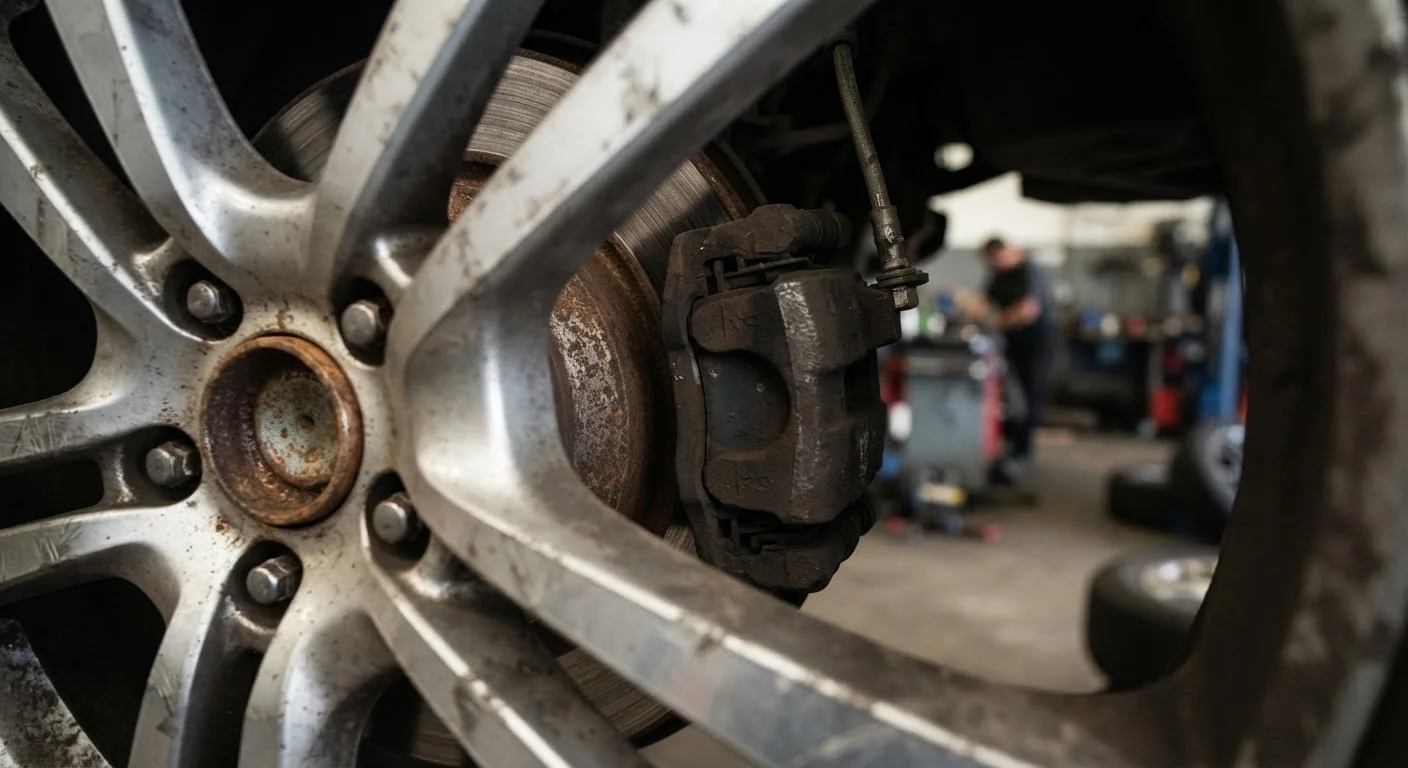
Many alloy wheels have large enough openings to view the brake pad and rotor with a flashlight - no tools required. Look for the pad material pressed against the rotor surface. If the pad appears thin (roughly the width of a pencil eraser or less), schedule an inspection. This takes under a minute and can catch wear before audible symptoms appear.
When to Get a Professional Inspection
Not every brake symptom requires stopping immediately, but all of them require follow-up. As a general guide: squealing that persists beyond a few days of dry-weather driving warrants a scheduled inspection. Grinding, a soft pedal, or a vehicle that pulls sharply under braking warrants same-day attention.
If your dashboard brake warning light illuminates - typically a red circle or exclamation mark - that's the vehicle's onboard system flagging a concern directly. Understanding what dashboard warning lights mean can help you prioritize which alerts to act on first.
For drivers weighing whether to inspect pads themselves or defer to a shop, this framework on DIY versus professional service outlines which brake-related checks are reasonable for a home mechanic and which carry real risk if done incorrectly. Brake hydraulics, caliper assessment, and rotor measurement generally fall in the professional category.
Braking performance is also closely tied to how you drive. Aggressive following distances and frequent hard stops accelerate pad wear significantly - highway habits that increase risk explores the broader safety picture around those behaviors.
Brake Fluid Has a Service Life Too
Brake fluid is hygroscopic, meaning it absorbs moisture from the air over time. As water content rises, the fluid's boiling point drops - which can cause brake fade under heavy use. Most manufacturers recommend flushing brake fluid every two to three years regardless of mileage. Check your owner's manual for the interval specific to your vehicle.