

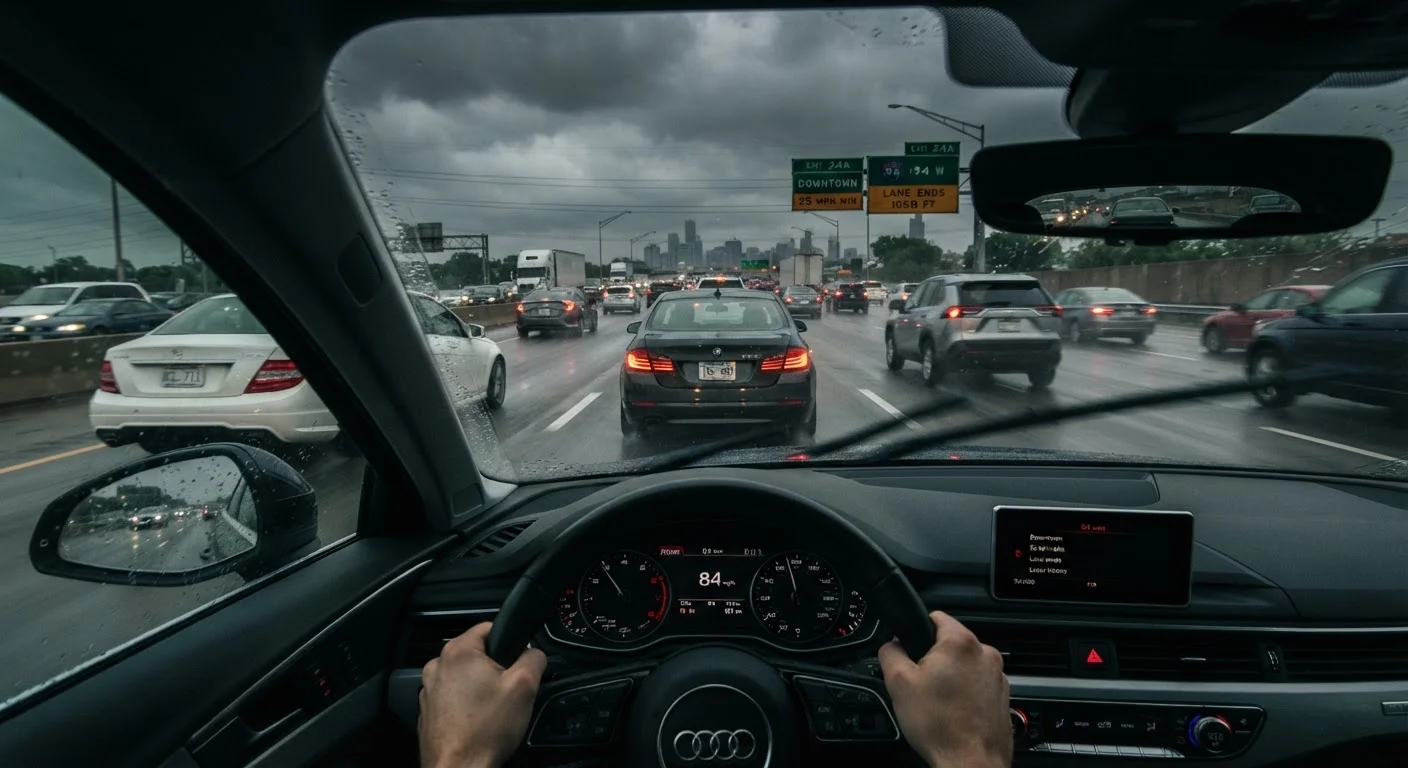
Key Takeaways
- Tailgating is one of the leading causes of rear-end collisions, yet most drivers underestimate their following distance.
- Speeding reduces reaction time and multiplies crash severity - even modest excess speed matters significantly.
- Lane discipline, distraction, and blind-spot neglect are common habits that increase highway risk without drivers noticing.
- Most dangerous highway behaviors feel normal precisely because they are so widespread.
- Small, consistent adjustments to driving habits can meaningfully reduce your exposure to serious incidents.
Why Routine Habits Create Serious Risk
The most hazardous behaviors on US highways aren't dramatic or unusual - they're the ones that have become invisible through repetition. Tailgating, mild speeding, and skipping blind-spot checks happen on virtually every commute, which is precisely what makes them dangerous. Familiarity breeds complacency, and complacency erodes the margins that prevent minor situations from becoming serious crashes.
Understanding why these habits form - and what they actually cost in reaction time and stopping distance - is the first step toward breaking them. For a broader framework on anticipating hazards before they develop, see our piece on defensive driving principles.
29%
Of fatal crashes involving speeding
According to NHTSA data, speeding is consistently a factor in roughly 29% of all traffic fatalities in the United States annually.
3 seconds
Minimum following distance recommended
Traffic safety experts generally recommend at least a three-second following gap in ideal conditions, with more distance required in rain, fog, or at higher speeds.
~25%
Crashes linked to driver distraction
The NHTSA estimates that distracted driving contributes to approximately one in four motor vehicle crashes in the US each year.
The Most Common Highway Mistakes - and How to Correct Them
The following errors appear across driver skill levels and experience ranges. None require advanced technique to correct - they require awareness and consistent habit change.
Following too closely (tailgating) at highway speeds.
Why it happens: Drivers often mirror surrounding traffic, closing gaps to match flow without consciously choosing to tailgate. At higher speeds, the shrinking distance feels normal because everyone around them is doing it.
Driving above the posted speed limit or too fast for conditions.
Why it happens: Speed creep is incremental and easy to rationalize - surrounding traffic moves fast, the road feels clear, and modern vehicles are engineered to feel stable well beyond legal limits.
Neglecting to check blind spots before changing lanes.
Why it happens: Drivers rely heavily on mirrors, which have inherent blind-spot angles that mirrors alone cannot cover. Over time, the habit of physically checking over the shoulder erodes, especially on familiar stretches of road.
Driving while distracted - phone use, eating, or adjusting controls while moving.
Why it happens: Multitasking feels efficient and modern vehicles have increasingly complex infotainment systems that invite interaction. Cognitive bias leads drivers to believe their divided attention is adequate.
Camping in the left lane without passing.
Why it happens: Many drivers treat the left lane as a travel lane rather than a passing lane, often because they feel they are driving fast enough or want to avoid merging traffic on the right.
Failing to adjust speed and following distance for weather and road conditions.
Why it happens: Drivers calibrate their behavior to the speed limit and surrounding traffic rather than to the actual grip and visibility available. Rain, snow, and fog change both stopping distance and visibility dramatically.
Speed Dramatically Amplifies Crash Severity
Physics works against drivers at higher speeds: stopping distance increases with the square of your speed, not linearly. A vehicle traveling at 70 mph needs roughly 40% more stopping distance than one at 55 mph. In a crash, that difference can determine whether an impact is survivable. Even modest speed reductions in poor conditions carry real safety value.
Conditions compound all of these risks. A driver who tailgates and speeds on a dry clear day faces a different - but still elevated - exposure than one doing the same in rain or darkness. Night driving specifically changes the reaction-time equation in ways most drivers underestimate.
Tailgating Near Large Trucks Is Especially Dangerous
Following a tractor-trailer too closely puts you in the truck's rear blind spot, where the driver cannot see your vehicle at all. Because large trucks take significantly longer to stop than passenger cars, a sudden brake event can result in an underride collision - one of the most severe crash types on US highways. Always maintain a larger buffer around commercial vehicles. See how trucks move and stop for specifics.
Lane discipline also intersects with merging dynamics. Drivers camping in the left lane or making abrupt lane changes create difficult situations for vehicles entering the highway. Our guide on merging onto a highway explains how flow and positioning affect safety for all road users.
The Connection Between These Habits and Broader Road Safety
Dangerous driving habits rarely exist in isolation. Aggressive following distances and speed often correlate with elevated stress and frustration behind the wheel - a combination that can escalate toward road rage. Understanding that connection matters: road rage escalates faster than most drivers expect, and the behaviors covered in this article are common triggers.
Vehicle condition also plays a role. Brakes that are worn or fading significantly extend stopping distances - making the gap between tailgating and a rear-end collision even smaller. If your brakes feel soft, pulse under pressure, or squeal regularly, those are warning signs worth acting on before your next highway trip.
The risk environment also shifts depending on where you drive. Highways and rural routes present different hazard profiles than city streets. Reviewing how hazards differ between urban and rural driving can help you calibrate your habits to the road type you're actually on.
None of these habits require significant effort to improve - they require recognition that what feels routine can still be consequential.