

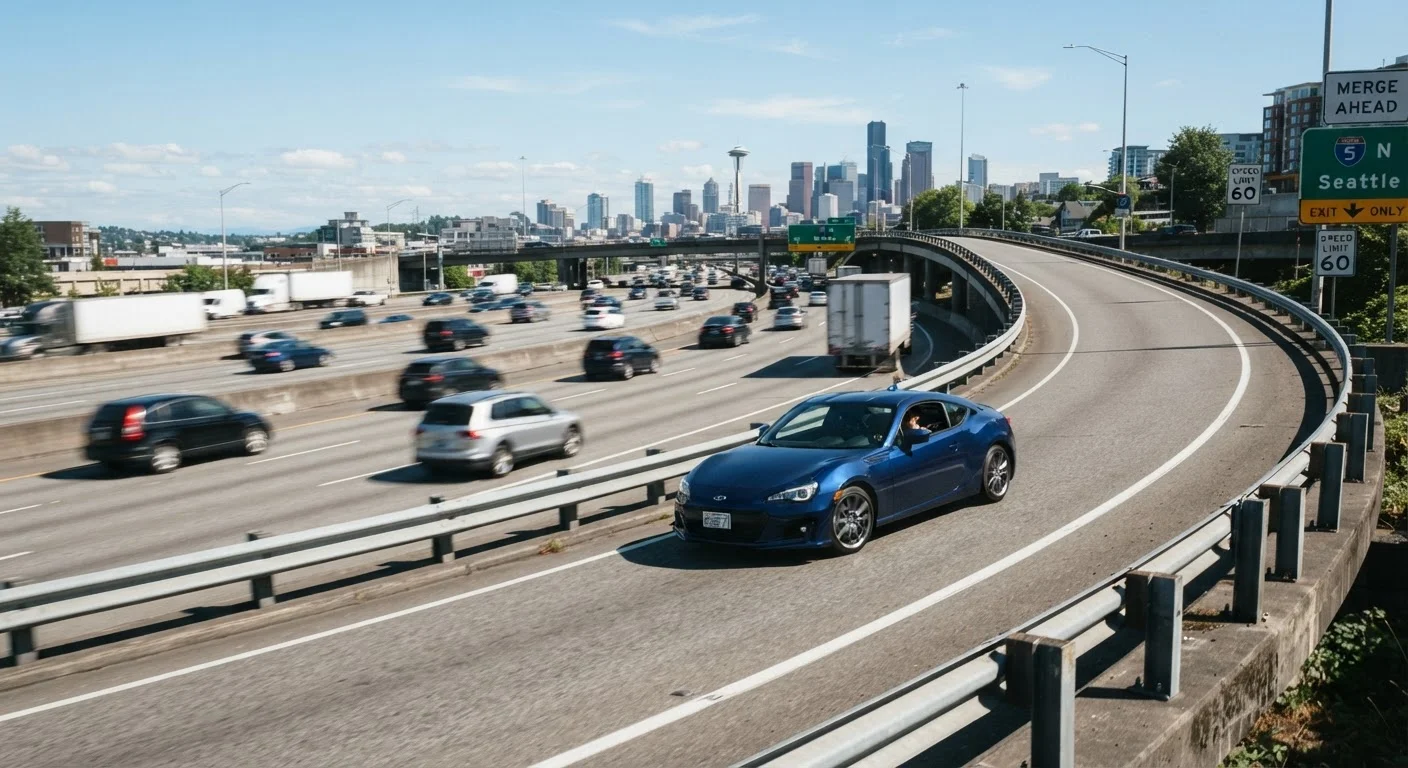
Key Takeaways
- Match highway traffic speed before your on-ramp ends - slow merging is a leading cause of ramp-area crashes.
- Signal early and check mirrors and blind spots before committing to your merge.
- Highway drivers must yield to merging vehicles only in zipper-merge situations - not always.
- Hesitation and abrupt stops on an on-ramp create serious rear-end collision risk.
- In heavy traffic, the zipper merge is the legally and practically preferred method in many US states.
What you will need
Why Highway Merging Goes Wrong
Merging is a brief, high-stakes maneuver that demands accurate speed judgment, spatial awareness, and clear communication - all simultaneously. Most merge errors come down to three root causes: entering too slowly, merging without checking blind spots, or freezing at the ramp's end due to uncertainty about right-of-way.
In the US, the general rule is that the merging driver bears the primary responsibility for finding a safe gap. Highway drivers are not legally obligated to yield to on-ramp traffic in most standard merge situations (zipper merges are the significant exception). Understanding this shifts your mindset correctly: the burden is on you to be ready, not to wait for an invitation.
This connects directly to the principles covered in defensive driving - anticipating what other drivers will do rather than assuming they will accommodate you. Poor merging technique also feeds into broader highway risk patterns; common highway habits that raise crash risk frequently begin with a disrupted merge.
Never Stop at the End of an On-Ramp
Stopping your vehicle at the end of an acceleration lane is one of the most dangerous actions on a highway. It forces following drivers to brake suddenly at highway speeds and puts you at high risk of a rear-end collision. If a gap is not available, slow - but maintain movement and look for the next opportunity. If traffic is genuinely stopped ahead, use your hazard lights immediately.
Use the Full Length of the Acceleration Lane
Many drivers merge prematurely, giving themselves less room and time than they need. Treat the entire on-ramp as an opportunity to reach target speed and identify a safe gap. Committing early limits your options and puts pressure on both you and the highway driver beside you.
Before You Reach the Ramp: Preparation That Matters
Effective merging starts before you arrive at the on-ramp. Confirm your mirrors are properly adjusted - a misaligned side mirror can create a blind spot large enough to hide an entire vehicle. Check that your turn signal is working. If you are unfamiliar with the route, know in advance which lane you will need to enter and whether the ramp has a short or long acceleration lane.
What you will need
Drivers who are unsure about the road signs they will encounter can review US road sign meanings before driving an unfamiliar corridor. Preparedness reduces the cognitive load at the moment of merge itself, when your attention needs to be split between multiple moving targets.
Blind Spots Are Larger Than They Look
Mirrors alone will not reveal every vehicle in the lane you are entering. Always perform a quick shoulder check - a direct glance over your merging-side shoulder - before committing to the lane change. This is especially important near large trucks, whose positions can be masked by your vehicle's roof pillars. For more on truck-specific hazards, see sharing the road with trucks.
Step-by-Step: Executing the Merge
Follow these steps each time you enter a highway. The sequence is consistent whether you are in light traffic or a congested rush-hour corridor - though step six covers the specific adjustments needed when traffic is heavy.
Read the on-ramp signs before you commit
As you enter the ramp, look for yield signs, speed advisories, and any lane-end warnings. These tell you what to expect at the ramp's end and whether a dedicated acceleration lane follows or you merge directly. Knowing the ramp's geometry in advance removes a key source of last-second panic.
Signal before you begin accelerating
Activate your turn signal as soon as you enter the acceleration lane - not at the last moment before the merge. Signaling early gives highway drivers time to adjust their speed or position. It is a legal requirement in every US state and a basic courtesy that significantly reduces conflict points.
Accelerate to match highway traffic speed
Use the full acceleration lane to bring your speed in line with the flow of traffic in the right-hand lane. The target is not the posted speed limit - it is the actual speed vehicles are traveling. In free-flowing traffic that may be 65-70 mph. Entering below traffic speed forces the vehicles behind you to brake sharply, which is a common trigger for chain-reaction incidents.
Identify a safe gap through mirrors and a shoulder check
Check your left side mirror to gauge gaps between vehicles in the right lane. Then perform a quick shoulder check - a direct glance over your left shoulder - to catch anything your mirrors may have missed. A safe gap is generally considered enough space for your vehicle to enter without causing a following driver to brake. This varies with speed: at highway speeds, a gap of at least three to four seconds of following distance is a reasonable benchmark.
Merge smoothly into the gap
Once a gap is confirmed and your speed matches traffic, make a smooth, deliberate steering input to move into the right lane. Avoid jerky or abrupt movements. Smooth merges are predictable to surrounding drivers and reduce the chance of a sideswipe. After merging, cancel your turn signal and maintain your position in the lane before any further moves.
Apply zipper merge technique in heavy or stopped traffic
When traffic in the right lane is slow or congested, many US states actively encourage - and some require - the zipper merge. This means staying in your lane until the merge point, then alternating one vehicle at a time with the highway lane. Early voluntary merging in congested conditions actually worsens backup length. If a sign instructs you to use both lanes to the merge point, follow it - it is traffic-management guidance, not a signal to cut in line.
For drivers who regularly share the road with large commercial vehicles, the merge dynamic shifts. Trucks require far greater stopping distances and have significant blind spots along both sides. Positioning yourself clearly in a truck driver's sight lines before and during a merge is essential - understanding truck blind spots and braking explains why the right lane beside a truck is particularly hazardous.