
Teen Drivers and the Graduated License System: How It Works and What It's Designed to Prevent

Key Takeaways
- Every US state operates some version of a graduated driver licensing (GDL) system for new teen drivers.
- GDL systems reduce exposure to high-risk driving conditions in stages - learner, intermediate, and full license.
- Teen crash risk is highest in the first months of independent driving, not during supervised practice.
- Passenger restrictions and nighttime driving limits are among the most crash-reducing GDL components.
- State rules differ significantly - teens and parents must verify requirements with their own DMV.
Start here
What Is a Graduated Driver Licensing System?
Next
The Three Stages Explained
Understand the why
Why These Restrictions Exist: The Crash Data
Check your state
How GDL Requirements Vary by State
Apply it
What Teens and Parents Should Know
What Is a Graduated Driver Licensing System?
A graduated driver licensing (GDL) system is a staged approach to granting driving privileges to new, typically teenage drivers. Rather than issuing a full, unrestricted license the moment a teen passes a road test, GDL systems progressively expand driving privileges as the new driver accumulates experience and demonstrates safe behavior over time.
All 50 states and the District of Columbia have enacted some form of GDL law. The specific rules vary considerably, but the underlying logic is consistent: new drivers face their highest crash risk not from ignorance of the rules, but from lack of real-world experience managing complex, dynamic driving situations. GDL limits exposure to the most dangerous conditions until that experience is built up.
Graduated Driver Licensing (GDL)
A staged system that gives new drivers increasing driving privileges over time rather than an immediate full license, designed to reduce exposure to high-risk situations while experience is gained.
Learner's Permit
The first official document allowing a new driver to operate a vehicle, but only with a licensed adult supervisor present at all times.
Intermediate (Provisional) License
The second stage of GDL, permitting unsupervised daytime driving but with restrictions on nighttime hours and the number of passengers allowed.
Nighttime Restriction
A GDL rule that prohibits intermediate-stage drivers from operating a vehicle after a set hour, typically between 9 p.m. and midnight, unless accompanied by a licensed adult.
Passenger Restriction
A GDL rule that limits how many non-family or same-age passengers a provisional teen driver may carry, targeting a key source of in-car distraction.
Holding Period
A mandatory minimum length of time a teen must remain in a given GDL stage before qualifying to advance, regardless of how quickly they accumulate practice hours.
The Three Stages Explained
Most GDL frameworks follow a three-stage structure:
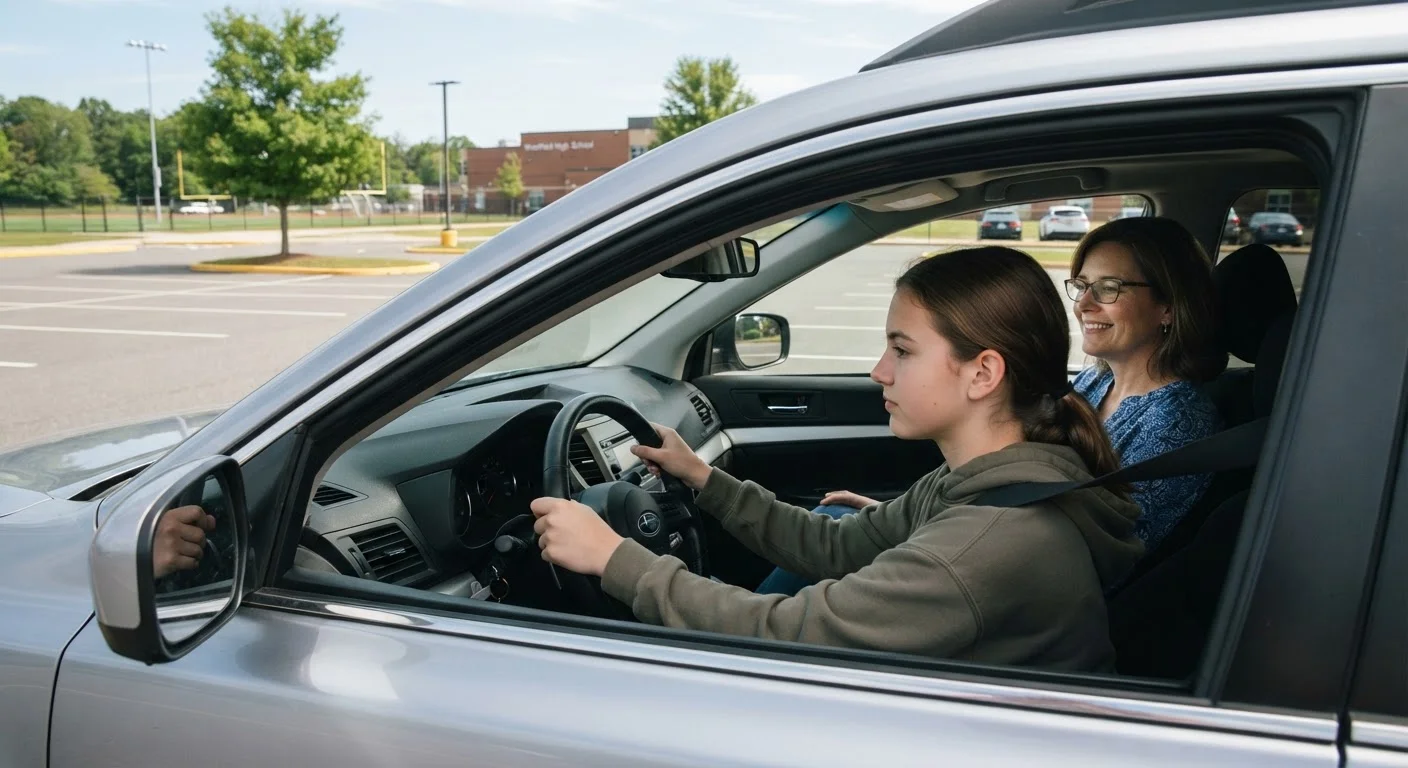
- Learner's permit stage: The teen may only drive with a licensed adult supervisor - usually age 21 or older - in the front passenger seat. This stage requires a minimum holding period (often six months) and a set number of supervised practice hours before the teen can advance.
- Intermediate (provisional) license stage: The teen can drive without a supervisor during the day, but nighttime driving and passenger limits apply. A typical restriction prohibits driving after 11 p.m. and limits non-family teen passengers to one or two. The teen must maintain a violation-free record for the required period to move forward.
- Full, unrestricted license: Issued once the teen meets the minimum age and has completed the intermediate stage without violations. At this point, standard adult driving rules apply.
Understanding defensive driving principles becomes especially important as teens move through these stages. Our guide to defensive driving explains the habits that help any driver - especially newer ones - anticipate and avoid hazards.
Why These Restrictions Exist: The Crash Data
Teen crash rates are disproportionately high relative to other age groups. According to the Centers for Disease Control and Prevention (CDC), motor vehicle crashes are a leading cause of death for US teenagers, and per-mile crash rates for 16- to 17-year-olds are significantly higher than for drivers in their mid-20s.
The risk is not evenly distributed across situations. Research from the Insurance Institute for Highway Safety (IIHS) and other bodies has consistently identified the following as especially dangerous for inexperienced teen drivers:
- Peer passengers: The presence of teen passengers increases distraction and risk-taking. Crash risk rises with the number of same-age passengers in the vehicle.
- Nighttime driving: Reduced visibility, greater fatigue risk, and higher incidence of impaired drivers on the road combine to make late-night hours disproportionately dangerous.
- The first months of unsupervised driving: Fatal crash rates spike sharply just after a teen obtains an independent license, not during the supervised learner stage.
GDL restrictions are designed specifically to shield new drivers from these high-risk combinations while they build skills. The nighttime and passenger provisions - often the most contentious with teens - are also among the most evidence-supported components of the system.
Make Supervised Hours Count
Don't concentrate all practice in one familiar neighborhood. Deliberately include varied road types - arterial roads, highways, and adverse weather conditions when safely supervised - so the learner builds transferable skills before driving solo. Quality of hours matters as much as quantity.
How GDL Requirements Vary by State
While all states have GDL laws, the strength and detail of those laws vary widely. Some states have robust, research-aligned requirements; others have weaker provisions that researchers have linked to higher teen crash rates. Common variables include:
- Minimum permit age: Ranges from 14 to 16 across states.
- Required supervised hours: From 30 hours (in some states) to 65 hours or more, sometimes including mandatory nighttime hours.
- Nighttime restriction curfew: Cut-off times range from 9 p.m. to midnight, and some states have different rules for 16-year-olds versus 17-year-olds.
- Passenger limits: Some states allow all family members but no teen peers; others allow one non-family passenger after a waiting period.
- Violation consequences: Penalties for breaking GDL restrictions differ - from extending the probationary period to full license suspension.
Because rules differ so much, the most reliable source is always your state's Department of Motor Vehicles (DMV). The IIHS publishes an annual summary of state GDL laws that families can use as a starting reference.
As teens gain experience with highway entry and exit, skills like merging need deliberate practice. Our merging guide for new drivers outlines the key techniques before attempting busier roads.
What Teens and Parents Should Know
GDL laws set legal minimums - they don't set the ceiling for how carefully a family approaches early driving. Parents play a measurable role in teen driving safety:
- Supervised practice should include varied conditions - highways, wet roads, night driving with supervision - not just low-stakes neighborhoods. Our article on driving in rain, snow, and fog walks through how conditions fundamentally change vehicle control demands.
- Setting a clear family driving agreement - covering passengers, phone use, and curfews - gives teens expectations that go beyond the legal minimums.
- Modeling safe behavior matters. Teens who regularly observe risky habits - tailgating, distracted driving, or speeding - are more likely to adopt them. See common highway habits that raise crash risk for a detailed look at which behaviors are most consequential.
Completing a formal driver education course - whether through a school or a state-approved private provider - can shorten required supervised hours in some states and reinforces structured skill development. Check with your state's DMV to confirm whether a course credits toward your GDL requirements.
This article is for general informational purposes only. Always verify current GDL requirements with your state's Department of Motor Vehicles, as laws are subject to change.