

Key Takeaways
- Emptying everything out before reorganizing gives you a true picture of what you own.
- Zoning your kitchen around how you cook - not how it came - makes daily tasks faster.
- Decluttering expired or unused items is a necessary first step before buying any storage.
- Maintenance routines, not one-time overhauls, are what keep a kitchen organized long-term.
- You don't need special products to build a functional system - placement logic matters most.
Start here
Start With a Full Emptying
Next
Sort, Declutter, and Decide
Then
Map Zones to How You Actually Cook
Apply it
Put It Back with Intention
Keep it going
Build a Simple Maintenance Habit
Start With a Full Emptying
The most effective kitchen organization projects begin with a counterintuitive move: take everything out. Open every cabinet, pull out every drawer, and clear every shelf onto your counters or kitchen table. This isn't chaos - it's clarity. You can't make good decisions about where things should live until you see the full scope of what you own.
Work in sections if emptying everything at once feels unmanageable. Tackle upper cabinets first, then lower cabinets, then drawers. As you empty each area, wipe it down. Starting with clean surfaces gives you a blank slate - and makes it easier to see how much space you actually have before anything goes back in.
Take Photos Before You Start
Before removing anything, photograph your cabinets and drawers from the front. These images serve as a useful reference - showing you which arrangements weren't working - and give you a satisfying before-and-after comparison when you're done. They're also handy if you need to pause and come back the next day.
Sort, Declutter, and Decide
With everything out, group items by category: bakeware together, cookware together, spices together, small appliances together. This step alone is revealing - most people discover multiples of things they didn't know they had, and items they haven't touched in years.
For each item, ask whether it earns its space. A waffle iron used twice a year may deserve a spot in a high cabinet or a storage closet rather than prime real estate. Expired pantry goods, broken utensils, and mystery gadgets should be discarded or donated before anything goes back. Adding storage around clutter just buries it - decluttering is the non-negotiable first step.
For a broader view of how this process fits into your whole home, see the room-by-room home organization checklist for room-specific guidance.
Kitchen zoning
Grouping related items together and storing them close to where they're used, so cooking and cleanup require less searching and fewer steps.
Decluttering
The deliberate process of removing items you no longer use, need, or want - creating space for the things that actually earn a place in your kitchen.
Prime real estate
The most accessible storage spots in a kitchen - eye-level shelves, front-of-drawer spaces - reserved for the items you reach for most often.
Reset habit
A short, consistent routine (often five minutes at the end of the day) to return items to their designated spots before disorder accumulates.
Categorical sorting
Grouping all items of the same type together - all bakeware, all spices, all utensils - so you can see what you own and make smarter decisions about storage.
Map Zones to How You Actually Cook
Zoning is the organizing principle that transforms a kitchen from a storage room into a working space. The idea is simple: items live nearest to where they're used. Pots and pans near the stove. Cutting boards and knives near the prep area. Plates and glasses near the dishwasher or sink. Coffee mugs by the coffee maker.
Think about the sequence of your morning and evening routines. Where do you land when you come home hungry? Where do you prep lunches? Let your actual habits - not an idealized version of them - guide placement. A zone that doesn't match real behavior gets ignored, and items drift back to wherever they were before.
If your cabinets themselves are part of the problem, the guide to cabinet refacing vs. replacement can help you weigh whether a structural change makes sense.
Put It Back with Intention
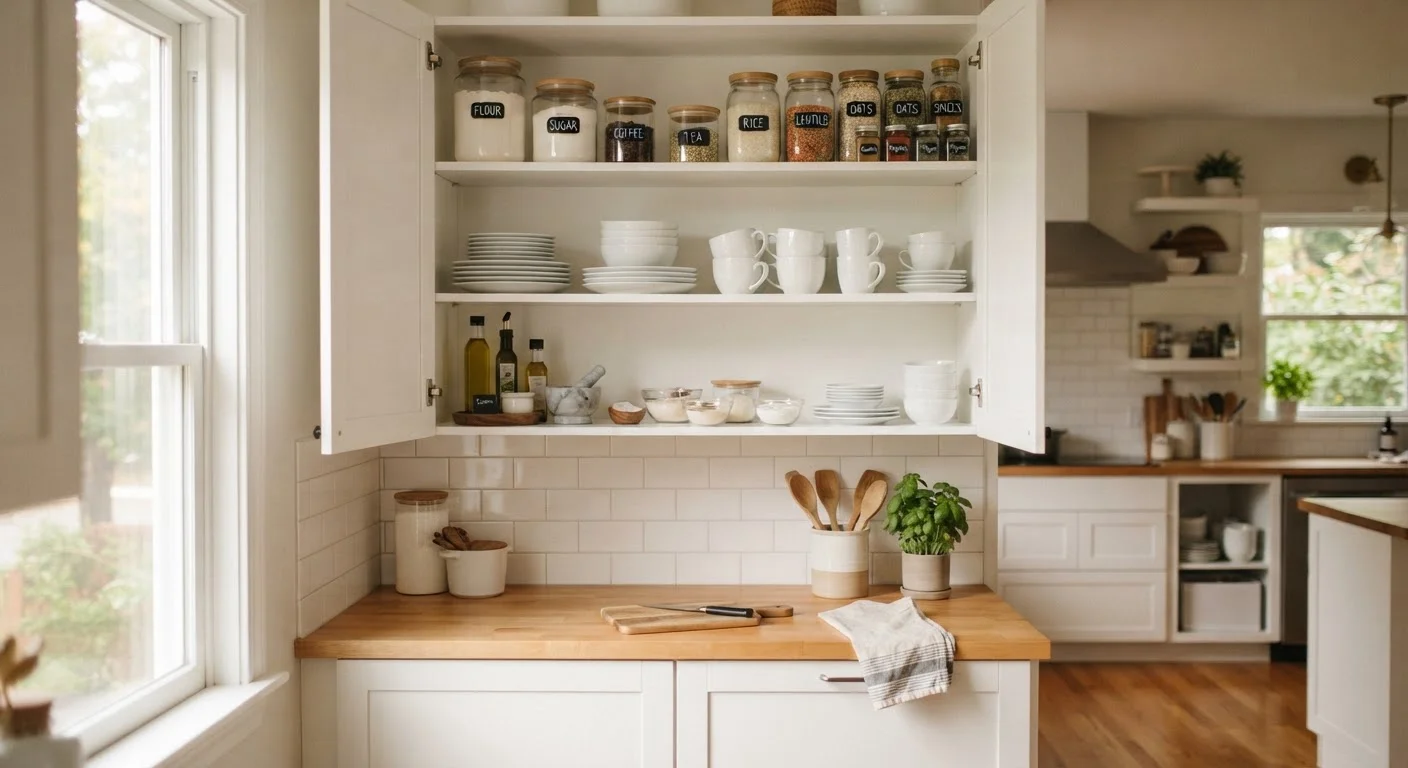
Now return items to their zones - but with purpose. Heavy items belong at waist height or below. Frequently used items at eye level. Rarely used things go high or toward the back. Stack by size within categories and keep surfaces as clear as possible; counter clutter is usually a symptom of insufficient cabinet homes, not insufficient counter space.
Resist the urge to fill every inch. Leaving some breathing room in drawers and on shelves makes it much easier to maintain the system over time. A drawer packed to the edge will resist tidying; one with some slack invites it.
Label Shelves Before You're Done
Before closing your cabinets for the first time after reorganizing, consider labeling shelves with simple masking tape and a marker. This step takes five minutes and makes it dramatically easier for everyone in the household to maintain the system - items go back where they belong because the right place is clearly marked.
Build a Simple Maintenance Habit
Organization isn't a one-time event - it's a system that needs light, consistent upkeep. A five-minute end-of-day reset, where everything gets returned to its designated spot, prevents the slow slide back into chaos. This habit is far easier to keep when the system is logical in the first place, which is exactly why the zoning step matters so much.
Schedule a quarterly check: pull out pantry items, check expiry dates, and ask whether any zones have stopped working. Households change - new cooking routines, new family members, seasonal shifts - and your kitchen layout should flex accordingly.
For a broader framework on building organized systems throughout your home, the complete home organization guide walks through the mindset and maintenance principles that support lasting change.