

Key Takeaways
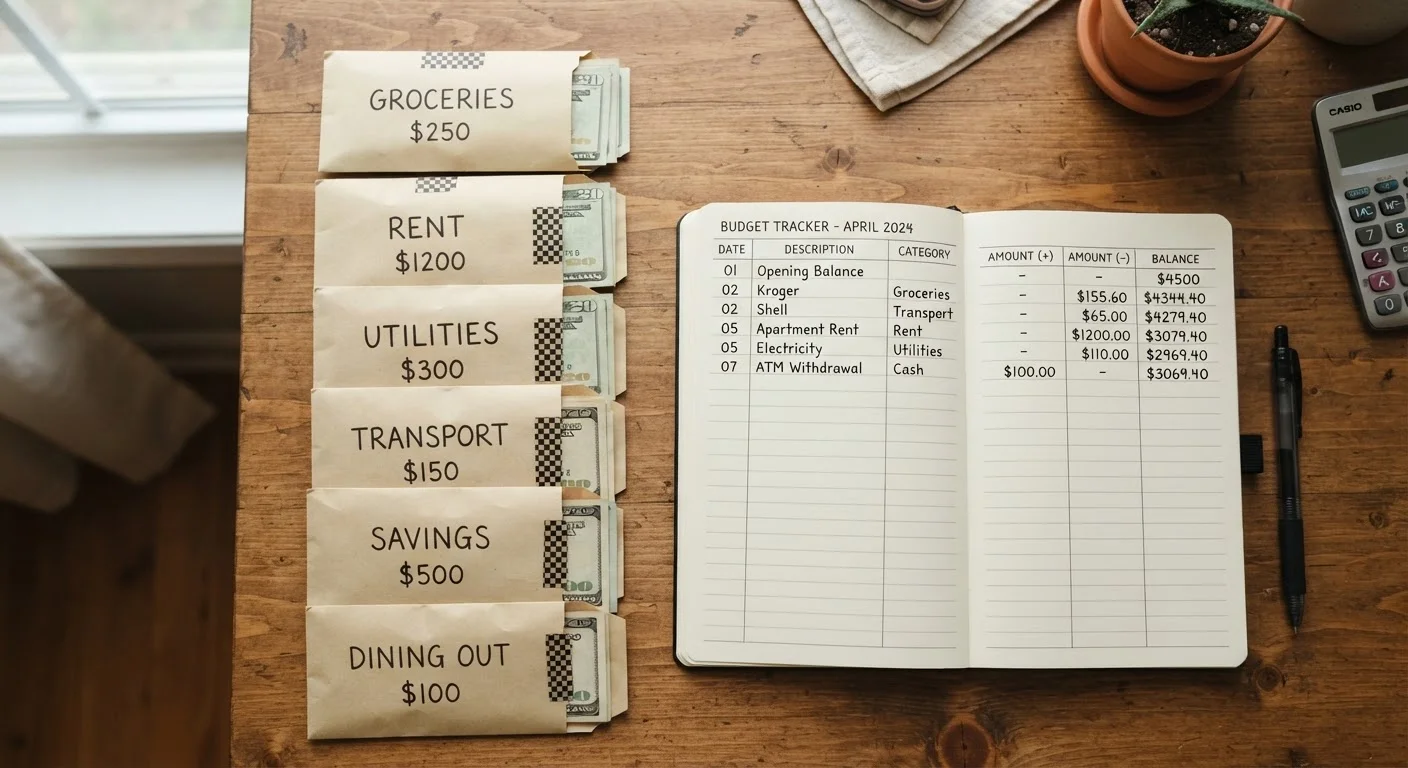
- Envelope budgeting uses physical or virtual cash pots to cap spending in each category.
- Zero-based budgeting assigns every dollar of income to a specific purpose until the balance reaches zero.
- Both methods force intentional spending, but differ in flexibility and day-to-day effort.
- Envelope budgeting works best for people who overspend on variable categories like groceries or dining.
- Zero-based budgeting suits those who want total visibility across all income and expenses each month.
- Neither method is inherently superior — the right fit depends on your habits and income type.
Our Verdict
Both envelope and zero-based budgeting share the same core principle: no dollar goes unaccounted for. Envelope budgeting is more tactile and straightforward, making it easier to adopt quickly — especially for variable spending categories. Zero-based budgeting offers more comprehensive control but demands more time and consistency each month. The method you'll actually stick with is the one that wins.
| Best for | Recommended |
|---|---|
| People who regularly overspend on groceries, dining, or entertainment | Envelope Budgeting |
| Those who want a complete, category-by-category plan for every dollar earned | Zero-Based Budgeting |
| Beginners who want a low-friction way to start budgeting | Envelope Budgeting |
| People with variable income who need to plan spending from scratch each month | Zero-Based Budgeting |
The Core Idea Behind Each Method
Both envelope budgeting and zero-based budgeting operate on a simple premise: give every dollar a destination. The difference is in how they get there.
Envelope budgeting divides your spending money into categories — groceries, gas, dining out, clothing — and assigns a fixed dollar amount to each. Traditionally this meant stuffing physical cash into labeled envelopes. When an envelope is empty, spending in that category stops for the month. Digital versions of the method replicate this with virtual "pots" or sub-accounts.
Zero-based budgeting starts with your total monthly income and works downward, assigning dollars to every expense, savings goal, and debt payment until the math reaches zero. The goal isn't to have nothing left — it's to have nothing unassigned. Every dollar is planned before you spend it.
If you're building a budget for the first time, see our step-by-step guide to building your first monthly budget before deciding which of these methods to layer on top.
How Each Method Works Day to Day
In practice, the two approaches create very different daily experiences.
With envelope budgeting, your main decision point happens once — when you divide your money at the start of the month (or paycheck). After that, you simply check the envelope before spending. It's low-maintenance and intuitive. The friction is built in: if your grocery envelope is empty on the 25th, that's a clear signal.
Zero-based budgeting requires more active management. You build a fresh plan each month, which means reconciling every line item — fixed bills, variable expenses, savings contributions, debt payments — against your actual income. This takes more upfront time but gives you a detailed map of where money flows. Many people use a spreadsheet or a budgeting app to manage it.
| Envelope Budgeting | Zero-Based Budgeting | |
|---|---|---|
| Core mechanic | Fixed cash pots per spending category | Income minus all expenses equals zero |
| Monthly setup time | Low — divide money once | Higher — rebuild plan each month |
| Day-to-day effort | Check envelope before spending | Track and reconcile all categories |
| Best for | Overspending on variable categories | Full visibility across all finances |
| Works with variable income | Possible, requires adjustment | Yes, designed to flex monthly |
| Covers fixed bills naturally | Only if you create envelopes for them | Yes, planned as line items |
| Learning curve | Low — intuitive concept | Moderate — requires discipline |
For a side-by-side look at how envelope budgeting compares with app-based tracking tools, see envelope budgeting vs. digital spending trackers.
Strengths and Weaknesses of Each Approach
Envelope budgeting's biggest strength is its simplicity. Because it focuses on spending categories rather than a whole-budget overview, it's easy to adopt incrementally. Its weakness: it doesn't naturally account for fixed bills, savings goals, or irregular expenses unless you create envelopes for those too — which some people find cumbersome.
Zero-based budgeting's strength is comprehensiveness. Nothing hides in a vague "miscellaneous" bucket. Its weakness is the time commitment — redoing the plan from scratch each month is a real barrier, especially when income fluctuates. If you skip a month, the whole system can unravel.
Hybrid Approaches Are Allowed
Some people use zero-based budgeting for fixed expenses and savings, then switch to the envelope method for discretionary categories like dining and entertainment. There's no rule against combining techniques. The goal is a system you'll actually maintain month after month, not methodological purity.
People who want a less granular alternative should also consider how the 50/30/20 rule divides income into broad buckets — a lighter-touch approach that sacrifices detail for ease.
Which One Fits Your Life?
The method you'll stick with is the one that matches how your brain and schedule actually work.
Choose envelope budgeting if you tend to overspend in specific categories, prefer a concrete spending limit you can see, or want to start with a partial system rather than overhaul your finances all at once. It also pairs naturally with cash-forward spending habits.
Choose zero-based budgeting if you want complete month-by-month visibility, tend to underestimate what you spend on fixed costs and savings, or have an irregular income that changes enough to justify replanning each month. For more on how this method compares to a percentage-based system, zero-based budgeting vs. percentage-based budgeting covers those trade-offs in depth.
Whichever method you pick, a monthly review keeps it honest. Use a structured monthly budget audit checklist to catch drift and reset before it becomes a problem.
This article is for general informational and educational purposes only and does not constitute personalized financial advice. Consider consulting a qualified financial professional for guidance specific to your situation.