
Zero-Based Budgeting vs. Percentage-Based Budgeting: Which Approach Fits Your Life?

Key Takeaways
- Zero-based budgeting requires you to allocate every dollar of income until your budget reaches zero.
- Percentage-based budgeting — like the 50/30/20 rule — divides income into broad category buckets by proportion.
- Zero-based budgeting offers more precision but demands more time and monthly upkeep.
- Percentage-based budgeting is faster to set up and easier to maintain, but may obscure overspending within categories.
- Neither method is universally superior — the right choice depends on your income structure and how closely you want to track spending.
Option A
Zero-Based Budgeting
The detail-first method that assigns every dollar a job.
Best for: People who want maximum control over their spending and are willing to put in regular tracking time each month.
Option B
Percentage-Based Budgeting
The flexible framework that divides income into simple categories.
Best for: People who want a low-maintenance system with built-in flexibility and don't need granular spending visibility.
If your income varies month to month
Zero-Based Budgeting
Rebuilding your budget from scratch each month naturally accommodates income changes, ensuring you never over-allocate during a lean month.
If you're new to budgeting and want a simple starting point
Percentage-Based Budgeting
Broad categories like needs, wants, and savings are easy to grasp quickly and require minimal setup, making it a practical first system.
If you're actively paying down debt or building an emergency fund
Zero-Based Budgeting
Assigning a specific purpose to every dollar makes it harder to let surplus income drift toward unintended spending.
If you have a stable salary and consistent monthly expenses
Percentage-Based Budgeting
Predictable income makes percentage targets easy to apply without recalculating categories every month.
If you've tried budgeting before and abandoned it due to complexity
Percentage-Based Budgeting
A lighter system with fewer rules reduces the friction that causes most budgets to fail within the first few weeks.
How Each Method Actually Works
Both approaches aim to give you intentional control over where your money goes — but they do it very differently.
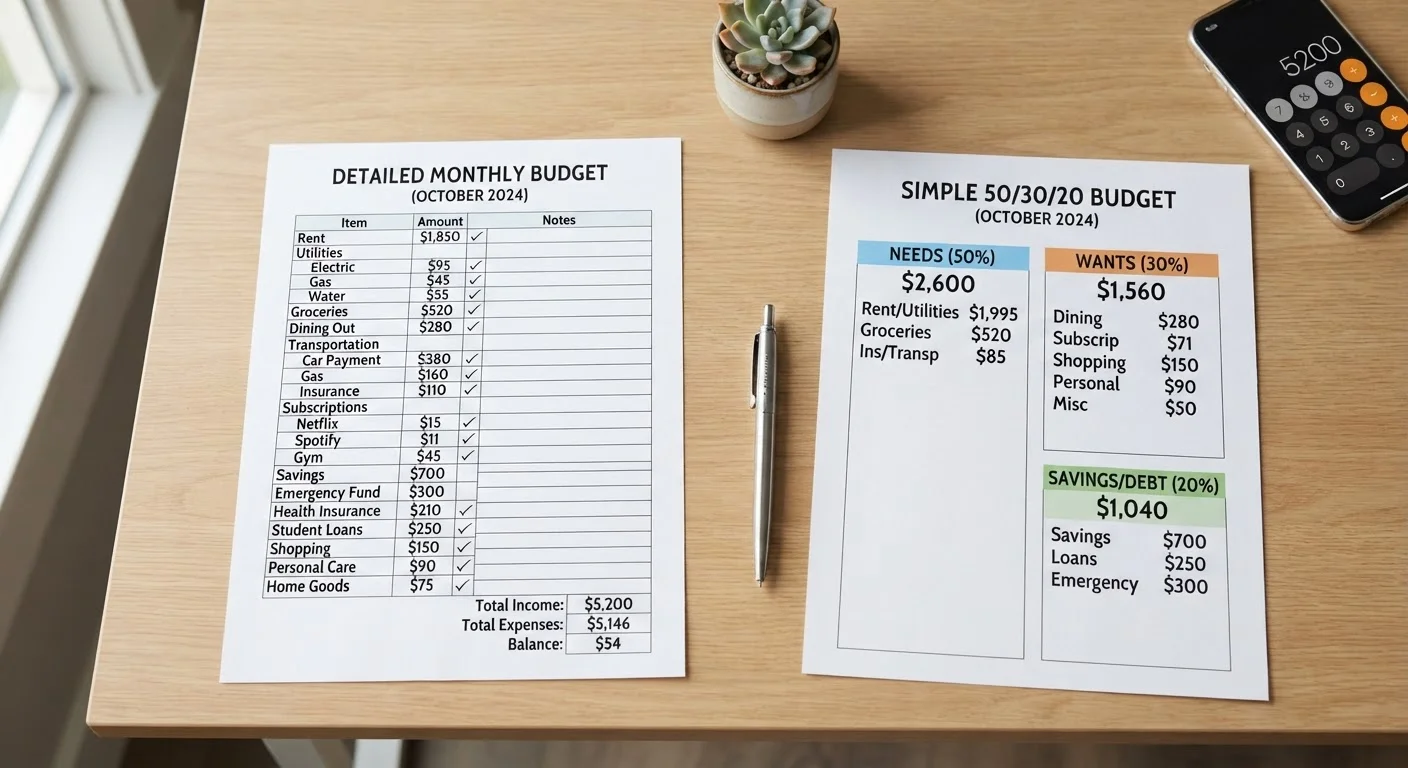
Zero-based budgeting starts with your total monthly income and requires you to allocate every dollar until the balance hits zero. That doesn't mean spending everything — savings, debt payments, and investments all count as allocations. If you earn $4,000 this month, every dollar gets a named destination before the month begins. You rebuild this plan each month, which keeps it current but requires consistent effort.
Percentage-based budgeting works from proportions rather than exact figures. The most widely known version is the 50/30/20 framework — 50% of take-home pay toward needs, 30% toward wants, and 20% toward savings and debt repayment. You can learn more about how that breakdown functions in practice in our overview of the 50/30/20 rule. Once you set your percentages, the system mostly runs itself month to month.
If you're starting with no system at all, building your first monthly budget from scratch is a useful primer before deciding which method to adopt.
| Criterion | Zero-Based Budgeting | Percentage-Based Budgeting |
|---|---|---|
| Core concept | Every dollar assigned a purpose | Income split by fixed percentages |
| Setup time | Higher — detailed monthly rebuild | Lower — apply ratios once |
| Ongoing maintenance | Regular tracking required | Minimal month-to-month upkeep |
| Best income type | Variable or irregular income | Stable, predictable salary |
| Spending visibility | High — line-item detail | Moderate — broad category view |
| Flexibility | Lower within a given month | Higher within category limits |
| Learning curve | Steeper for beginners | Gentle — easy to start |
The Real Trade-Offs: Control vs. Convenience
The central tension between these two methods is precision versus simplicity — and there's no objectively correct side.
Zero-based budgeting's strength is visibility. Because every line item is deliberate, it's harder for small recurring expenses to accumulate unnoticed. It also forces a monthly review, which keeps your priorities front and center. The drawback is time: rebuilding a detailed budget each month takes effort, and skipping even one cycle can throw off your tracking. For a closer look at how granular tracking compares to a more relaxed approach, see tracking every dollar vs. setting a loose spending cap.
Percentage-based budgeting trades that precision for ease. You apply the same ratios month after month without rebuilding anything. But broad categories can mask problems — you might stay within your "wants" bucket overall while quietly overspending on dining out and underspending on other priorities. It's a lighter system, and that lightness is both its advantage and its blind spot.
Hybrid Approaches Are Common
Many people find that neither method works perfectly in isolation. Using percentage-based targets as broad guardrails while zero-basing the spending within each category can offer both structure and detail. There's no rule requiring you to pick one system and stick to it rigidly — the goal is a system you'll actually maintain.
The two methods aren't mutually exclusive. Some people use percentage-based targets as guardrails while zero-basing the allocations within each category — a hybrid that balances structure with flexibility.
Choosing the Right Fit — and Making It Stick
The budgeting method that works is the one you'll actually use. A few honest questions can help you decide:
- How variable is your income? Freelancers and gig workers often benefit from zero-based budgeting because they're recalculating from a different starting point each month anyway.
- How much time can you realistically commit? If monthly budget sessions feel burdensome, a percentage system is more likely to survive long-term.
- Do you have a specific short-term goal? Paying off a credit card or saving a three-month emergency fund often benefits from the intentionality of zero-based allocation.
Whichever you choose, the bigger challenge is consistency. Most budgets don't fail because the math is wrong — they fail because the habits don't stick. Making a budget actually stick past the first week covers the practical side of follow-through once you've picked your method.
You might also find it useful to compare other approaches, like envelope budgeting vs. zero-based budgeting, to see how tactile spending systems compare to purely numerical ones.
This article is for general informational purposes only and does not constitute personalized financial advice. Consider speaking with a qualified financial professional about your specific situation.