

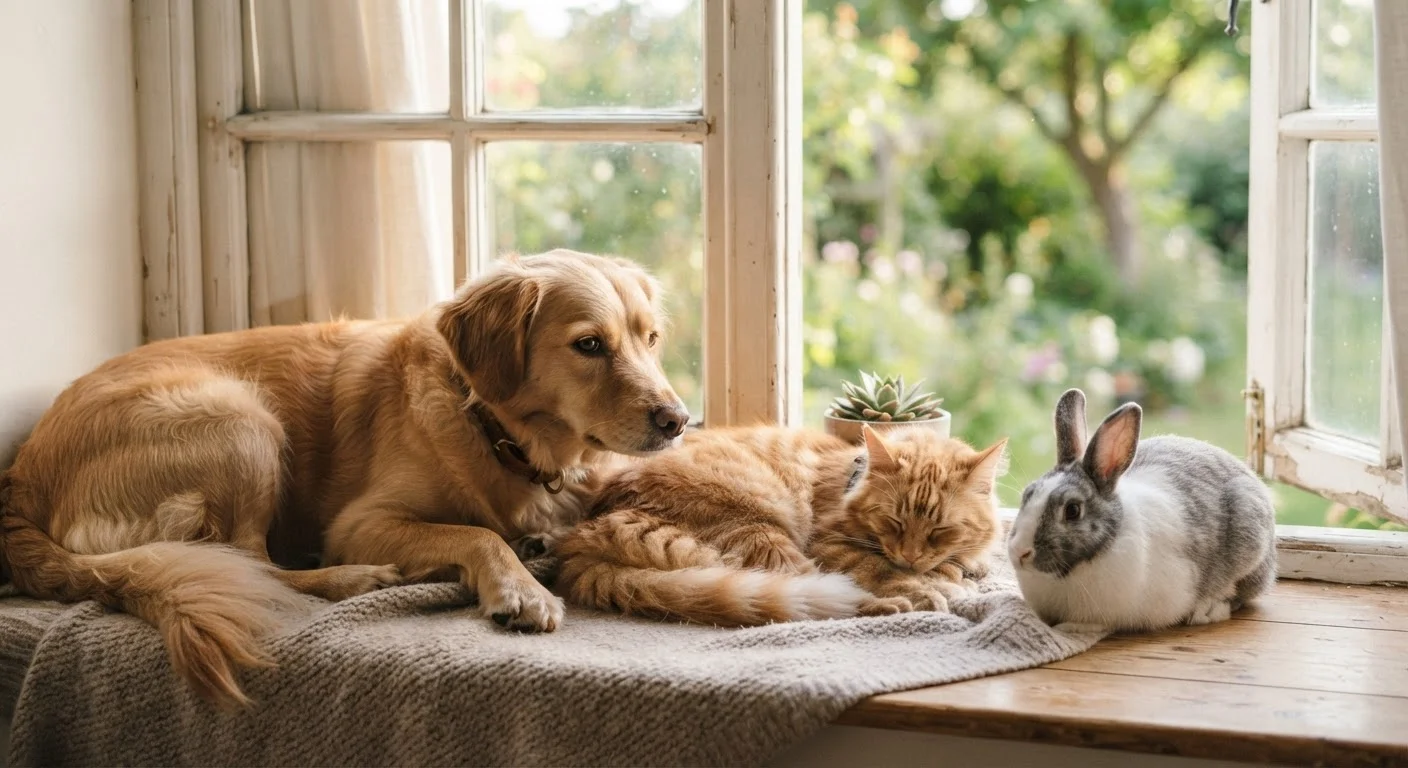
Why Stress Signals Differ So Much Between Species
Pets can't tell us when something feels wrong, so they communicate through behavior, posture, and subtle physiological changes. The catch is that a stressed rabbit looks nothing like a stressed dog — and misreading those signals can mean missing a problem until it escalates. Understanding species-specific cues helps you respond earlier and more effectively.
Stress and pain can sometimes overlap in presentation. If you're unsure whether a behavior reflects anxiety or discomfort, learn the difference between stress and pain signals before drawing conclusions. When behavioral changes are significant or sudden, a conversation with your veterinarian is always a sound first step.
Stress Signals in Dogs
Dogs are expressive animals, but their stress cues are easy to chalk up to personality quirks. Common signals include:
- Yawning outside of tiredness — a classic calming signal used to self-soothe or defuse tension
- Lip licking and nose nudging — brief, repetitive movements that occur in non-food contexts
- Whale eye — when you can see the whites of the eyes in a crescent shape, usually paired with a stiffened body
- Excessive panting or drooling without heat or exercise as a cause
- Tucked tail, lowered body, pinned ears — visible postural submission indicating fear or anxiety
- Destructive behavior, house soiling, or vocalizing when alone, which can point to separation-related anxiety
A deeper look at anxiety in dogs and cats can help you understand whether what you're seeing is situational stress or a more persistent concern.
Stress Signals in Cats
Cats are masters of concealment. Their stress often goes unnoticed until it becomes a health or behavioral problem. Watch for:
- Eliminating outside the litter box — one of the most consistent behavioral stress indicators in cats
- Over-grooming or hair pulling, resulting in thinning patches
- Hiding more than usual or refusing to engage with family members
- Aggression that appears out of character — redirected frustration is common in chronically stressed cats
- Decreased appetite or sudden food guarding
- Excessive vocalization, particularly in senior cats, which may also signal medical issues
Because cats mask discomfort so well, changes in routine or environment — a new pet, a move, construction noise — deserve close monitoring. Consistent daily routines are one of the most practical tools for keeping feline anxiety in check.
Calming signal
A body language gesture used by animals, particularly dogs, to communicate non-threat and reduce tension in social situations. Examples include yawning, lip licking, and looking away.
Whale eye
A visible crescent of white (sclera) at the edge of a dog's eye, indicating discomfort, fear, or anxiety. It is often accompanied by a stiff body posture.
Stereotypic behavior
A repetitive, invariant behavior pattern that appears to serve no obvious function, often developing in animals experiencing chronic stress, boredom, or inadequate environmental stimulation.
Cecotrope
A soft, nutrient-rich dropping produced by rabbits that they re-ingest directly from the anus as a normal part of digestion. Reduced consumption can signal illness or stress.
Redirected aggression
Aggression directed toward a bystander — person or animal — because the actual trigger is inaccessible or too arousing to approach. Common in chronically stressed cats.
Stress Signals in Rabbits and Birds
Small mammals and birds are prey animals, which means their stress response is often muted or easily misinterpreted as calm behavior.
Rabbits
- Thumping — a rapid, repeated hind-foot strike against the floor signals alarm
- Freezing or flattening against the ground, with ears pressed flat
- Aggressive lunging or biting when approached, especially in a previously gentle animal
- Over-grooming or fur pulling, which may also indicate boredom
- Loss of appetite or reduced cecotrope consumption (the soft droppings rabbits re-ingest for nutrition)
Birds
- Feather plucking or barbering — one of the clearest chronic stress indicators
- Screaming or repetitive vocalizations beyond normal communication patterns
- Fluffed feathers when not sleeping, combined with lethargy
- Biting or lunging from a bird that is normally social
- Stereotypic behaviors — repetitive, purposeless movements like head bobbing or pacing
Both species benefit enormously from enrichment, social interaction appropriate to their nature, and predictable care schedules. If you're preparing either animal for a veterinary visit, small handling and carrier adjustments can meaningfully reduce stress on the day.
This article is for general informational purposes only and is not a substitute for professional veterinary advice. If your pet's behavior changes suddenly or significantly, please consult a qualified veterinarian.