

Key Takeaways
- Ingredients are listed by weight before processing, so moisture content affects their order.
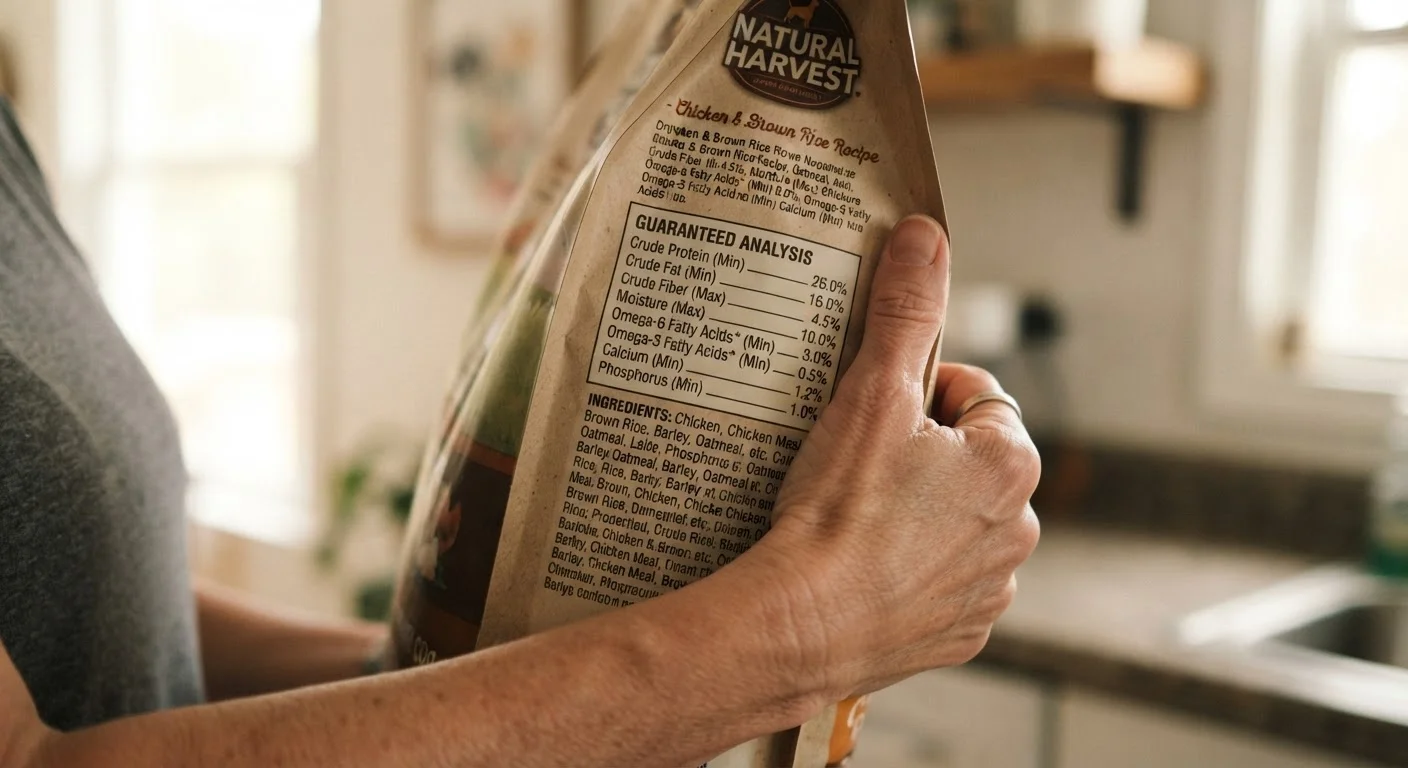
- The guaranteed analysis shows minimum or maximum nutrient percentages, not exact amounts.
- An AAFCO nutritional adequacy statement tells you whether a food is complete and balanced.
- Marketing terms like 'premium' or 'natural' have limited regulatory definitions — look past them.
- Always consult your veterinarian before making significant changes to your pet's diet.
Pet Food Label
A pet food label is the regulated panel of information printed on every commercially sold pet food package. It includes the product name, ingredient list, guaranteed analysis, feeding guidelines, and a nutritional adequacy statement. These elements are governed by rules set by the Association of American Feed Control Officials (AAFCO) and individual state regulations.
AAFCO itself does not directly regulate or approve pet foods — it publishes model regulations that individual states may adopt, so oversight varies slightly by state.
Why Pet Food Labels Can Feel So Confusing
Picking up a bag of pet food and flipping it over can feel like reading a legal document. Ingredient names you can barely pronounce sit next to percentages without units, and bold claims on the front of the package often have little to do with what's inside. The good news is that once you know which sections actually matter and what each one is designed to tell you, the label becomes a genuinely useful tool.
For a broader look at how pet food format affects nutrition, see our guide to wet food versus dry food, which covers moisture content and nutrient differences in plain terms.
AAFCO Sets Standards, States Enforce Them
AAFCO publishes model pet food regulations that states can adopt, but it does not directly approve or recall pet foods. Enforcement is handled at the state level, and the FDA oversees safety concerns like contamination. This means regulatory oversight can vary depending on where a product is sold.
Decoding the Ingredient List
Ingredients are listed in descending order by weight before processing. This means a raw chicken listed first is mostly water — once that moisture cooks off, chicken may actually contribute less protein than a concentrated ingredient listed further down, such as chicken meal. Neither is inherently bad; understanding this context helps you interpret the list accurately.
Ingredient splitting is another thing worth knowing. A manufacturer might list 'ground corn,' 'corn gluten meal,' and 'corn flour' separately. Each appears lower individually, but combined they may outweigh the first ingredient. This isn't necessarily deceptive, but it does change how you read relative proportions.
For more on how plant versus animal protein sources differ in quality, the protein quality and completeness guide offers useful background.
3%
Minimum ingredient required for 'With [Ingredient]' claims
AAFCO's ingredient naming rules set this threshold, meaning a food called 'With Beef' may contain very little beef by weight.
25%
Minimum required for '[Ingredient] Recipe' or 'Dinner' naming
Under AAFCO guidelines, named ingredients in 'recipe,' 'dinner,' or 'entrée' products must make up at least 25% of the food's total weight.
70–80%
Typical moisture content in wet/canned pet food
This high moisture level explains why guaranteed analysis percentages on wet food appear much lower than dry food, even when actual nutrient delivery is comparable.
Understanding the Guaranteed Analysis
The guaranteed analysis panel lists four nutrients at minimum: crude protein (minimum percentage), crude fat (minimum percentage), crude fiber (maximum percentage), and moisture (maximum percentage). Some labels include additional guarantees for nutrients like taurine or omega-3 fatty acids.
The word 'crude' refers to the measurement method used in a lab, not the quality of the nutrient. A high crude protein percentage doesn't tell you how digestible that protein is — a shoe has protein by this measure, but your pet can't use it. Digestibility data is generally not required on labels, which is one reason these numbers are a starting point rather than the whole story.
Comparing wet and dry foods on guaranteed analysis alone is also tricky because of moisture differences. A wet food showing 10% protein and a dry kibble showing 30% protein may actually deliver similar protein on a dry-matter basis. Your veterinarian can help you convert and compare if needed.
What the AAFCO Statement Actually Means
The nutritional adequacy statement — sometimes called the AAFCO statement — is one of the most meaningful lines on the entire label. It tells you two things: which life stage the food is intended for, and how the manufacturer determined it meets nutritional requirements.
There are two ways a food can earn this statement. The first is formulation: the recipe was designed to meet AAFCO's published nutrient profiles for a given life stage. The second is feeding trials: the food was actually fed to animals and shown to sustain them through defined health markers over time. Feeding trial-based claims are generally considered more rigorous, though formulation-based foods are widely used and accepted.
Life stage categories include 'growth and reproduction' (puppies, kittens, pregnant or nursing animals), 'adult maintenance,' and 'all life stages.' A food labeled for 'all life stages' must meet the more demanding growth profile, making it suitable for animals of any age — though not always the most efficient choice for a healthy adult pet.
Look for the Life Stage Match First
Before analyzing ingredients or nutrient percentages, check that the AAFCO statement matches your pet's current life stage. A food formulated for 'adult maintenance' is not appropriate for a growing puppy or a pregnant cat, regardless of its ingredient quality. This single check can prevent significant nutritional gaps.
Marketing Language: What to Take with a Grain of Salt
The front of the package is largely a marketing space. Terms like 'premium,' 'holistic,' 'gourmet,' and 'superfood' carry no standardized regulatory definition under current AAFCO guidelines. They are not quality guarantees.
A few terms do have defined meanings. 'Natural' has an AAFCO definition (no chemically synthesized ingredients, with some exceptions for added vitamins and minerals). Ingredient percentage rules also govern when a food can be named after a specific ingredient — for instance, if a product is called 'Chicken Recipe,' chicken must make up at least 25% of the total product weight. 'With Chicken' only requires 3%.
The Common Pet Nutrition Myths, Fact-Checked article digs further into claims like grain-free being healthier and why the evidence doesn't always support popular beliefs.
This article is for general informational purposes only and is not a substitute for veterinary advice. Consult your veterinarian before making significant changes to your pet's diet.