

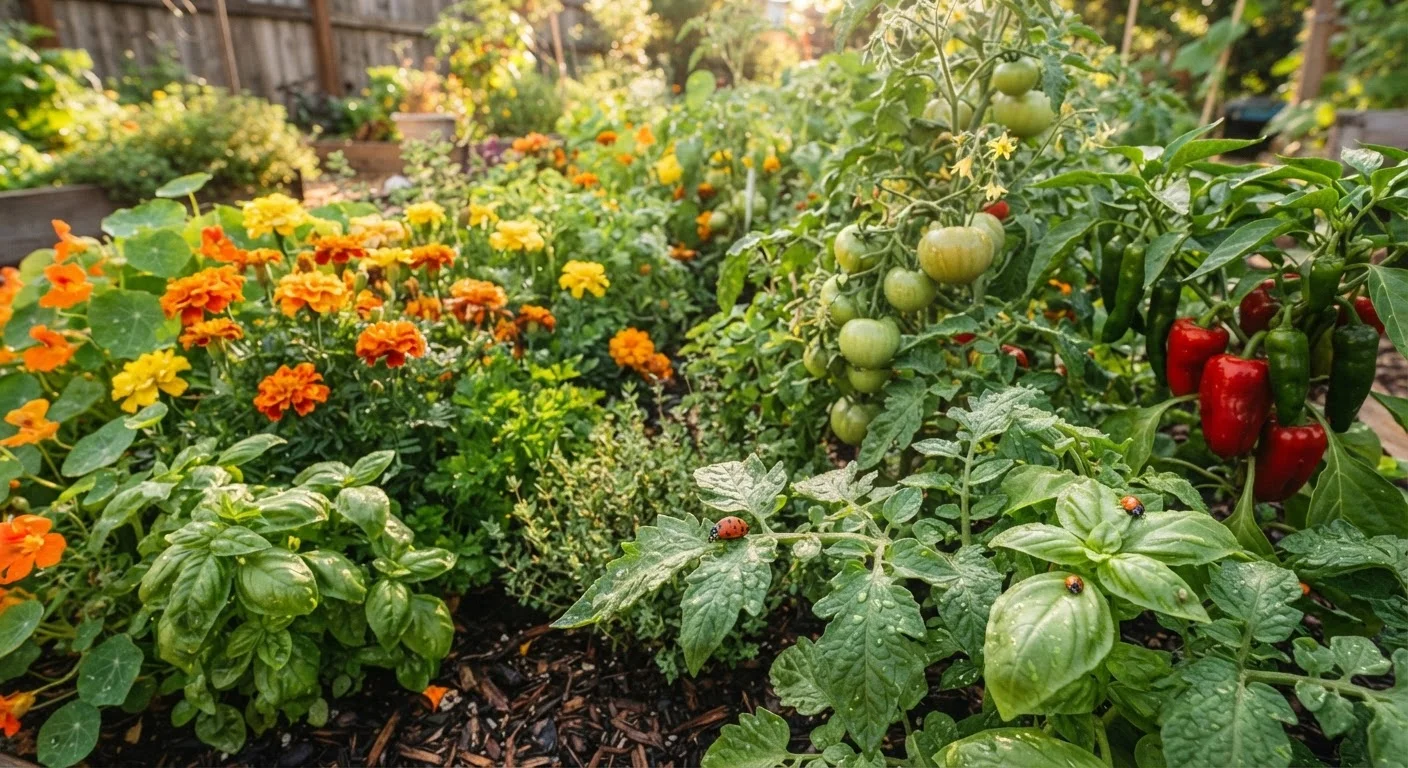
Key Takeaways
- Companion planting strategically pairs plants to confuse or repel pests naturally.
- Beneficial insects like ladybugs and lacewings can dramatically reduce aphid and mite populations.
- Physical barriers such as row covers and copper tape stop many pests before they reach plants.
- Healthy soil and proper plant spacing reduce stress that makes plants more vulnerable to pests.
- Consistency matters - natural pest control works best when several methods are used together over time.
Why Natural Pest Control Is Worth the Effort
Chemical pesticides can solve pest problems quickly, but they often eliminate the beneficial insects - predatory wasps, ladybugs, ground beetles - that keep pest populations in check naturally. Once those allies are gone, pest rebounds can be faster and worse than the original problem. Natural pest control methods work by strengthening your garden's own defenses rather than replacing them.
That said, realistic expectations matter. These approaches generally require more observation and patience than a spray-and-walk-away solution. They work best when layered together and adjusted based on what you're actually seeing in your garden. A pre-season readiness check helps you set your garden up defensively before pest pressure even begins.
Use companion planting to confuse and deter common pests before they establish.
Many insects locate host plants by scent. Interplanting with aromatic herbs and flowers interrupts this process and reduces the chance of large infestations forming. It also diversifies the garden, which limits how quickly any single pest can spread.
Attract and support beneficial predatory insects with habitat plantings.
Predatory insects naturally regulate pest populations, but they need food, shelter, and undisturbed habitat to remain in your garden. Planting a small pollinator strip near your vegetable beds gives them a reason to stay.
Install physical barriers at the start of the season, before pest pressure peaks.
Row covers and netting work best as preventive tools, not reactive ones. Once pests are inside the planting area, barriers can trap rather than exclude them. Early installation locks out common flying and crawling pests during their peak activity windows.
Inspect plants routinely and intervene early with manual removal or water sprays.
Pest populations grow exponentially when left unchecked. Early intervention - before a colony establishes - reduces the scale of the problem dramatically and avoids the need for any treatment beyond manual action.
Improve and maintain soil health to grow structurally stronger, less pest-attractive plants.
Plants grown in nutrient-balanced, well-structured soil develop thicker cell walls, better root systems, and stronger immune responses. Stressed, nutrient-deficient plants emit signals that draw certain pests. Good soil is a foundational pest-prevention strategy.
Companion Planting: Strategic Neighbors
Companion planting is the practice of growing certain plants near each other to create pest-deterring effects. Strong-scented herbs like basil, dill, and rosemary can mask the chemical signals that attract insects to nearby crops. Marigolds release a root compound that deters nematodes, and their scent confuses aphids and whiteflies searching for host plants.
The key is placing companions intentionally - not just scattered throughout the bed. Interplanting rows of alliums (onions, chives, garlic) among brassicas, for example, disrupts cabbage moth navigation. Dense, diverse plantings also support the habitat and food sources that beneficial insects need to establish and stay. A well-structured planting environment connects directly to healthy soil biology, which itself supports resilient root systems less susceptible to damage.
Match Companions to Your Actual Pest Pressures
Companion planting works best when you target the pests you actually have, not a generic list. If aphids are your main problem, focus on plants that attract aphid predators like lacewings. If slugs are the issue, focus on copper barriers and rough-textured mulch rather than aromatic interplanting. Observe your garden for a season before making major companion planting decisions.
Beneficial Insects and Physical Barriers
Encouraging predatory insects is one of the most effective long-term strategies. Ladybugs, lacewings, parasitic wasps, and hoverflies all feed on common garden pests. You attract them by growing nectar-rich flowers like yarrow, fennel, and sweet alyssum near vegetable beds and by avoiding pesticide use that would harm them.
Physical barriers offer immediate protection when pest pressure is high. Floating row covers made of lightweight fabric exclude moths, beetles, and flies while still allowing light and water through. Copper tape around container rims deters slugs and snails through a mild electrochemical reaction. Fine mesh netting protects fruit and brassicas during vulnerable growth periods. These tools are especially practical for container gardens, where the enclosed growing area makes barriers easier to deploy and maintain.
Monitoring, Soil Health, and Consistency
Natural pest control is fundamentally observational. Walking your garden every few days - checking leaf undersides, soil level, and new growth - lets you catch infestations early when they're easiest to address. Hand-picking caterpillars, knocking aphid colonies off stems with water, or removing damaged foliage is tedious but highly effective at small scales.
Soil health plays a background role that's easy to overlook. Compacted, nutrient-depleted soil produces stressed plants that emit chemical distress signals attracting certain pests. Healthy, biologically active soil - supported by regular composting - grows plants with stronger cell walls and more robust immune responses. See our guide to home composting for building a sustainable soil amendment practice.
No single method eliminates all pest problems, and that's normal. The goal is a garden ecosystem that stays balanced over time - not one that's sterile. Combining companion planting, habitat for beneficials, physical barriers, and attentive monitoring creates overlapping layers of protection that hold up through real growing seasons.
~80%
Of crop pest species have natural predators
University extension research consistently finds the vast majority of garden pest species have at least one effective natural predator present in diverse garden ecosystems.
3-5x
Faster pest rebound after broad-spectrum pesticide use
Studies in agricultural entomology indicate pest populations can rebound several times faster after broad-spectrum pesticide application eliminates natural enemies from the ecosystem.