

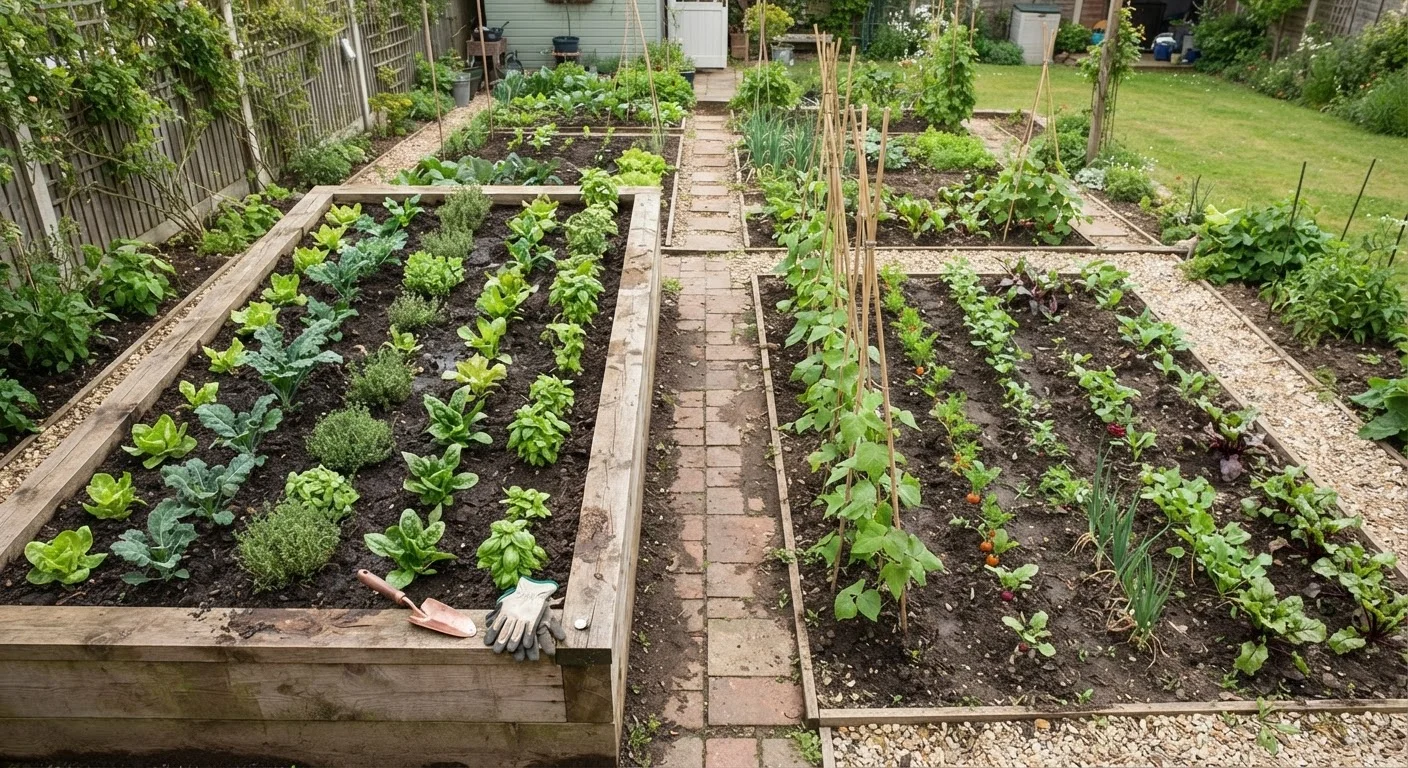
Key Takeaways
- Raised beds offer better drainage and soil control but cost more to set up initially.
- In-ground planting suits larger growing areas and naturally fertile soil with minimal startup expense.
- Raised beds reduce bending and kneeling, making them more accessible for many gardeners.
- In-ground plots support deep-rooted crops like corn and sprawling vegetables more easily.
- Both methods can be highly productive when matched to the right site conditions and gardener needs.
Option A
Raised Bed Gardening
The controlled, accessible growing environment.
Best for: Gardeners dealing with poor native soil, limited mobility, or small urban spaces who want faster results and precise growing conditions.
Option B
In-Ground Planting
The traditional, large-scale growing method.
Best for: Gardeners with good native soil and ample space who want lower upfront costs and the ability to grow crops at scale.
If your yard has compacted, rocky, or clay-heavy soil
Raised Bed Gardening
You can fill the bed with a custom soil mix, bypassing native soil problems entirely and giving roots an ideal environment from day one.
If you want to grow large crops like corn, pumpkins, or sprawling melons
In-Ground Planting
In-ground plots provide unlimited root depth and horizontal space that confined raised beds simply cannot match.
If accessibility or physical comfort is a priority
Raised Bed Gardening
A bed built to counter or table height eliminates the need to kneel or crouch, making gardening far more comfortable for many people.
If you have fertile loamy soil and want to grow on a budget
In-Ground Planting
With good native soil, in-ground growing requires minimal materials to get started and no ongoing costs for replacement soil or lumber.
If you're a beginner wanting quick, manageable results
Raised Bed Gardening
Smaller, defined growing areas are easier to manage, weed, water, and monitor - a confidence-building environment for new gardeners.
Soil Quality and Drainage
Soil is where most gardening decisions get made, and it's the area where raised beds and in-ground planting differ most sharply.
With a raised bed, you fill the structure with a blended growing mix - typically a combination of topsoil, compost, and an aerating material like perlite or aged bark. This gives you direct control over texture, fertility, and drainage from the start. Raised beds drain freely because the soil sits above grade and isn't compacted by foot traffic. For gardeners working with heavy clay or sandy native soil, this control is the single biggest advantage.
In-ground planting works with whatever soil your yard provides. If you're lucky enough to have deep, loamy, well-draining native soil, in-ground growing is straightforward and economical. If your soil is compacted or nutrient-poor, you'll need to invest time in amending it with compost over multiple seasons before it performs reliably. That's not a reason to avoid in-ground gardening - soil improvement is genuinely rewarding - but it does mean slower early results. See our beginner's guide to soil prep for foundational steps.
| Criterion | Raised Beds | In-Ground Planting |
|---|---|---|
| Upfront cost | Moderate to high (materials + soil mix) | Low (minimal materials needed) |
| Soil control | Full control over mix and quality | Dependent on native soil conditions |
| Drainage | Excellent - drains freely above grade | Variable - depends on native soil type |
| Accessibility | High - adjustable height, no stepping in | Lower - requires kneeling or bending |
| Scalability | Limited by structure size and cost | Easily expanded with available space |
| Weed pressure | Lower, especially in early seasons | Higher - full native seed bank present |
| Best crop types | Greens, herbs, root veg, tomatoes | Corn, melons, sprawling crops |
| Long-term maintenance | Soil topping, frame replacement | Ongoing soil amendment and mulching |
Cost and Setup
The upfront cost difference between these two approaches is significant and worth being clear-eyed about.
In-ground planting has the lowest barrier to entry. If your soil is workable, you need little more than a spade, some compost, and seeds or transplants. Over time, costs remain low because the growing area expands naturally and requires no structural materials.
Raised beds require an initial investment in materials - lumber, galvanized metal, or composite boards - plus enough quality growing mix to fill the bed. A single 4×8-foot bed can require several cubic feet of soil mix and may cost considerably more to establish than the equivalent in-ground area. However, because raised beds produce reliable results more quickly and require less remediation work, many gardeners find the investment pays off in reduced frustration and better harvests early on.
6-12 in.
Minimum raised bed depth for most vegetables
Most cooperative extension services recommend at least 6 inches of quality growing mix; root crops like carrots benefit from 12 inches or more.
3-4 years
Typical timeline to improve poor native soil
Consistent annual compost additions can meaningfully improve clay or sandy in-ground soil, though results vary widely by starting conditions.
4×8 ft
Most common raised bed footprint
This size allows a gardener to reach the center from either side without stepping in, keeping soil loose and uncompacted throughout the season.
Long-term, raised beds may also need periodic topping up with compost as the soil settles, while wooden frames typically need replacement after several years depending on the material used.
Accessibility and Ergonomics
For many gardeners, physical comfort determines which method is actually sustainable over the long term.
Raised beds can be built to any height - standard beds sit around 12 inches high, but waist-height designs eliminate the need to bend almost entirely. This makes a meaningful difference for gardeners managing back pain, knee problems, or limited mobility. The defined footprint also means you never need to step into the growing area, so soil stays loose and uncompacted.
In-ground gardening is inherently a ground-level activity. Kneeling pads and garden stools help, but they don't eliminate the physical demands the way a well-positioned raised bed does. For younger or able-bodied gardeners, this is rarely a limiting factor - but it's worth considering your needs not just today but in future growing seasons.
If you're exploring all your options, also consider container gardening, which offers maximum flexibility in positioning and can be adapted to almost any physical setup.
Weed Pressure and Pest Management
Weed control is an ongoing reality in any garden, but the two methods experience it differently.
Raised beds filled with purchased soil mix start relatively weed-free, since you're not working with weed-seed-laden native soil. Laying landscape fabric or cardboard beneath the bed before filling adds another layer of suppression. Over time, wind-borne seeds will introduce some weeds, but the volume tends to be manageable - and the defined, elevated surface makes hand-weeding straightforward.
In-ground beds contend with the full seed bank present in native soil, which can mean more persistent weed pressure, particularly in the first few seasons. Consistent mulching with straw or wood chips significantly reduces this burden and improves moisture retention at the same time.
On pests: neither method is categorically superior. Slugs and soil-dwelling insects affect both. Raised beds can experience faster soil warming in spring, which benefits crops but can also accelerate certain pest cycles. Our article on natural pest control covers practical, non-chemical approaches that work well in both settings.
Which Method Fits Your Garden Goals?
Neither raised beds nor in-ground planting is universally superior - the right choice depends on your site, your physical needs, your budget, and what you want to grow.
Choose raised beds if you're working with poor native soil, want immediate control over growing conditions, value accessibility, or are new to gardening and want a contained, manageable space to build confidence. They work especially well for intensive crops like salad greens, herbs, carrots, and tomatoes.
Choose in-ground planting if your native soil is already in reasonable shape, you want to grow at scale without significant upfront costs, or you're cultivating large or sprawling crops that benefit from unrestricted root depth and horizontal spread.
Many experienced gardeners use both - raised beds for high-value crops and herbs near the house, and in-ground rows for larger vegetables further out. Before your next growing season, run through our pre-season garden readiness checklist to make sure your setup - whichever method you choose - is ready to go.