

Key Takeaways
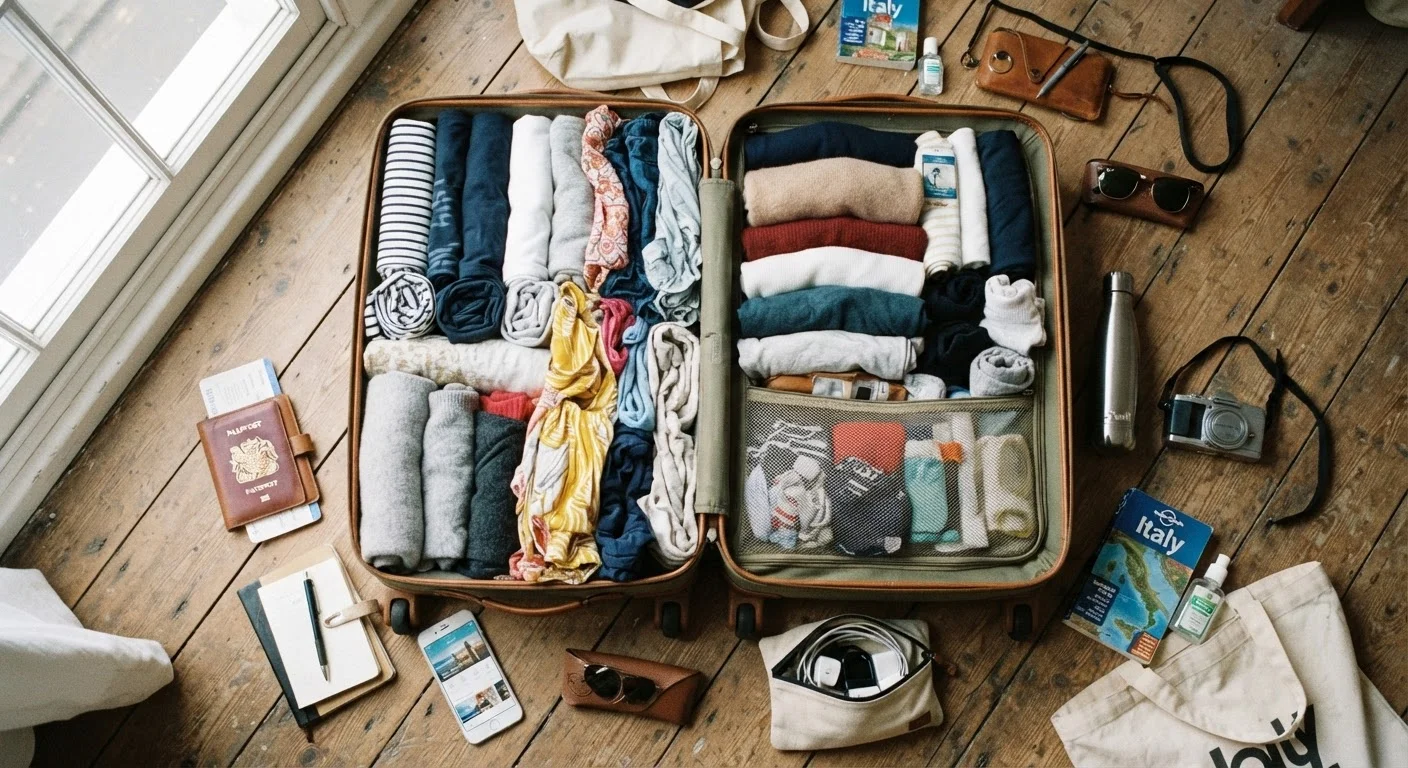
- Rolling clothes does not automatically save more space than folding — technique and fabric type matter more.
- Packing 'just in case' items is the single biggest driver of overweight bags.
- Carry-on restrictions vary by airline; never assume one standard applies universally.
- Most destinations have stores where forgotten basics can be purchased affordably.
- Heavier luggage increases physical strain and often triggers baggage fees, not convenience.
Why Packing Myths Persist
Packing habits tend to form early and harden fast. Most travelers learn by watching family members or following advice passed along at airports and travel forums — advice that often sounds logical but doesn't hold up under scrutiny. The result is a pattern of overstuffing that costs money (in baggage fees), energy (lugging heavy bags), and time (waiting at carousels).
Understanding which packing beliefs are myths — and why — is one of the most practical skills any traveler can develop. Whether you're planning a weekend trip or a multi-week itinerary, lighter packing consistently correlates with a smoother trip. For a deeper look at the cognitive reasons overpacking holds travelers back, see the science behind packing light.
Myth
Rolling your clothes always saves more space than folding them.
Fact
Rolling works well for casual, wrinkle-resistant fabrics, but folding is often more efficient for structured or thicker items.
Rolling is frequently cited as the universal packing solution, but its effectiveness depends on fabric type and garment construction. Soft, lightweight items like T-shirts and jeans roll efficiently and resist wrinkles. Structured blazers, dress shirts, and heavier knits, however, can actually take up more space when rolled and may arrive more wrinkled than if flat-folded. A hybrid approach — rolling soft items, flat-folding structured ones — generally outperforms any single method applied uniformly.
Myth
You should always pack for 'just in case' scenarios.
Fact
Most 'just in case' items go unused, and the weight and space cost is rarely worth the rare occasion they'd be needed.
The 'just in case' mindset is the most common engine of overpacking. Travelers pack formal shoes for a dinner that may never happen, rain gear for a forecast that never materializes, or backup outfits for spills that don't occur. A more useful question to ask is: 'If I need this and don't have it, can I borrow, buy, or do without it?' For the majority of items, the answer is yes — and at most destinations, pharmacies, supermarkets, and clothing stores can cover genuine emergencies. Packing light vs. packing for every scenario walks through a practical framework for this decision.
Myth
A bigger bag means more flexibility and convenience.
Fact
Larger bags encourage filling, add physical strain, and often trigger checked-bag fees that a smaller carry-on avoids.
Research in behavioral psychology consistently shows that people fill available space — packing expands to meet container size. A larger suitcase doesn't give you more flexibility; it gives you more weight to carry and more decisions to make. Beyond the physical toll, oversized bags frequently exceed carry-on limits and trigger fees. Carry-on vs. checked luggage strategies can help you choose a bag size that actually suits your trip rather than undermines it.
Myth
All airlines follow the same carry-on size and weight rules.
Fact
Carry-on allowances vary significantly between carriers, especially budget and international airlines.
US full-service carriers tend to have relatively generous carry-on policies, but budget airlines — both domestic and international — often impose stricter size limits and may charge for bags that exceed them. Weight limits for carry-on bags, which are common outside the US, can catch travelers off guard. Always verify the specific allowance for every carrier on your itinerary before packing, especially when mixing airlines on multi-leg trips. For budget travel contexts, carry-on vs. checked luggage on a budget trip covers these trade-offs clearly.
Myth
Packing cubes always compress your clothes and save space.
Fact
Packing cubes improve organization but do not inherently reduce the volume of what you pack.
Packing cubes are genuinely useful for keeping a bag organized and making items easy to find — but they are not compression devices unless they are specifically designed with compression zippers. Standard packing cubes simply corral your clothes; they don't make them smaller. In fact, the cubes themselves take up space. They work best as an organizational system for travelers who already pack efficiently. What every traveler should know about packing cubes separates the genuine benefits from the marketing claims.
Smarter Habits to Replace the Myths
Debunking myths is only half the work — replacing them with practical habits is what actually changes how you pack. Start by auditing your last trip: how many items came home unused? That number is your overpacking baseline. Most travelers find it's at least one-third of what they brought.
A versatile wardrobe built around neutral colors and lightweight, quick-dry fabrics eliminates the need for outfit-by-outfit planning. Shoes deserve special attention — they're heavy, bulky, and most travelers bring one more pair than they use. Limiting yourself to two pairs (one comfortable walking shoe, one for evening or formal occasions) covers the vast majority of trip scenarios. For weather uncertainty, layering strategy outperforms stuffing extra gear every time — packing for any climate without extra bag weight explains that approach in detail.
Baggage Policies Change — Always Verify
Airline carry-on and checked bag allowances are updated periodically and can differ between fare classes on the same carrier. Before every trip, check the specific baggage policy for your ticket type on your carrier's official website. Do not rely on rules you remember from a previous flight, especially if you're booking with a different airline or on a budget fare.
Toiletries are another consistent offender. Full-size bottles take up disproportionate space relative to their usefulness. Decanting into travel-size containers, or purchasing toiletries at your destination, is almost always the more efficient approach. For a clear breakdown of liquid restrictions and what you can realistically carry through security, TSA rules and packing liquids is worth reading before your next flight.
The broader goal is shifting from a scarcity mindset — packing as though nothing will be available at your destination — to a confidence-based approach that trusts you can handle the unexpected with less. That mindset shift, more than any particular technique, is what separates light packers from chronic overpackers. See why even experienced travelers overpack for a closer look at the decision patterns behind the habit.