

Key Takeaways
- Layering with three core pieces covers most temperature ranges without bulk.
- Fabric choice determines how much climate range you get per ounce of clothing.
- A color-neutral palette doubles outfit combinations without adding items.
- Versatile footwear is the single biggest weight-saving decision you can make.
- Checking destination weather patterns before packing eliminates redundant gear.
What you will need
Why Most Travelers Overpack for Unpredictable Weather
The anxiety of not knowing exactly what weather to expect is the leading driver of overpacking. Travelers hedge by throwing in one outfit for every possible scenario — a heavy coat "just in case," an extra layer for evenings, rain gear for one forecasted shower. The bag gets heavy before a single item has proven its worth.
The smarter approach treats clothing like a system rather than a collection of individual contingencies. When pieces work together and fabrics earn their place, a single well-chosen bag handles a 40°F morning and an 80°F afternoon without a backup suitcase. For a deeper look at why streamlined packing tends to outperform the "cover all bases" method, see The Science of Packing Light.
What you will need
Building a Climate-Flexible Packing System
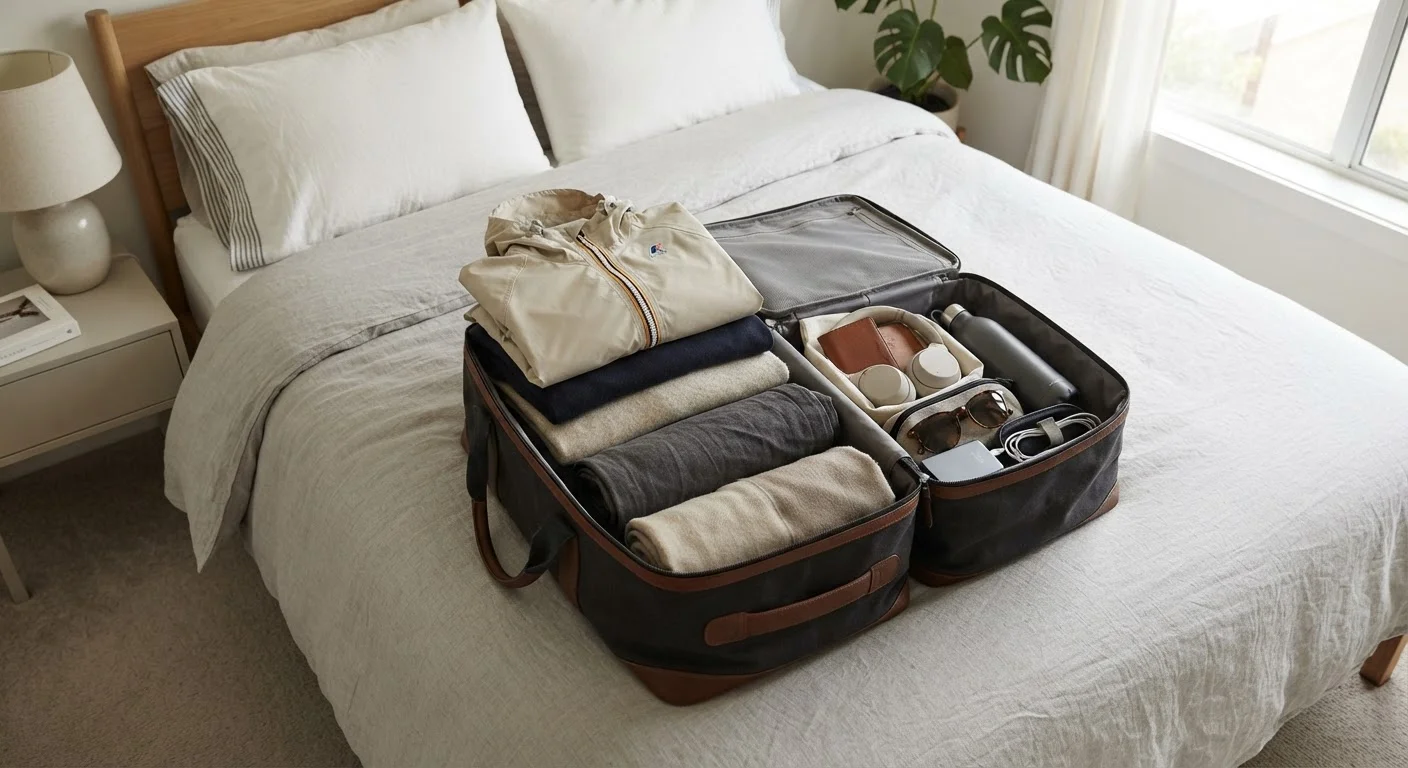
The foundation is the three-layer rule: a moisture-wicking base layer, an insulating mid-layer, and a packable outer shell. These three garments can be worn independently or stacked to cover a roughly 50-degree temperature range. Critically, each layer should compress small enough to fit in your hand.
Fabric matters more than most travelers realize. Merino wool regulates temperature in both warm and cool conditions, resists odor, and dries quickly — meaning fewer items can do more work. Synthetic blends (polyester-nylon) add wind and moisture resistance at minimal weight. Avoid heavy cotton for travel; it absorbs moisture, dries slowly, and packs poorly.
A color-neutral palette — grays, navies, blacks, and tans — multiplies outfit combinations mathematically without adding a single item. This principle sits at the heart of the capsule wardrobe approach to travel clothing, which is worth exploring before any multi-climate trip.
Plan Around Laundry, Not Extra Clothes
Building one laundry stop into a week-long trip — whether at a laundromat, a sink, or a hotel laundry service — effectively doubles your wardrobe without adding weight. Quick-dry fabrics make sink washing practical even in modest accommodations. This single habit is what separates travelers who pack light from those who perpetually run out of bag space.
Footwear is often the most overlooked weight factor. One pair of comfortable walking shoes and one pair of versatile sandals or dress shoes covers most trips. Extra shoes add mass and volume disproportionate to their usefulness. If you find yourself debating shoes, common packing myths may be influencing your thinking.
Step-by-Step: Packing for Any Climate
Research the actual temperature range, not just the season
Before selecting a single item, look up the daily high and low temperatures for each destination during your travel dates. A "summer" trip can mean 60°F coastal mornings and 85°F inland afternoons. Use this range — not vague seasonal assumptions — as your packing brief. Verify conditions through official national meteorological services or established weather platforms before departing.
Choose a base layer that works in both warm and cool conditions
Select lightweight, moisture-wicking shirts in neutral colors. Merino wool T-shirts are an excellent option: they regulate body temperature, resist odor across multiple wears, and pack to roughly the size of a rolled sock. Pack two to three for a week-long trip, not one per day.
Add one insulating mid-layer that compresses small
A lightweight fleece or synthetic-fill jacket is the workhorse of climate-flexible packing. It should compress into its own pocket or a small stuff sack, weigh under one pound, and be comfortable worn alone on a cool day or under a shell in cold rain. One mid-layer is almost always sufficient.
Pack one packable outer shell for wind and rain
A packable rain jacket is arguably the single most efficient item a traveler can carry. It blocks wind, handles light to moderate rain, and layers over both your base and mid-layer. Look for one that packs into its own chest pocket. This replaces bulky waterproof coats that take up a quarter of a bag on their own.
Select bottoms that transition across contexts
Two to three pairs of versatile bottoms — pants that move between casual and smart-casual, or shorts with a modest cut — cover most itineraries. Lightweight chinos in a neutral tone work in a restaurant, on a hike, and in transit. Avoid packing both dedicated hiking pants and separate casual pants unless your activities genuinely require distinct gear.
Limit footwear to two pairs maximum
Choose one pair of supportive walking shoes that can handle varied terrain and a full day of movement, and one additional pair that suits your secondary activity (sandals for beach destinations, a clean sneaker for urban evenings, a dress shoe for business trips). Anything beyond two pairs typically adds weight without meaningfully expanding your wardrobe's range.
Do a final weight and redundancy check before closing the bag
Lay every item out and ask two questions for each: Does this serve a function no other item in this bag covers? Would I genuinely feel the absence of this on the trip? Anything that fails both tests comes out. This step alone typically removes two to four items from the average traveler's bag.
Once you have your system in place, it's worth weighing the trade-offs for your specific trip type. The right balance of minimalism versus preparation varies by destination and duration — Packing Light vs. Packing for Every Scenario walks through how to calibrate that decision for your itinerary.
Don't Pack for Worst-Case Scenarios Alone
Packing a heavy winter coat for a three-percent chance of extreme cold is a poor trade-off for most trips. Assess the realistic probability of each weather scenario rather than packing for the rarest possibility. If genuine extreme-weather risk exists, verify it through official sources and adjust specifically for that — rather than padding the entire bag with precautionary gear.