

Key Takeaways
- Packing light works best for short trips, frequent movers, and carry-on-only travelers.
- Scenario-based packing is justified when activities, dress codes, or climates genuinely vary.
- Most overpacking is driven by anxiety, not actual need — identifying real requirements narrows the gap.
- A hybrid approach — a lean core wardrobe plus targeted extras — suits most multi-purpose trips.
- Bag choice and organization tools significantly affect how much either strategy actually costs you in comfort.
Our Verdict
Neither approach is universally superior. Packing light pays dividends in mobility, time, and often cost — but scenario-based packing is the more honest choice when a trip's demands are genuinely diverse. The smartest strategy is to audit your actual itinerary, not your fears, and pack to that reality.
| Best for | Recommended |
|---|---|
| Urban trips, weekend getaways, and frequent fliers | Packing Light |
| Multi-climate adventures, formal events, or specialty activity trips | Packing for Every Scenario |
| Most travelers on trips of four to ten days | Hybrid approach — lean core with targeted additions |
What Each Approach Actually Means
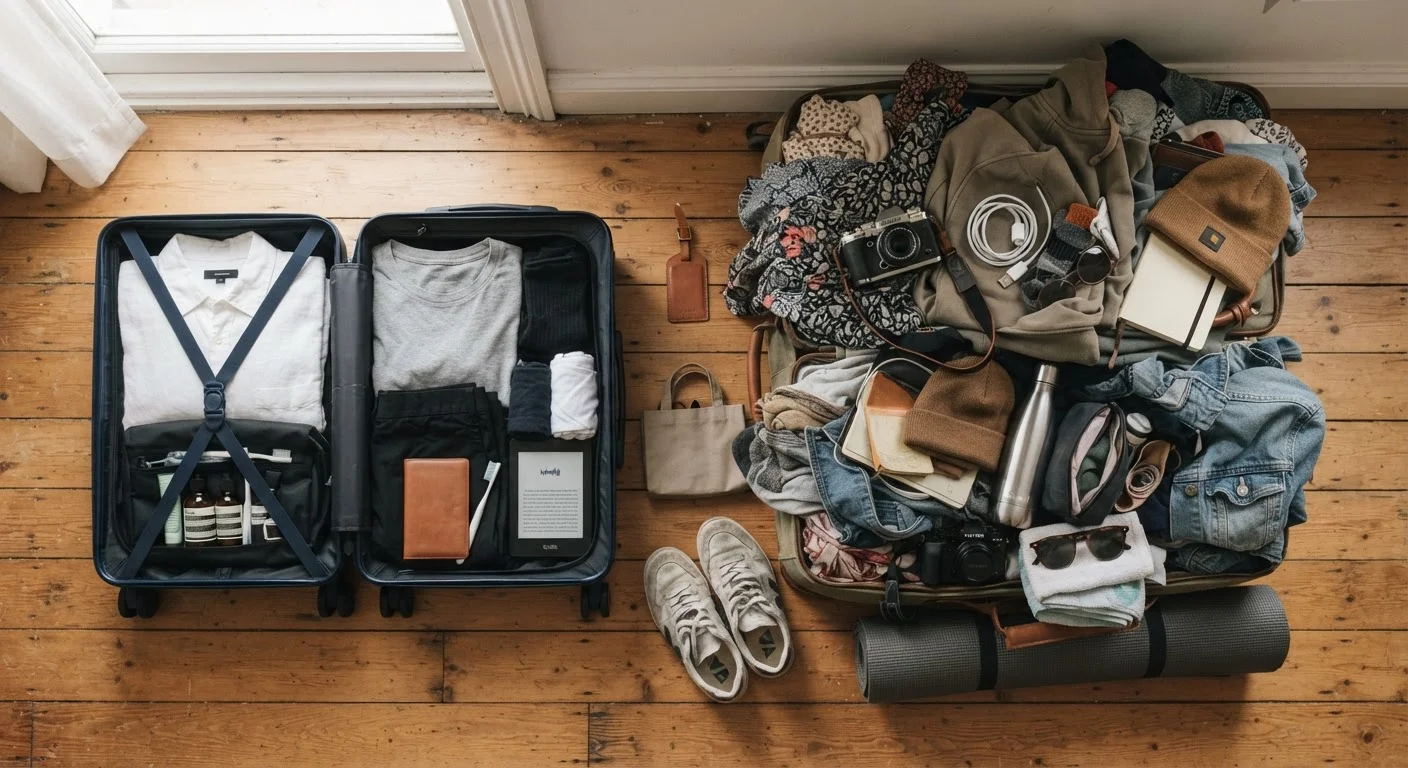
Packing light — often defined as fitting everything into a carry-on or personal item — prioritizes mobility and speed over preparedness. The goal is a bag you never have to check, wait for, or haul across cobblestones for more than a block. It forces intentional choices: every item must earn its weight.
Packing for every scenario takes the opposite philosophy: bring what you might need so you're never caught short. This often means a checked bag, multiple footwear options, gear for activities you're only 30% likely to do, and a wardrobe that covers every possible dress code. The comfort is psychological as much as practical.
The real question isn't which philosophy sounds better — it's which one matches the actual demands of your specific trip. For a deeper look at the cognitive case for minimalism, see why less gear means more freedom.
Where Packing Light Wins
The advantages of a minimal bag compound throughout a trip. You move faster through airports, skip baggage claim entirely, and avoid checked-bag fees that can add meaningfully to a budget trip's cost. On multi-city itineraries — where you're changing hotels every two or three nights — a lighter bag is simply less punishing.
Packing light also reduces decision fatigue. A curated wardrobe of mix-and-match pieces means fewer choices each morning, not more. The capsule wardrobe approach is built on exactly this logic: a small, interchangeable clothing set that creates more outfit combinations than a bulging suitcase of unrelated items.
Test Your Bag Before You Commit
A week before departure, pack your bag completely and carry it around for 20 minutes. If it's uncomfortable or difficult to manage, that's useful information before you're navigating an unfamiliar train station. This simple test reveals whether your planned load is actually sustainable for your trip's logistics.
It does require trade-offs. You'll likely do laundry mid-trip, skip bulky gear, and accept that you won't have options for every unexpected occasion. For many travelers, that's a fair deal. For others, it's a source of genuine stress.
When Scenario-Based Packing Is Justified
There are trips where packing light is the wrong call. A ten-day itinerary that moves from beach to mountain to a formal dinner genuinely requires different clothing categories — and no amount of minimalist discipline makes a hiking boot double as dress footwear. Similarly, travelers with medical equipment, specialty sports gear, or infant supplies often have non-negotiable volume requirements.
The honest test: write down the specific scenarios you're packing for, then ask whether each is actually scheduled or just possible. A snorkeling kit for a trip with one beach day is a justified addition. A snorkeling kit for a city trip with a one-hour harbor cruise is probably wishful planning.
| Packing Light | Packing for Every Scenario | |
|---|---|---|
| Bag type | Carry-on or personal item | Checked bag, often large |
| Airline fees | Typically none | Checked-bag fees apply |
| Mobility at destination | High — easy to move between locations | Lower — heavier, bulkier to transport |
| Outfit flexibility | Requires mix-and-match planning | High — dedicated items per occasion |
| Mid-trip laundry need | Likely required | Rarely needed |
| Best trip length | 1–7 days | 8+ days or multi-activity trips |
| Return trip risk | Low — room for souvenirs | High — overage fees likely |
| Stress profile | Lower physical, higher planning | Lower planning, higher physical load |
For guidance on managing varied climates without doubling your load, packing for any climate without doubling your bag weight walks through layering logic that can satisfy both camps.
The Hidden Costs of Overpacking
Beyond baggage fees, overpacking carries subtler costs. A heavy bag changes how you move — you opt out of walking tours, avoid stairs, and spend more on transport between stops. Research in travel ergonomics consistently links heavy loads to faster traveler fatigue, though exact figures vary by individual fitness and terrain.
There's also the return-trip problem. Souvenirs, purchases, and accumulated items mean a bag that was full at departure is dangerously over capacity coming home. Travelers who pack for every scenario frequently face excess weight charges on return flights or end up shipping items back — costs that rarely appear in pre-trip budgeting.
Common packing myths often drive this behavior: the belief that you'll definitely need the item, or that packing more is simply the responsible choice. Examining those assumptions before you zip up can save real hassle.
Building a Practical Decision Framework
Rather than choosing a philosophy in the abstract, evaluate three factors for each trip: duration, activity diversity, and laundry access. Short trips under five days almost always favor packing light — you can repeat outfits without issue and rarely need specialty gear. Trips over ten days with genuinely varied activities may warrant a checked bag, but only if the activities are confirmed, not speculative.
Laundry access is the overlooked variable. Many hotels offer same-day laundry; most destinations have coin laundromats or drop-off services. A trip with two laundry opportunities effectively doubles your wardrobe without adding a gram to your bag. Factor this in before defaulting to overpacking.
Your bag choice matters here too. Weighing carry-on versus checked luggage across different trip types is a useful companion exercise to this decision. And once you've settled on volume, packing cubes can help you organize either approach more efficiently — though they organize space rather than create it.