

Key Takeaways
- A well-chosen 7-day wardrobe built on neutrals and layering typically fits in one standard carry-on.
- TSA-compliant toiletry rules apply to all US domestic and international carry-on bags — plan accordingly.
- Rolling clothes and using packing cubes significantly increases usable space inside a carry-on.
- Wearing your bulkiest items on travel day frees up critical bag space.
- Verifying airline-specific size limits before you pack prevents gate-check surprises.
Summary
34 items · 45–90 minutes
Why Carry-On Only Works for a Full Week
Fitting seven days into a single carry-on is less about sacrifice and more about strategy. When you pack with a clear system, you avoid checked-bag fees, eliminate the risk of lost luggage, and move through airports significantly faster. For most climates and trip types — city breaks, beach getaways, business travel — a 40-liter carry-on (commonly around 22" x 14" x 9") holds everything you need.
Before you start loading your bag, read up on the real trade-offs by checking out carry-on vs. checked luggage — some trips (extended hiking, extreme-weather destinations, formal events) do genuinely call for a checked bag. If this checklist confirms carry-on is right for you, this guide will walk you through every category.
Always verify your specific airline's size and weight limits before you pack. Limits vary meaningfully between carriers and fare classes, and a bag that fits one airline's overhead bin may be gate-checked on another.
Packing Cubes
Compress and organize clothing by category, making it easier to find items and fit more into your bag.
Quart-Sized Clear Zip Bag
Required for TSA 3-1-1 compliance — holds all your carry-on liquids, gels, and aerosols for security screening.
Luggage Scale
Confirms your carry-on meets weight limits before you leave home, preventing gate-check fees.
Packable Tote or Day Bag
Folds flat inside your carry-on and serves as your day bag or personal item once you arrive at your destination.
Universal Travel Adapter
Allows you to charge devices in countries with different outlet standards without carrying multiple adapters.
Clothing: The Capsule Wardrobe Approach
The core principle is mix-and-match neutrals. Choose a base palette (navy, grey, black, white, or earth tones) so every top works with every bottom. Plan to re-wear bottoms and layer tops rather than packing a fresh outfit for each day.
Clothing
Toiletries (TSA 3-1-1 Compliant)
Documents and Money
Electronics and Connectivity
Carry-On Bag Essentials
For a deeper look at what gear actually earns its space in your bag, the travel gear essentials guide breaks down each category with practical questions to ask before adding anything.
Toiletries, Documents, and Tech
Toiletries are where most carry-on attempts fail. The TSA's 3-1-1 rule requires all liquids, gels, and aerosols to be in containers of 3.4 oz (100 ml) or less, all fitting in a single quart-sized clear bag. Plan this category first — it has the hardest constraints.
Know the Rules Before You Fly
TSA's 3-1-1 liquid rule applies to all carry-on bags on US flights: containers must be 3.4 oz (100 ml) or less, all fitting in a single quart-sized clear bag. Prescription medications in original labeled containers are generally permitted in reasonable quantities beyond this limit, but always verify current rules with the TSA and your airline before travel. Entry requirements, including visas and health documentation, vary by destination — always check with official government sources close to your departure date, as rules can change.
Documents and tech are easy to forget in the rush of clothing decisions. Build a habit of packing these last so they're on top and accessible at security. If you're still finalising your pre-departure checklist beyond just packing, the trip-planning checklist covers every stage from research through departure.
Carry-on-only travel also has real budget implications. To understand where you save and where you might spend more, see what you gain and lose packing carry-on only.
Packing It All In: Technique Matters
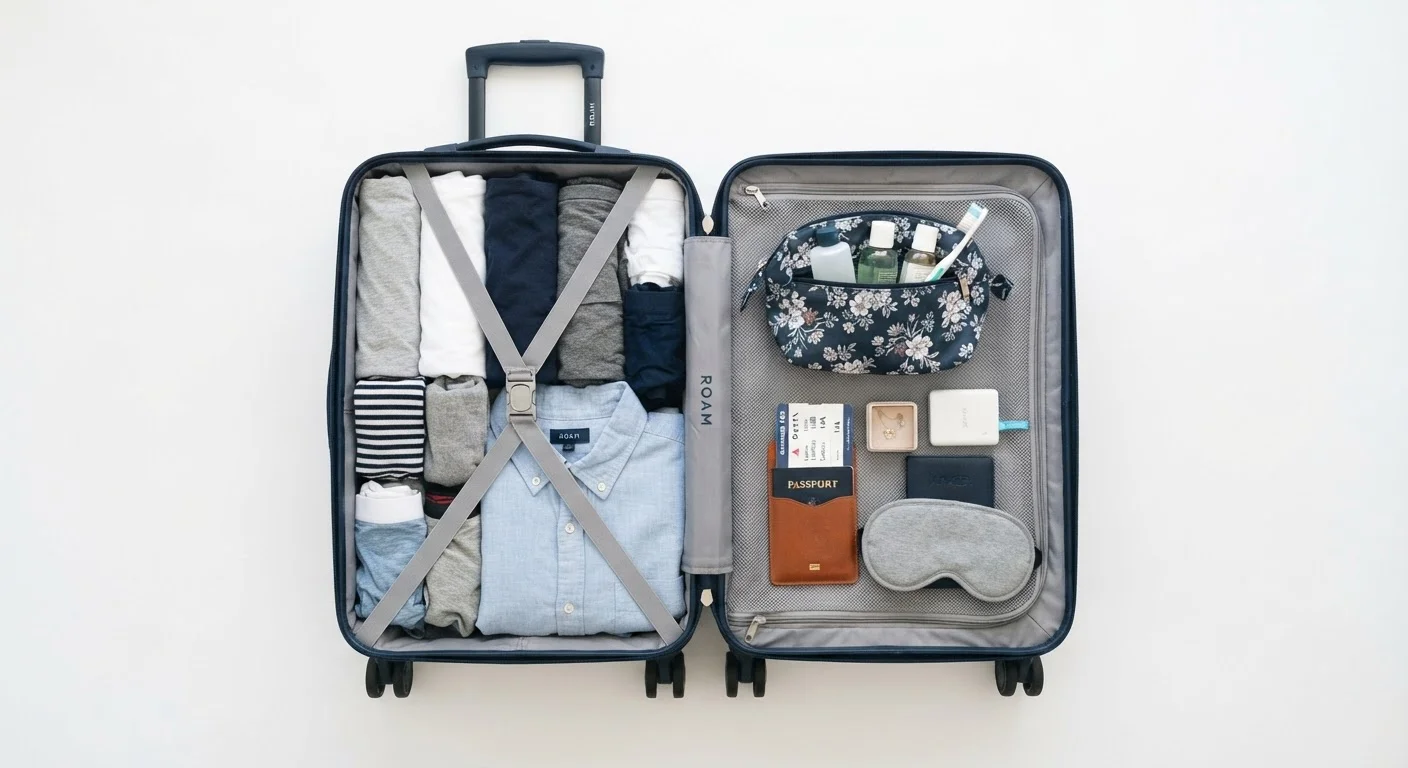
Having the right items is only half the equation — how you pack determines whether everything fits. Use these proven techniques to maximize every cubic inch:
- Roll soft items (t-shirts, underwear, lightweight pants) to reduce bulk and minimize wrinkles.
- Fold structured items (blazers, dress shirts) using the bundle method or lay them flat on top.
- Use packing cubes to compress clothing and keep categories separated so you're not unpacking everything to find one item.
- Fill dead space — stuff socks inside shoes, tuck small items around the edges.
- Wear your bulkiest items on travel day: boots, a heavy jacket, and thick jeans worn on the plane don't count against your bag's space.
Once packed, do a final weight check if your airline has a carry-on weight limit (common on international low-cost carriers). Lift the bag and simulate overhead-bin movement — if it's too heavy to hoist comfortably, remove items until it is.
This checklist is part of a broader resource on packing strategy: the complete guide to packing and gear covers everything from weekend bags to multi-week adventures.